





















































Stakeholders have called for deliberate, coordinated and sustained investment in Africa’s space science and technology sector, stressing that the continent’s ambition for meaningful participation in outer space must be built on strong institutional, technological and policy foundations at home.
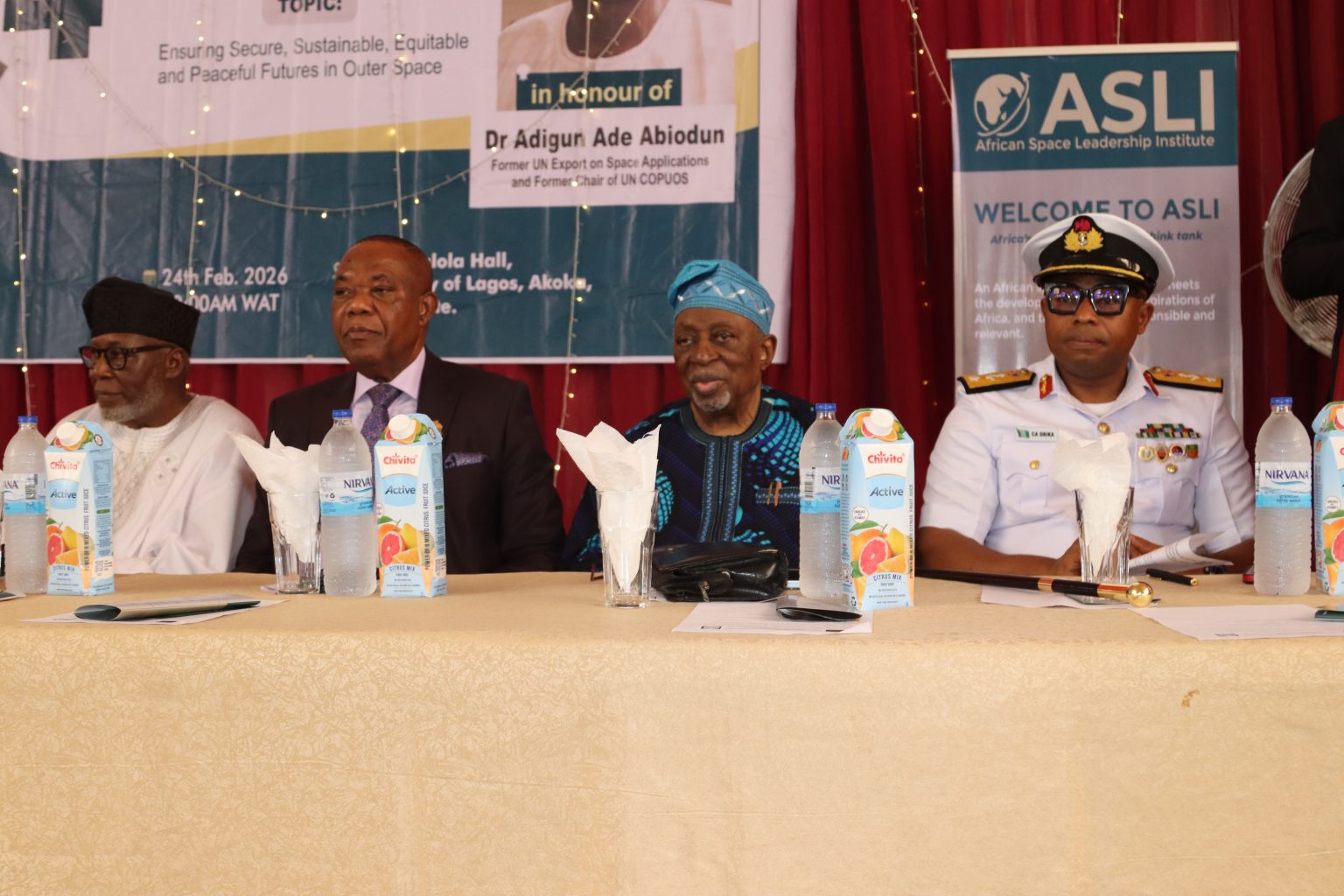
The call was made on Tuesday, February 24, 2026, as the Department of Geography, University of Lagos (UNILAG), in collaboration with the African Space Leadership Institute (ASLI), hosted the fourth edition of the Adigun Ade Abiodun Public Lecture at the Afe Babalola Auditorium.
The annual lecture honours the late Nigerian space scientist, Adigun Ade Abiodun, and seeks to deepen discourse on space science, governance, sustainability, security and equitable access to space resources across Africa.
Celebrating a Visionary Legacy

The event opened with a documentary highlighting Dr Abiodun’s pioneering contributions to remote sensing and his instrumental role in positioning Nigeria within Africa’s space research and development landscape.
Beyond recounting his achievements, the documentary portrayed a scholar of remarkable foresight and intellectual depth whose work laid enduring foundations for space science, policy and governance on the continent.
In his welcome address, Chairman of the occasion and former Vice-Chancellor of the Federal University of Technology, Akure, Emeritus Professor Peter Olusegun Adeniyi, described the lecture as both intellectually and morally significant.
Paying tribute to his late colleague and friend of over four decades, he noted that Dr Abiodun’s commitment to remote sensing distinguished Nigeria within Africa’s outer space research community and helped bridge past achievements with future aspirations in space governance.
A Call for Responsible Space Governance
Representing the Vice-Chancellor of UNILAG, Professor Folasade T. Ogunsola, OON, FAS, the Dean of the Faculty of Social Sciences, Professor Adelaja Odukoya, emphasised the need for responsible stewardship of outer space.
He cautioned that as humanity seeks to build a sustainable outer space environment, it must avoid replicating the environmental degradation, inequality and conflict that characterise life on Earth. He described the honouree as a towering figure in space governance whose legacy continues to inspire responsible scholarship and visionary leadership.
Global Perspectives, Continental Responsibility
Goodwill messages were delivered virtually by global space leaders, including the Deputy Director of the United Nations Office for Outer Space Affairs (UNOOSA), Dr Driss El Hadani, who underscored the importance of ensuring the peaceful and responsible use of outer space in line with international frameworks.
Similarly, the President of the African Space Agency, Dr Tidiane Ouattara, urged African nations to transition from being passive consumers of space-derived data to active contributors in global space innovation and policy formulation.
Earlier, ASLI representative Mr Etim Offiong outlined the institute’s mission to promote African-led solutions in space policy, governance and technological advancement.
“Outer Space Conquest Starts with Ground Space Conquest”
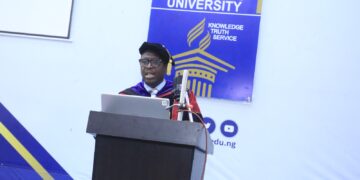
Delivering the keynote address titled Ensuring a Secure, Sustainable, Equitable and Peaceful Future in Outer Space, Founder and Chairman of Teledom Group, Dr Emmanuel E. Ekuwem, examined outer space from legal, technological, environmental and geopolitical perspectives.
In a statement that drew strong reactions, he declared: “Outer space conquest starts with ground space conquest.”
He argued that Africa’s aspirations in outer space must be anchored on robust terrestrial systems, strong institutions, sound policies, indigenous technological capacity, sustainable funding and ethical governance. Without addressing developmental gaps on Earth, he warned, ambitions for relevance in outer space would remain superficial.
Dr Ekuwem identified four pillars critical to securing the future of outer space:
Security: Preventing the weaponisation of space and protecting orbital assets.
Sustainability: Addressing space debris and preserving orbital environments.
Equity: Ensuring fair access to orbital slots, satellite resources and technological opportunities for developing nations.
Peace: Upholding international cooperation and compliance with global treaties.
He further stressed the need for deliberate investment in human capital development in areas such as space law, satellite engineering, geospatial intelligence and policy negotiation.
The lecture concluded with an engaging question-and-answer session, during which scholars, students and practitioners examined Africa’s readiness for deeper space exploration and the regulatory implications of expanding commercial space activities.
About ASLI
Established in 2022, the African Space Leadership Institute is Africa’s first space-focused think tank. The institute works to address gaps in space policy, strategy, law and governance, while promoting evidence-based policymaking and strategic participation in the global space ecosystem.










 EduTimes Africa, a product of Education Times Africa, is a magazine publication that aims to lend its support to close the yawning gap in Africa's educational development.