



















































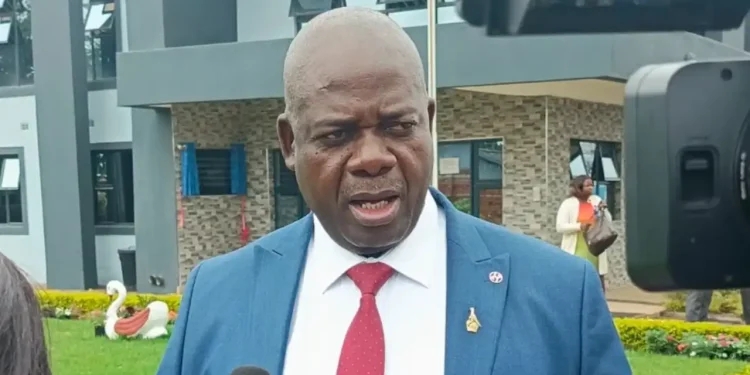


Zimbabwe’s Minister of Primary and Secondary Education, Torerayi Moyo, has directed all private schools offering foreign languages such as French and Chinese to also teach Zimbabwean history and indigenous languages, in line with the country’s Heritage-Based Curriculum (HBC).
Speaking during a Senate question-and-answer session on 26 February 2026, Moyo said some independent institutions have prioritised international languages at the expense of local heritage studies.
“Our indigenous languages such as Shona, Ndebele, Kalanga, Shangani and Tonga are not taught in many ATS schools. They are now learning French and Chinese and no longer learning our local languages,” he said.
Heritage-Based Curriculum Now Mandatory

The minister emphasised that the Heritage-Based Curriculum is compulsory for all learning institutions — including government, council, church and private schools. He cited Section 63 of the Constitution and the Education Act, which empower the Ministry to determine curricula and examinations nationwide.
According to Moyo, the transition to the HBC is a statutory requirement aimed at aligning education with national development goals and preserving Zimbabwe’s cultural identity.
“All schools are mandated to implement the Heritage-Based Curriculum, ensuring every child, irrespective of the institution they attend, attains a deep understanding of their national identity,” he said.
Cambridge, IB To Remain As Add-Ons
Zimbabwe currently operates three main curricula: the Heritage-Based Curriculum offered in most public schools; the Cambridge curriculum largely offered by members of the Association of Trust Schools (ATS) and independent colleges; and the International Baccalaureate (IB) in some international schools.
Under the new directive, schools may continue offering Cambridge examinations, but only as an additional qualification. The HBC will serve as the primary curriculum framework. Institutions seeking to run dual curricula must obtain approval from the Permanent Secretary and outline their implementation plans.
During a meeting with the ATS at the University of Zimbabwe on 12 February 2026, Moyo reiterated that compliance is not optional.
Schools Pledge Compliance
ATS Chairperson Abe Gatsi confirmed that member institutions had taken note of the directive and would work toward implementation.
The Ministry has announced that training sessions for private school educators on the Heritage-Based Curriculum will begin soon to facilitate the transition.
Fees And Multi-Currency Payments
Addressing concerns over school fees, Moyo reminded institutions that under the Education Act (Chapter 25:04), no non-government school may increase fees or levies without prior written approval from the Secretary.
He also noted that Zimbabwe’s multi-currency system allows parents to pay fees in United States dollars, South African rand and Zimbabwe Gold (ZiG), all of which schools must accept as valid payment methods.
The Government maintains that while international languages and qualifications remain welcome, they must not replace the teaching of Zimbabwean history, indigenous languages and national values.









 EduTimes Africa, a product of Education Times Africa, is a magazine publication that aims to lend its support to close the yawning gap in Africa's educational development.