
























Nearly two months after more than 40 schoolchildren and their teachers regained freedom from captivity, members of the University of Ibadan community have rallied around the victims with a ₦6 million donation aimed at supporting their recovery and helping bereaved families rebuild their lives.



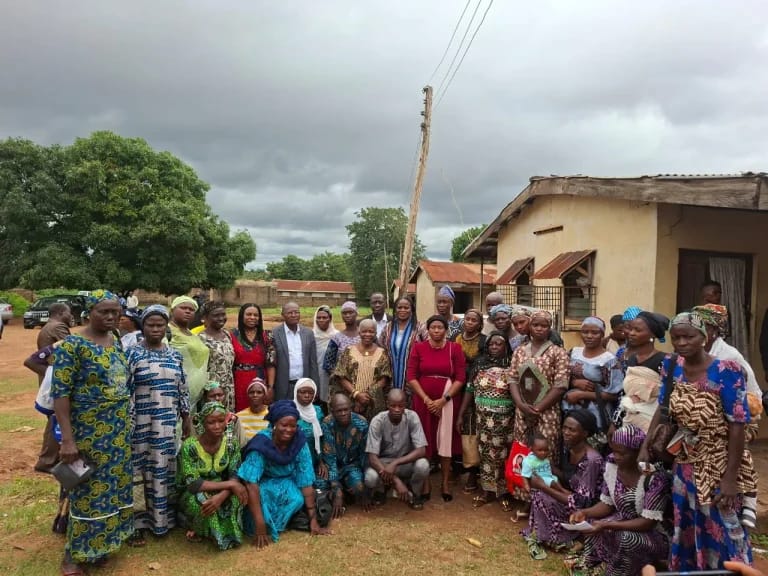
The financial support, raised by retired and serving staff of the University of Ibadan, was presented on Wednesday to rescued pupils, teachers and families of those who lost loved ones during the coordinated attacks on three schools in Oriire Local Government Area of Oyo State.

The presentation took place at the Office of the Inspector-General of Education, Ogbomoso Zone.
Leading the delegation, Chairman of the University of Ibadan Ad Hoc Committee on Support for Oriire Rescued Abductees, Prof. Ezekiel Ayoola, said the intervention reflected the university community’s solidarity with the victims and their families.

The beneficiaries were among more than 40 pupils and teachers abducted during coordinated attacks on Baptist Nursery and Primary School, Yawota; L.A. Primary School; and Community Grammar School, Ahoro-Esienle, on May 15, 2026. They regained their freedom on July 10 after spending 56 days in captivity.
Ayoola explained that the donation came through voluntary contributions from the immediate past Vice-Chancellor of the University of Ibadan, Prof. Kayode Adebowale; the Vice-Chancellor of Bowen University, Prof. Jonathan Babalola; professors; and early-career academics.
According to him, the support was meant to complement ongoing rehabilitation efforts while reassuring the victims that they had not been forgotten.
“Our gathering today is both sombre and celebratory. It reminds us of the insecurity confronting our nation, but it also celebrates the triumph of humanity over terror,” he said.
While celebrating the victims’ release, Ayoola noted that many survivors continued to battle psychological trauma, stressing the need for sustained emotional, educational and financial support to help them recover fully.

He also commended the Federal Government, the Oyo State Government and security agencies for their coordinated efforts that led to the successful rescue of the abductees.
Ayoola specifically praised the Nigerian Army, Nigerian Navy Special Forces, Nigerian Air Force Special Forces, Nigeria Police Force, Department of State Services, National Intelligence Agency, Nigeria Security and Civil Defence Corps, Office of the National Security Adviser and the National Counter Terrorism Centre for their roles in the rescue operation.
He equally acknowledged the National Assembly, particularly the Senate, for providing financial assistance to bereaved families and security personnel affected by the incident.
Earlier, the Inspector-General of Education, Ogbomoso Zone, Olubunmi Adisa, described the donation as a powerful demonstration of compassion and social responsibility.
“The academic staff of the University of Ibadan have redefined the relationship between the town and the gown. You have set another pace in humanitarian service. With this gesture, there is hope for Nigeria,” he said.
The symbolic presentation was carried out by Prof. Adenike Emeke, Prof. Chinedum Babalola and Prof. Aina Adeogun, who presented the donations to the rescued teachers, pupils and widows of those killed during the attack.
Speaking to the beneficiaries, Prof. Jonathan Babalola said the donation represented more than financial support.

“We are standing with you to let you know that you are not alone. We rejoice over your safe return and pray that God will continue to strengthen you,” he said.
Beyond the financial assistance, the gesture underscored the role universities can play in responding to humanitarian crises, demonstrating that education communities can extend their impact far beyond classrooms by offering hope and support to those facing unimaginable hardship.












 EduTimes Africa, a product of Education Times Africa, is a magazine publication that aims to lend its support to close the yawning gap in Africa's educational development.