




















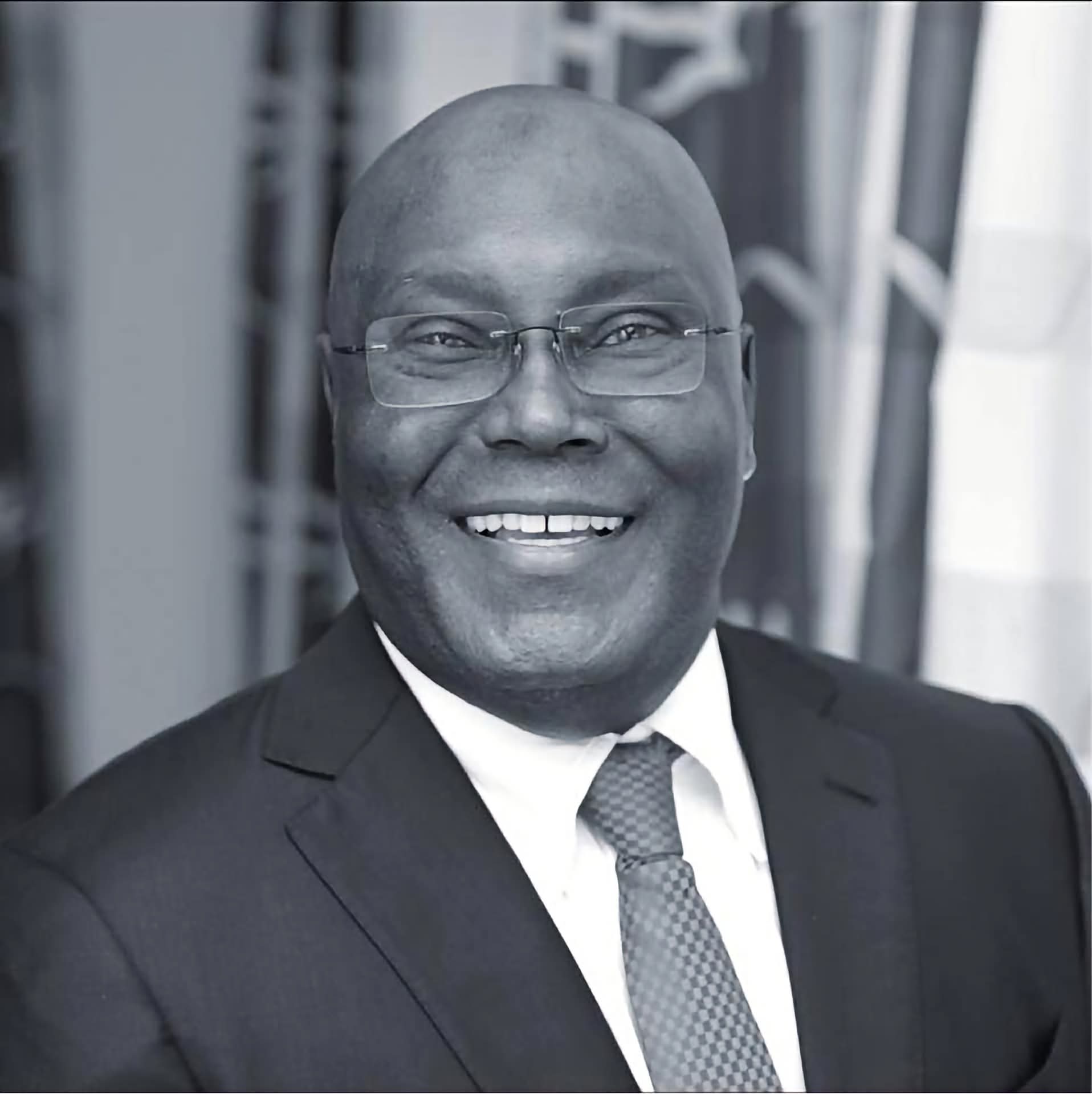


Alhaji Atiku Abubakar, GCON, former Vice-President of Nigeria and a prominent figure in the country’s Fourth Republic politics, has built a career spanning public service, business, education and national politics.



From his years in the Nigeria Customs Service to his tenure as Vice-President and his repeated presidential bids, Atiku remains one of Nigeria’s most recognisable political figures.

Here are 15 facts about Atiku Abubakar:
1. He was born in 1946

Atiku Abubakar was born on 25 November 1946 in Jada, Adamawa State, then part of the Northern Region of Nigeria.
2. He studied at Ahmadu Bello University
Atiku attended Ahmadu Bello University, Zaria, where he obtained a Diploma in Law in 1969.
3. He spent about two decades in the Nigeria Customs Service
Atiku joined the Nigeria Customs Service in 1969 and spent about 20 years in the organisation, rising through the ranks before retiring from public service in 1989.
4. He entered business after leaving Customs

After leaving the Customs Service, Atiku expanded his interests into business, including real estate, logistics, agriculture and oil and gas-related services.
He later became associated with Integrated Logistics Services Nigeria Limited (INTELS), a major logistics and maritime services company.
5. He served as Nigeria’s Vice-President
Atiku served as Vice-President of Nigeria from 1999 to 2007, alongside President Olusegun Obasanjo.
During this period, he chaired the National Economic Council and played a prominent role in Nigeria’s economic policy and privatisation programme.
6. He was involved in Nigeria’s telecommunications reforms
The administration in which Atiku served oversaw major economic reforms, including the liberalisation of the telecommunications sector.
The reforms contributed to the expansion of mobile telecommunications and the arrival of GSM services in Nigeria in 2001.
7. He founded the American University of Nigeria
Atiku founded the American University of Nigeria (AUN) in Yola, Adamawa State, in 2004.
The university was established as an American-style liberal arts institution and has become one of Nigeria’s notable private universities.
8. He has a long history in Nigerian politics
Before becoming Vice-President, Atiku was involved in national political movements during Nigeria’s transition towards democratic rule.
He was associated with the People’s Front, a political group linked to the late Major-General Shehu Musa Yar’Adua.
9. He became Governor-elect of Adamawa State in 1998
Atiku won the 1998 Adamawa State governorship election under the platform of the Peoples Democratic Party (PDP).
However, he did not eventually serve as governor after he was selected as Olusegun Obasanjo’s running mate in the 1999 presidential election.
10. He has contested Nigeria’s presidency several times
Atiku has been a presidential candidate in several election cycles.
His major presidential contests include 1993, 2007, 2011, 2019 and 2023, while his political journey has also involved the 2015 election, when he served as a prominent APC figure rather than the party’s presidential candidate.
11. He has moved across Nigeria’s major political parties

Atiku has been associated with several political platforms, including the PDP, Action Congress of Nigeria (ACN), All Progressives Congress (APC) and, more recently, the African Democratic Congress (ADC).
His political career has therefore been marked by several major alliances and party realignments.
12. He is a traditional title holder
Atiku was conferred with the traditional title of Turaki of Adamawa in 1982.
He later became Waziri of Adamawa, one of the prominent traditional titles associated with the Adamawa Emirate.
13. He has promoted education as a development tool
Education has remained an important part of Atiku’s public profile.
Through the establishment of AUN and other educational initiatives, he has promoted access to higher education and skills development, particularly in northern Nigeria.
14. He has a large family
Atiku has been married several times and has a large family. He has publicly spoken about the importance of family and his role as a father.
15. He is now associated with the ADC political realignment
Atiku has joined other opposition politicians in the African Democratic Congress (ADC) as part of a broader political realignment ahead of the 2027 Nigerian general elections.
His emergence within the ADC has placed him at the centre of discussions about Nigeria’s opposition politics and the possibility of a broader coalition challenging the ruling All Progressives Congress (APC).
Why Atiku Abubakar matters
Atiku’s political journey stretches from the Nigeria Customs Service and private business to the Vice-Presidency, education and repeated attempts to become Nigeria’s President.
His career provides an important lens through which to understand Nigeria’s Fourth Republic, political party realignments, economic reforms, opposition politics and the 2027 presidential election.
Atiku Abubakar remains one of the most experienced political figures in Nigeria’s contemporary political landscape.









 EduTimes Africa, a product of Education Times Africa, is a magazine publication that aims to lend its support to close the yawning gap in Africa's educational development.