
























As Nigeria accelerates efforts to build a digitally skilled workforce capable of competing in the global economy, the 3 Million Technical Talent (3MTT) programme is emerging as one of the Federal Government’s key initiatives for equipping young Nigerians with practical, in-demand technology skills.
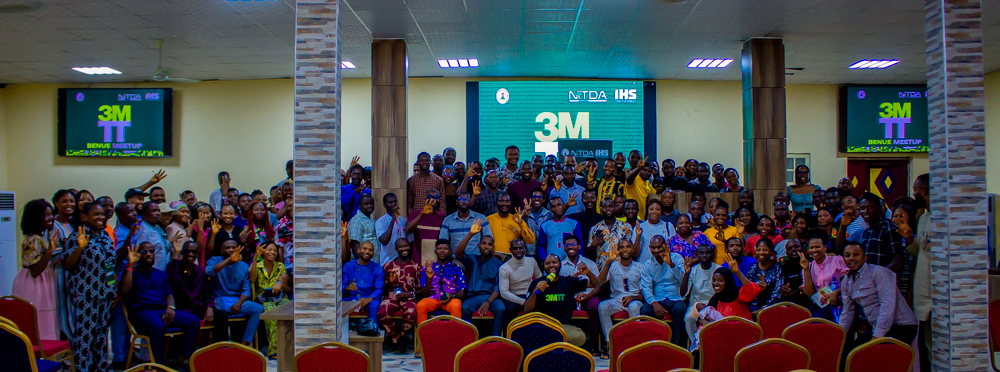
In Benue State, the programme is helping to expand the local technology ecosystem while connecting young people with opportunities in employment, internships, entrepreneurship and innovation. What began within a relatively small technology community has, according to Tuleun Kelvin, the 3MTT State Programme Manager for Benue, grown into a community of more than 6,000 members.

The stories emerging from the community illustrate the programme’s potential impact. Fellows who started with little or no technical background have gone on to secure internships and full-time employment, participate in hackathons, build start-ups and take on technology roles with local and international organisations.
Among them are fellows such as Victor Tseyina, who secured an internship with fintech company Gandaria and later won a state hackathon; Lucy Iorliam, who moved from the programme into internship and employment opportunities; and Mary Apenumbe, whose internship as a front-end software developer progressed into a full-time role.

For Kelvin, however, the transformation goes beyond learning how to code or acquiring technical certifications. He believes the programme is helping young people develop the problem-solving abilities, confidence, networks and practical experience needed to create value in an increasingly digital economy.
In this feature interview, Kelvin speaks about the growth of the 3MTT community in Benue, the success stories emerging from the initiative, the challenges of keeping young people engaged, the role of artificial intelligence in the future of work, and why consistency—not necessarily prior technical knowledge—can determine whether a learner succeeds.
1. Tell us about your journey into technology and community leadership. What inspired you to become the State Programme Manager for the 3MTT programme in Benue State?
My journey into the technology space was born out of frustration. I had just started finding my footing after a failed agricultural start-up that I co-founded with some friends at the time. Within the start-up team, I led projects which involved constantly managing people.
It was during that period of despondency that I started considering product management. I spoke to a few friends who were already in the space, and they advised me to pursue product or project management because they were closely related and came naturally to me.
I started with a few YouTube videos that gave me a preliminary background, followed by a few boot camps, and the rest, as they say, is history.
2. How has the 3MTT programme evolved in Benue since its inception? Could you share the number of fellows in the state, the communities reached, and some of the milestones achieved so far?
Before 3MTT, we had just the Google Developers Group (GDG), which was a small tech community of fewer than 100 people.
When 3MTT came, I was able to further grow the tech ecosystem in the state to more than 6,000 members.

3. One of the goals of 3MTT is to equip Nigerians with globally competitive digital skills. Can you share some outstanding success stories from Benue fellows who have secured jobs, launched start-ups, built innovative solutions or made significant career progress through the programme?
Imagine someone who never knew anything about technology—someone with zero background knowledge—who simply decided to take that leap of faith into our programme, went ahead to not only finish strong but also secured a job, landed an internship or built a start-up.
That is the story of Victor Tseyina, who went on to secure an internship with a fintech company called Gandaria. He later won a state hackathon challenge worth more than ₦3 million.
Lucy Iorliam, upon graduation, also landed an internship at Gandaria. She now works for both Jobberman and another company in the United States.
Mary Apenumbe also secured an internship role as a front-end software developer, which has now been converted into a full-time position.
Agwu and Gege are in the testing phase of their telemedicine start-up.
Luper Aondohemba now works as a full-stack software engineer at Efiko Management Consulting, a company based in Abuja.
George and, I think, four other people now work with Learn2Earn. There are several others enrolled in the programme.
The milestones are many.
4. Beyond technical training, how has 3MTT contributed to building a vibrant technology community and innovation ecosystem in Benue State?
Those names I mentioned are just a few people I know personally. There are several others who are building amazing projects, while some have secured promotions at their workplaces because of their new and innovative ways of doing things.
Overall, the ecosystem is becoming more vibrant.

5. Every transformative initiative faces challenges. What have been the biggest obstacles in implementing the programme in Benue, and how has your team addressed them?
For me, there have been a lot of challenges. But some of the most difficult have been getting people to first develop an interest in the programme and then remain consistent until they complete it.
My approach to solving this has been to share real stories of people whose lives have been transformed as a result of learning a new skill. I also constantly remind them of what else is possible.
Then, most importantly, I assign them accountability partners through our peer-learning model. This gets people more involved in the programme and helps keep them engaged until completion.
Sadly, the fact that what you are offering someone might be life-changing does not necessarily translate into getting their buy-in or commitment.

6. The digital economy is creating new opportunities for young Nigerians. In your view, what skills are currently in the highest demand, and how is 3MTT preparing Benue youths to compete in both local and global markets?
My response might be unpopular, but, well…
The one skill that is and will always be in demand is problem-solving—the ability to solve problems and add value within organisations.
But if I am to answer within the context of your question, I would say the ability to use AI to enhance work in areas such as software development, product marketing and cybersecurity is increasingly important.
7. Looking ahead, what are your priorities for the 3MTT community in Benue? Are there new partnerships, projects or initiatives that participants and stakeholders should anticipate?
In terms of priorities, my major focus is getting more people into the programme—from undergraduates to recent graduates and even people who have just finished secondary school.
New partnerships are always coming up every week. I would not say much for now, but trust me, there are a lot of opportunities in the pipeline for fellows and learners to take advantage of.
We currently have other amazing partnerships, such as the Learn2Earn programme, which is similar to ours but more advanced and intensive.
There is also the Credi-Corp partnership, through which fellows can access device loans to ease their learning and increase their access to more opportunities.
More are actually coming.
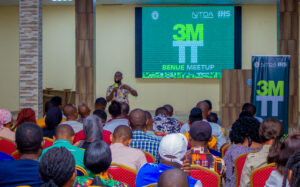
8. Finally, what message would you like to share with young Nigerians who are considering joining the 3MTT programme, and what role do you believe digital skills will play in shaping Nigeria’s future economy?
To every young Nigerian still on the fence, I would say this: you do not need to have it all figured out before you start. I did not.


I came into technology from a failed start-up and a lot of uncertainty, and the one thing that changed everything was simply deciding to take that leap of faith. That is really all the programme asks of you at the start. Everything else—the skill, the confidence and the community—comes afterwards.
What I would also add is that consistency matters more than talent here. I have watched people with zero technical background outwork people who came in “naturally gifted”, simply because they showed up every week and leaned on their accountability partners when motivation ran low.
So, if you are worried that you are starting from nothing, that is not a disqualifier. That is simply where most of our success stories started too.
As for the bigger picture, I genuinely believe digital skills are going to be one of the defining factors in Nigeria’s economic future.
We are not just training people to get jobs; we are building a generation that can create jobs, solve local problems with global tools and compete anywhere in the world without needing to leave home to do it.
Every fellow who lands an internship, launches a start-up or gets promoted because they learned to use AI to work smarter represents the economy Benue—and Nigeria—is quietly building right now.
I want more young people to see themselves in that story and to know that there is a seat at the table for them too.














 EduTimes Africa, a product of Education Times Africa, is a magazine publication that aims to lend its support to close the yawning gap in Africa's educational development.