
























































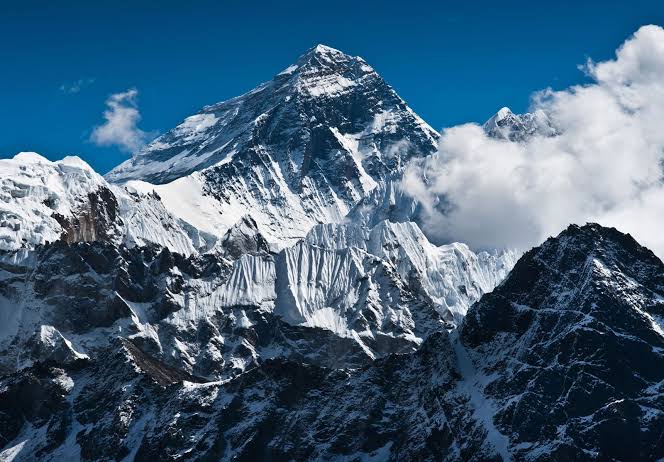


Mount Everest is one of the world’s most famous natural landmarks and a symbol of human endurance and exploration. As the tallest mountain on Earth, it attracts climbers, scientists, and tourists from across the globe. Beyond its breathtaking height, Mount Everest is rich in geographical, historical, and scientific significance. Here are 15 fascinating facts about this remarkable mountain.



1. Mount Everest is the highest mountain on Earth, standing at 8,848.86 metres (29,031.7 feet) above sea level.

2. It is located in the Himalayas, on the border between Nepal and China’s Tibet Autonomous Region.
3. The Nepali name for Mount Everest is “Sagarmatha,” meaning Forehead of the Sky.


4. In Tibet, it is called “Chomolungma,” which means Goddess Mother of the World.
5. The mountain was named “Everest” in 1865 after Sir George Everest, a British surveyor-general of India.
6. Mount Everest is still growing, rising by a few millimetres each year because of the movement of the Indian and Eurasian tectonic plates.
7. The first successful ascent was achieved on 29 May 1953 by Sir Edmund Hillary of New Zealand and Tenzing Norgay, a Sherpa from Nepal.
8. The summit has very little oxygen, with only about one-third of the oxygen available at sea level.
9. Winter temperatures at the summit can drop below -60°C (-76°F), making it one of the harshest environments on Earth.
10. More than 7,000 people have successfully reached the summit, with some climbers completing multiple ascents.

11. Climbing Mount Everest is extremely dangerous because of avalanches, harsh weather, altitude sickness, and the “death zone” above 8,000 metres.
12. Sherpas are essential to Everest expeditions, serving as experienced guides, porters, and mountaineering experts.
13. Mount Everest lies within Sagarmatha National Park, a UNESCO World Heritage Site known for its unique biodiversity and stunning landscapes.
14. The best climbing seasons are generally April to May and September to October, when weather conditions are more stable.
15. Scientists use Mount Everest for research, studying climate change, glaciers, geology, and how the human body adapts to extreme altitudes.
Mount Everest is much more than the world’s highest mountain. It is a place of scientific discovery, cultural importance, and extraordinary human achievement. Learning about Mount Everest helps us appreciate the power of nature, the importance of environmental conservation, and the determination required to overcome great challenges.














 EduTimes Africa, a product of Education Times Africa, is a magazine publication that aims to lend its support to close the yawning gap in Africa's educational development.