

























The Federal Government has approved a major overhaul of agricultural education in tertiary institutions, introducing a new curriculum that places 80 per cent emphasis on practical training in a bid to equip young Nigerians with employable skills and drive economic growth.



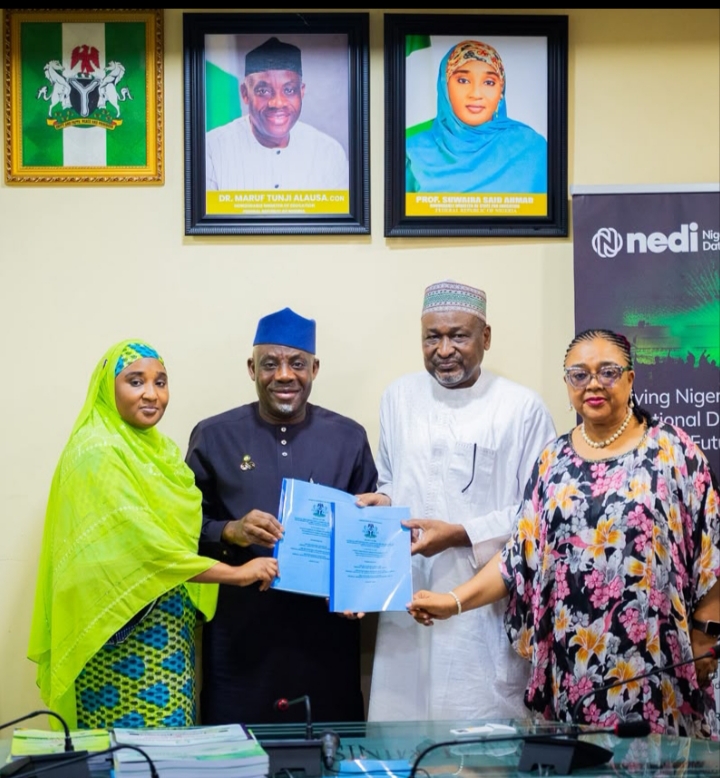
The Minister of Education, Dr Maruf Tunji Alausa, disclosed this on Thursday while receiving the report of the National Implementation Committee on the Review and Development of Agricultural Curricula for Tertiary Institutions in Nigeria.

Alausa said the reform aligns with President Bola Ahmed Tinubu’s Renewed Hope Agenda and reflects the administration’s commitment to positioning agriculture as a skills-based sector capable of creating jobs, improving food security and supporting national development.

He explained that the revised curriculum marks a significant shift from the previous structure, which allocated 70 per cent to theoretical learning and 30 per cent to practical training. Under the new framework, students will receive 80 per cent practical instruction and 20 per cent theoretical learning.


According to the minister, the hands-on approach is expected to produce graduates with the technical competence required to contribute meaningfully to the agricultural sector.
He noted that beyond curriculum reform, the government would develop national occupational standards to strengthen skills acquisition and ensure that graduates are equipped for modern agricultural practices.
Alausa also called for extensive sensitisation of academics, industry stakeholders and educational institutions to ensure a smooth implementation of the new curriculum. He stressed the need for teacher training and adequate institutional support to achieve the desired outcomes.
Speaking at the event, the Minister of State for Education, Prof. Suwaiba Sa’id Ahmad, described the curriculum review as a product of collaboration among the National Board for Technical Education, the Skills Council, industry experts and academics.
She expressed confidence that the new curriculum would strengthen agricultural education and urged stakeholders to embrace the reforms, particularly the increased focus on practical learning.
Presenting the committee’s report, the Executive Secretary of the National Board for Technical Education, Prof. Idris Muhammad Bugaje, revealed that the exercise produced 36 new and reviewed National Diploma and Higher National Diploma curricula, three Nigeria Certificate in Education curricula and 31 National Occupational Standards.
He explained that 27 of the occupational standards were developed from scratch, while four existing standards were updated to reflect current industry needs.
Bugaje added that the curricula had been approved by the relevant regulatory bodies and would be formally unveiled at a later public event.
The Minister reaffirmed the Federal Ministry of Education’s commitment to working with the NBTE, tertiary institutions and industry partners to ensure the successful implementation of the revised curriculum.
He said the ultimate goal is to equip Nigerian youths with practical agricultural skills, strengthen the nation’s agricultural workforce and unlock opportunities that will support economic growth and food security.











 EduTimes Africa, a product of Education Times Africa, is a magazine publication that aims to lend its support to close the yawning gap in Africa's educational development.