






















The 2027 general elections, political activity is already gathering momentum, with parties repositioning themselves, politicians forming alliances, defections dominating headlines and candidates preparing for what promises to be another fiercely contested election. Yet, beyond the rallies, campaign promises and struggle for political power lies a question that could determine Nigeria’s future for decades: what will a change of government mean for education?
The presidential and National Assembly elections are scheduled for January 16, 2027, while the governorship and State House of Assembly elections will hold on February 6, following the revised timetable of the Independent National Electoral Commission (INEC) after the enactment of the Electoral Act 2026. For the education sector, however, the election represents far more than a change of political leadership. It could determine whether Nigeria finally develops a stable and effective education system capable of educating, training and preparing its rapidly growing young population for productive lives, or whether the country continues to move from one education crisis to another.

Nigeria cannot afford another four-year cycle of abandoned policies, unfinished projects and new promises. Education requires long-term planning, sustained investment and continuity across administrations. A government may change, but the children entering school, the students in universities and technical institutions, the teachers standing before classrooms and the young people preparing to enter the labour market will remain. Their needs cannot be reset every four years simply because political leadership has changed.
A Crisis That Can No Longer Be Ignored

Nigeria’s education crisis is no longer a problem that can be concealed behind official speeches, budget announcements or impressive enrolment figures. The scale of the challenge is visible in the millions of children who remain outside the classroom and in the millions more who attend school without acquiring the foundational skills they need.
UNICEF’s 2025 data put the number of primary and junior-secondary-age children out of school at about 10.2 million, with about 45 per cent of the out-of-school population concentrated in the North-West and another 28 per cent in the North-East. These figures reveal a crisis that has both national and regional dimensions and which cannot be addressed through isolated interventions.
The problem becomes even more serious when children who are physically present in classrooms but are not learning are considered. World Bank estimates indicate that more than 75 per cent of Nigerian children may be unable to read and understand a simple text by the age of 10. Primary schools also have an average pupil-teacher ratio of about 49 to one, while shortages of qualified teachers make the situation even more difficult in many communities.
This means Nigeria’s education problem is not simply that millions of children are outside school. Millions more are inside classrooms without acquiring the knowledge and skills expected from years of schooling. The 2027 election should therefore force political parties and candidates to confront both sides of the crisis: access to education and the quality of learning.
The country needs to stop treating school enrolment as the final measure of educational progress. A child being registered in a school does not necessarily mean that the child is receiving quality education. The real question should be whether that child can read, write, calculate, reason, communicate and apply knowledge to everyday problems.
The Next Government Must Preserve What Works
One of Nigeria’s biggest development challenges is policy discontinuity. Successive administrations often introduce new programmes, change the names of existing initiatives or abandon policies inherited from previous governments. This approach creates unnecessary duplication, wastes public resources and prevents successful programmes from reaching maturity.
Education cannot survive this political culture.
Long-term educational reforms require years, sometimes decades, before their full impact can be measured. Teacher development, curriculum reform, infrastructure development, early childhood education, technical training, research and digital learning cannot be transformed within a single political term. They require consistent funding, monitoring and institutional commitment.
The Nigerian Education Loan Fund, NELFUND, provides a useful example of a policy that should be evaluated on its performance rather than its political ownership. NELFUND has expanded access to tertiary education through student loans, with its latest published figures showing more than 1.69 million loan applications, about 1.39 million registered students and 354 collaborating institutions.
The question ahead of the 2027 election should therefore not simply be whether the next government supports NELFUND. It should be whether the scheme is genuinely expanding access to tertiary education, whether students are receiving the support they need, whether the repayment structure is sustainable and whether identified weaknesses can be corrected.
The same principle should apply to technical and vocational education, digital-learning programmes, teacher-development initiatives, research funding and other education reforms. If a programme is delivering results, a change in government should not automatically become a reason to terminate it.
Good education policies should outlive individual politicians.
The ₦3.52 Trillion Question
The Federal Government’s 2026 budget allocated ₦3.52 trillion to education, placing the sector among its major priorities. The Federal Ministry of Education also defended a ₦2.4 trillion budget proposal before the National Assembly, with emphasis on teachers, infrastructure, skills development and the completion of ongoing projects.
The size of these allocations matters, but the more important issue is what Nigerians receive in return.
For decades, governments have announced large education budgets, launched new initiatives and commissioned projects. Yet many schools continue to struggle with inadequate classrooms, insufficient learning materials, poor infrastructure, teacher shortages and weak learning outcomes. The challenge is therefore not only how much government allocates to education but how effectively the money is converted into measurable improvements.
The 2027 election should force political candidates to move beyond announcing impressive figures. Nigerians should demand clear answers about how many classrooms will be constructed, how many teachers will be recruited and trained, how many schools will receive laboratories and learning materials, how many children will be returned to school, how learning outcomes will be measured and how much will actually be spent per child.
Candidates should also explain what proportion of education spending will reach basic education, how projects will be monitored and what sanctions will apply when funds are released but projects are not delivered.
A budget allocation is not an achievement. The achievement is the classroom built, the teacher trained, the child brought back to school and the student who acquires the skills necessary to improve his or her life.
The Next Administration Must Tackle the Learning Crisis
Nigeria has spent decades measuring educational progress largely through enrolment figures, certificates and examination results. That approach is no longer sufficient.
A child who spends six years in primary school but cannot read and understand a simple passage has not received quality education. A secondary school graduate who cannot communicate effectively or apply basic mathematical reasoning is not adequately prepared for the next stage of life. A university graduate who leaves higher education without practical, digital, communication and problem-solving skills may also struggle to compete in an increasingly demanding labour market.
The 2027 education agenda must therefore move decisively from access to learning.
The next administration should establish measurable national targets for literacy, numeracy, science, digital competence and problem-solving. These targets should be tracked regularly and publicly so that citizens can determine whether government policies are producing results.
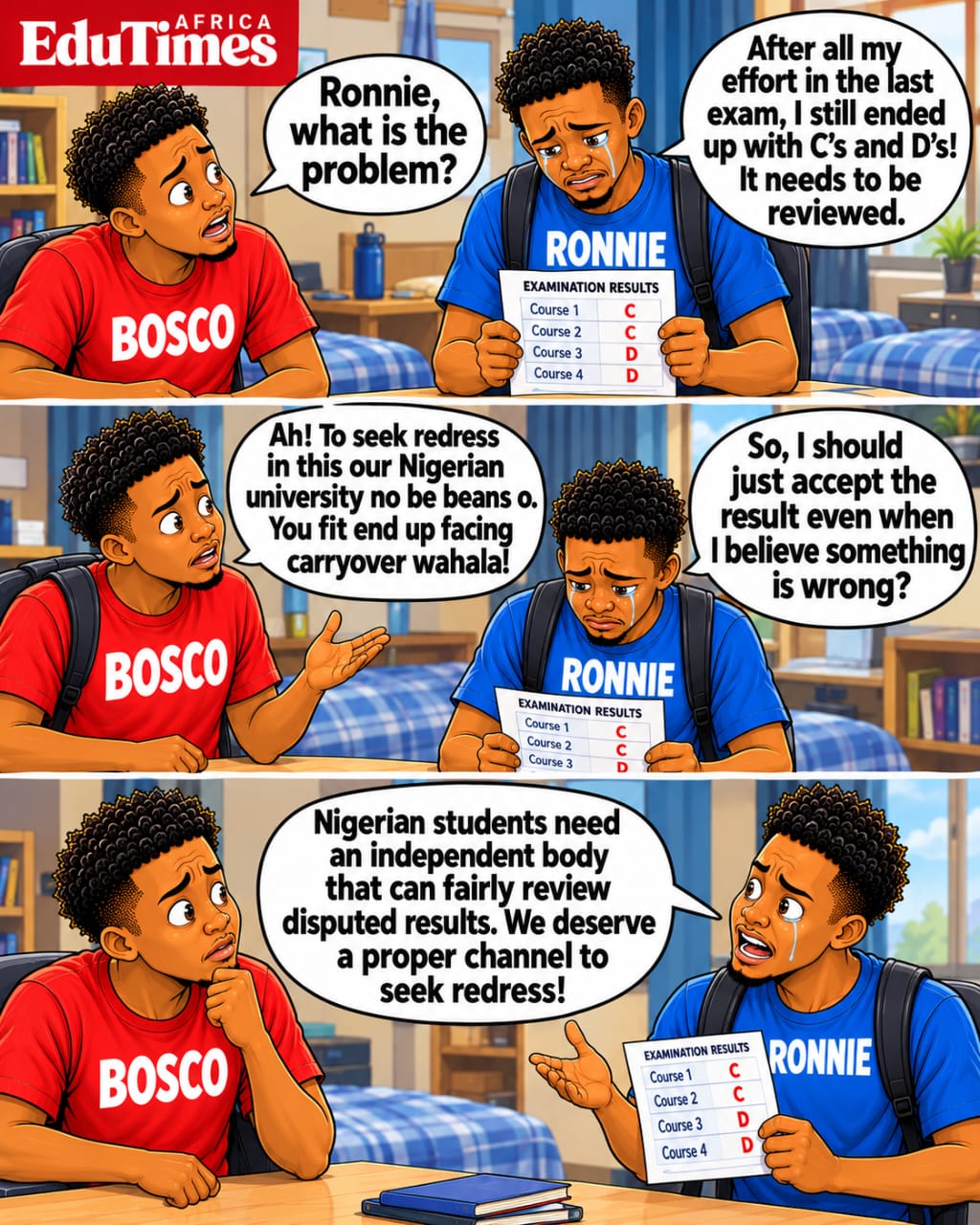
Teacher quality must also become a central priority. Recruiting more teachers without ensuring that they are properly trained and supported will not solve the learning crisis. Nigeria needs continuous professional development, effective classroom supervision, better teaching resources and incentives that help attract and retain competent teachers, particularly in underserved communities.

The objective should be straightforward: get children into school, make sure they learn, give them relevant skills and connect those skills to opportunities.
TVET Must No Longer Be the Poor Cousin of University Education
For years, Nigeria has treated university education as the preferred route to success, while technical and vocational education has often been presented as an option for students who could not gain admission to university. That perception has contributed to the country’s shortage of skilled workers and has created an unhealthy imbalance within the education system.
Nigeria needs technicians, electricians, welders, builders, mechanics, agricultural specialists, software developers, health technicians, renewable-energy installers and thousands of other skilled professionals. These occupations are essential to economic development and cannot be treated as second-class career paths.
The 2027 government should therefore place technical and vocational education at the centre of its economic strategy. This requires modern workshops, qualified instructors, strong industry partnerships, apprenticeships, credible certification and clear pathways from vocational training to employment and entrepreneurship.
The country does not simply need more graduates who possess certificates. It needs graduates and skilled workers who can solve problems, create value and contribute meaningfully to the economy.
The Out-of-School Crisis Requires More Than Building Schools
Nigeria’s out-of-school crisis is deeply connected to poverty, insecurity, displacement, gender inequality and social exclusion. These problems cannot be solved through the construction of classrooms alone.
UNICEF reported in 2026 that more than 10 million children remain out of school, while conflict and displacement continue to disrupt education in parts of northern Nigeria. In the North-East, North-West and North-Central regions, about 8.4 million people, including roughly five million children, were estimated to require humanitarian assistance in 2026.
The next administration must therefore recognise that education policy is closely linked to security, social protection and economic policy.
Where insecurity is driving children away from school, government must make schools safer and protect pupils and teachers. Where poverty prevents children from attending school, education interventions must be connected to social protection measures that address the economic pressures facing families. Where girls are excluded from education, government must address the economic, cultural and social barriers responsible. Where displacement has destroyed access to education, emergency education must become an integral part of national education planning.
The country cannot expect children who are struggling to survive to prioritise schooling without addressing the conditions that keep them away from the classroom.
Nigeria Cannot Ignore the Digital Divide
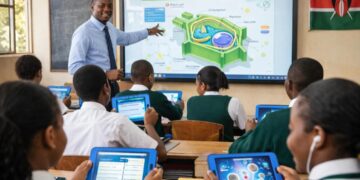
The education system is entering an era in which artificial intelligence, digital learning platforms, online resources and technology-enabled teaching are rapidly changing how knowledge is acquired. However, Nigeria risks creating another layer of inequality if access to these technologies remains limited to students in relatively privileged schools and communities.
UNICEF reports that only about 36 per cent of Nigerians use the internet, while only 47 per cent of teachers have basic ICT skills. The gap is even more evident within schools.
World Bank analysis found that public primary schools in rural areas had roughly 519 pupils per computer, compared with 188 pupils per computer in urban public primary schools.
This creates two very different educational realities. While some Nigerian students are already experimenting with artificial intelligence, online learning and sophisticated educational platforms, others attend schools where electricity, computers and internet access remain luxuries.
The 2027 government must therefore treat electricity, connectivity and digital devices as part of modern educational infrastructure. Digital education cannot succeed simply by distributing computers or announcing artificial intelligence initiatives. Teachers must be trained, schools must have reliable electricity and internet access must become affordable and available across rural and urban communities.
The States Are Just as Important as Abuja
Nigeria’s education challenges cannot be solved from Abuja alone.
Basic education depends significantly on state and local structures, while universities, polytechnics and colleges operate within different government and institutional arrangements. Consequently, the 2027 governorship elections will be just as important to education outcomes in many communities as the presidential election.
Governorship candidates should be required to explain their plans for UBEC interventions, teacher recruitment, school infrastructure, learning outcomes, technical education and education data. They should explain how they intend to improve schools in rural communities and how they will measure whether their education policies are working.
A governor who builds major infrastructure while schools remain without adequate teachers should face questions. A president who announces billions for education without demanding measurable outcomes should also face questions. Legislators who influence education budgets must equally be prepared to explain how public money is being allocated and monitored.
The 2026 budget allocated ₦22.82 billion to the National Commission for Almajiri and Out-of-School Children’s Education, covering capital and recurrent expenditure, amid controversy over some projects assigned to the commission. Such developments reinforce the need for greater transparency and public scrutiny of education financing.
Education spending must be traceable from appropriation to implementation. Citizens should be able to determine what was budgeted, what was released, what was spent and what was ultimately delivered.
What Should Nigerians Demand From Candidates?
Education should become a campaign scorecard in 2027.
Before voting, Nigerians should demand measurable answers from presidential and gubernatorial candidates on funding, learning outcomes, teachers, out-of-school children, skills development, digital education and accountability.
Candidates should explain what proportion of public expenditure they intend to devote to education and how they will protect those resources from waste. They should set clear targets for literacy and numeracy and explain how progress will be measured. They should state how many teachers they intend to recruit, train and retain and how they will address teacher shortages in underserved areas.
They should also provide specific targets for bringing children back to school and explain how their administrations will expand technical and vocational education, apprenticeships and industry-linked training.
On digital education, candidates should explain how schools will gain reliable electricity, internet access, devices and digitally competent teachers. Most importantly, they should explain what happens when an education promise is not delivered.
These questions should feature prominently in presidential and gubernatorial debates. They should be raised at education-sector town halls and asked consistently by journalists. Parents, teachers, students, education researchers and civil society organisations should also insist on clear and measurable commitments.
The Real Meaning of Nigeria’s Political Transition
Ultimately, Nigeria’s 2027 political transition should not be judged simply by the person who takes over at the Presidential Villa or the governors who emerge across the states.
It should be judged by whether the country can move from policy announcements to policy continuity, from enrolment to learning, from certificates to competence and from education spending to measurable educational outcomes.
UNICEF’s 2025 data show that nearly half of Nigeria’s population is under 18, representing about 98 million children and adolescents.
That is not merely a demographic statistic. It represents Nigeria’s future workforce and its future pool of scientists, teachers, engineers, entrepreneurs, farmers, doctors, artisans, civil servants and political leaders.
If Nigeria educates this population effectively, its youthful population can become one of the country’s greatest economic advantages. If it fails, the consequences will extend far beyond the classroom and could affect employment, security, productivity, public health and national development for decades.
The 2027 election is therefore not simply about who will govern Nigeria next. It is about whether the next government will have the political will to build an education system that can prepare the next generation for the realities of the future.
When the campaign posters eventually come down, the classrooms will still be there. The teachers will still be there. The children will still be there.
The question is whether the politicians will still remember the promises they made to them.










 EduTimes Africa, a product of Education Times Africa, is a magazine publication that aims to lend its support to close the yawning gap in Africa's educational development.