























































The Federal Government has said stronger cooperation between Nigeria and China could help improve electricity supply, expand renewable energy development and increase local production of power equipment.



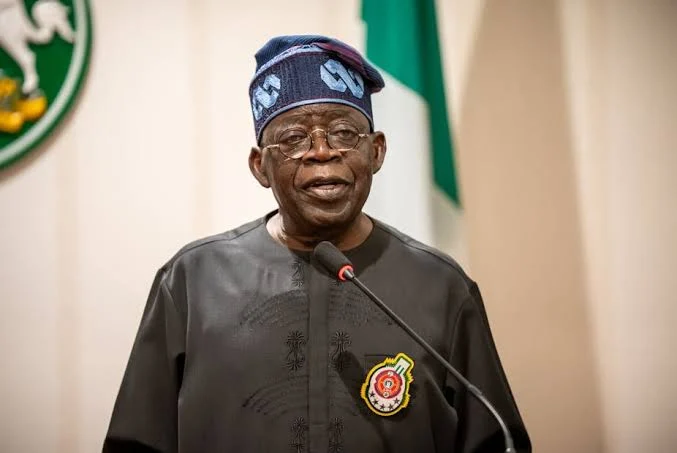
Minister of Power, Joseph Tegbe, stated this on Wednesday night in Abuja during a reception to mark the 77th anniversary of the founding of the People’s Republic of China.

Tegbe said increased Chinese investment in Nigeria’s power sector would have greater impact if it also focused on building local technical capacity and strengthening Nigerian businesses.
“As Minister of Power, I see particular promise in deeper cooperation on achieving reliable electricity, renewable energy, and manufacture of power equipment in Nigeria with our cooperation with China,” he said.

He added that the benefits of such investments would be greater if they helped develop Nigerian engineers and technicians and enabled local enterprises to acquire the skills required to operate and maintain infrastructure built in the country.
The minister said Nigeria and China had expanded their relationship from diplomatic ties into a broader partnership covering infrastructure, healthcare, technical exchanges, trade and investment. The two countries established diplomatic relations on February 10, 1971, while their relationship was upgraded to a comprehensive strategic partnership by President Bola Tinubu and Chinese President Xi Jinping in September 2024.
Tegbe also acknowledged China’s contribution to major Nigerian projects through investment, financing and engineering, citing the Lekki Deep Seaport, railway modernisation projects and the Zungeru Hydropower Station.
He described China’s progress in manufacturing, science, high-speed rail and clean energy as significant, while highlighting China’s zero-tariff programme as an opportunity for Nigerian producers to expand exports.
According to the minister, bilateral trade between Nigeria and China stood at $28bn at the end of 2025, while trade reached $17bn in the first half of 2026.

He, however, said Nigeria must now focus on converting increased market access into higher domestic production and stronger exports to China.

“Our shared task is to translate that access into stronger Nigerian production and Nigerian exports to China, with benefits that will endure both economies,” Tegbe said.
The Chinese Ambassador to Nigeria, Yu Dunhai, said relations between both countries had entered what he described as “the fast lane” under the leadership of President Xi Jinping and President Tinubu.
Dunhai said recent agreements on economic partnership and aquatic exports would provide additional institutional support for expanding trade between both countries.
He said bilateral trade reached $18bn in the first half of 2026, representing a 35 per cent increase, while Chinese imports from Nigeria rose by 81 per cent.
The ambassador said China was prepared to align its 15th Five-Year Plan with the Federal Government’s Renewed Hope Agenda, particularly in industrialisation, digital development and the green and blue economies.
He also invited Nigeria to join the World Artificial Intelligence Cooperation Organisation, saying participation would allow the country to contribute to global technology development.
Dunhai said China’s zero-tariff treatment for 53 African countries, which began on May 1, had helped drive a 24 per cent increase in China’s imports from Africa in May and June.
He added that Chinese innovations in artificial intelligence, digital payments and solar energy were contributing to efforts to address development challenges across Africa.
Nigeria and China are marking 55 years of diplomatic relations, with the ambassador calling for continued cooperation based on mutual respect, shared development and practical benefits.









 EduTimes Africa, a product of Education Times Africa, is a magazine publication that aims to lend its support to close the yawning gap in Africa's educational development.