

























Imagine a school lesson in which children are encouraged to talk about their relationships, listen to one another, resolve disagreements and learn how to live together.
There are no conventional tests to prepare for during that session. Instead, the focus is on classroom relationships, cooperation, social development and the well-being of every child.
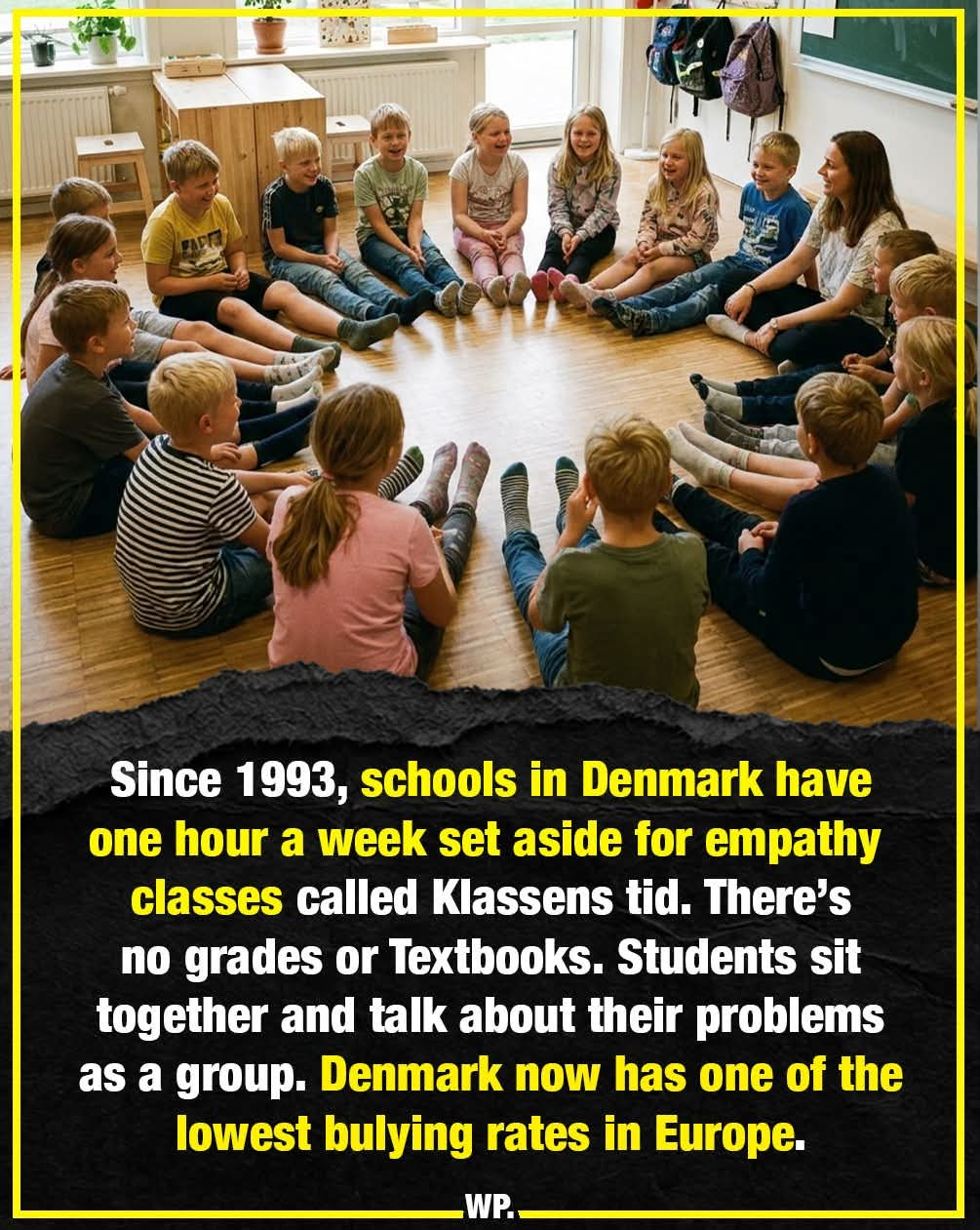
This is the idea behind “Klassens tid”, a Danish school practice commonly translated as “Class Hour” or “Class Time”.
The practice offers an important lesson for education systems around the world: schools have a responsibility not only to teach children academic subjects but also to help them develop the social skills needed to live and work with others.
What is Klassens tid?
Klassens tid is time set aside for activities that strengthen relationships within a class and support pupils’ social development.
According to Denmark’s Ministry of Children and Education, the practice can be used to support students’ well-being, classroom relationships, cooperation and sense of belonging within the school community.
The time may be used for class discussions, student participation, resolving disagreements, reflecting on relationships and other activities that help pupils develop socially.
Danish education guidance describes Class Time as part of the broader resources schools can use to support learning and pupils’ development. The traditional practice has involved approximately one lesson a week, although how the time is organised can vary between schools.
Importantly, Klassens tid is not a separate graded subject called empathy. Rather, it provides an opportunity for schools to address aspects of education that may not receive sufficient attention when the focus is solely on academic performance.
Why does social development matter in schools?

Children spend a significant part of their lives interacting with classmates and teachers. These interactions can influence their confidence, participation, friendships and experience of school.
A child who feels excluded, bullied or unable to express concerns may find it difficult to participate fully in classroom activities.

Similarly, disagreements between classmates can affect the learning environment when pupils have no constructive way to address them.
Providing structured opportunities for discussion can help teachers identify problems, encourage respectful communication and give pupils a chance to understand different perspectives.
It does not mean that every disagreement will disappear. Rather, children can learn that conflicts can be addressed through listening, dialogue and appropriate support.
Teaching children to listen and cooperate
One important lesson from Klassens tid is that cooperation can be developed through practice.
During a class discussion, pupils may be encouraged to explain how they feel about a situation, listen without interrupting and consider how their actions affect others.
For example, if a group of pupils repeatedly excludes a classmate from activities, a teacher can guide a discussion about inclusion, fairness and the consequences of such behaviour.
The aim is not to embarrass individual pupils but to help the class understand the problem and identify constructive ways to improve its relationships.
Teachers can also use group activities to help pupils practise sharing responsibilities, making collective decisions and respecting differences.
These experiences can contribute to a classroom environment in which children feel more comfortable participating and seeking help when they need it.
The role of teachers
The success of a Class Hour depends partly on how it is facilitated.
Teachers need to create an environment in which pupils can express themselves without fear of ridicule or humiliation. They must also ensure that discussions remain respectful and that concerns about bullying, exclusion or other serious problems receive appropriate attention.
A teacher may begin by asking pupils what helps them feel welcome in class, what makes group work difficult or how they would like disagreements to be handled.
Such questions can help pupils reflect on their behaviour and recognise that they share responsibility for the classroom environment.
However, a discussion alone cannot replace formal safeguarding procedures, counselling or disciplinary action where these are necessary.

Class Hour is best understood as one tool that teachers can use alongside other measures to support pupils’ well-being.
Is Denmark teaching empathy instead of academics?
No. The purpose is not to replace academic instruction with conversations about feelings.
Danish schools continue to teach academic subjects, and Klassens tid is intended to complement the wider educational experience.
Academic knowledge remains important, but children also need opportunities to develop communication, cooperation and social awareness.
A pupil may perform well in mathematics or science while still needing guidance on managing disagreements, respecting others or working effectively in a team.
Education that recognises both academic and social development can help schools respond to these different needs.
Nevertheless, the existence of Class Hour does not automatically guarantee that every pupil will feel included or that every school will achieve the same outcomes. Its effectiveness depends on implementation, teacher support and the wider school culture.
What can Nigerian schools learn from the practice?
Nigerian schools could explore similar approaches to strengthening classroom relationships without necessarily copying Denmark’s model in full.
A school could introduce a regular class meeting during which pupils discuss cooperation, bullying, shared responsibilities, peer relationships and concerns about their learning environment.
Class teachers could guide pupils through age-appropriate conversations and activities that encourage respect, accountability and problem-solving.
For younger pupils, this might involve stories, role-play and simple discussions about kindness and sharing. Older pupils could discuss peer pressure, online behaviour, conflict resolution, leadership and the responsibilities of belonging to a school community.
Schools could also involve pupils in developing classroom agreements, provided that teachers maintain clear boundaries and protect the rights and safety of every child.
Such activities need not require expensive facilities. They require planning, consistency and teachers who understand how to guide constructive discussions.
School leaders should also assess whether the activities are helping pupils feel safer, participate more confidently and resolve everyday disagreements more effectively.
Beyond examination results
The Danish Class Hour practice raises a broader question about the purpose of education.
Schools are expected to help children acquire knowledge and qualifications, but they also prepare them to interact with people whose experiences, opinions and needs may differ from their own.
Learning to listen, cooperate, take responsibility and resolve disagreements can benefit pupils in school, at home, at work and in their wider communities.
These skills do not develop simply because children sit in the same classroom. They require guidance, opportunities to practise and adults who model respectful behaviour.
Klassens tid provides one example of how schools can make room for that development within the school day.
Ultimately, education is about more than preparing children to pass examinations. It is also about helping them become thoughtful, responsible and capable members of society.
Denmark’s Class Hour offers a useful reminder that teaching children how to live with one another is a meaningful part of that responsibility.












 EduTimes Africa, a product of Education Times Africa, is a magazine publication that aims to lend its support to close the yawning gap in Africa's educational development.
