



















In Nigeria today, earning a professorship almost always requires obtaining a Doctor of Philosophy (PhD) and building an impressive record of teaching, research, and scholarly publications. The PhD is considered the highest academic qualification and is a standard requirement for promotion to the rank of professor in Nigerian universities.



However, this was not always the case. In the early years of Nigeria’s university system, a few exceptional individuals were appointed professors without holding PhDs. Their appointments were based on extraordinary achievements, outstanding scholarship, creative works, and international recognition in their respective fields. Their contributions were considered equivalent to, or even greater than, what a traditional doctoral qualification would demonstrate.

Here are four notable examples:
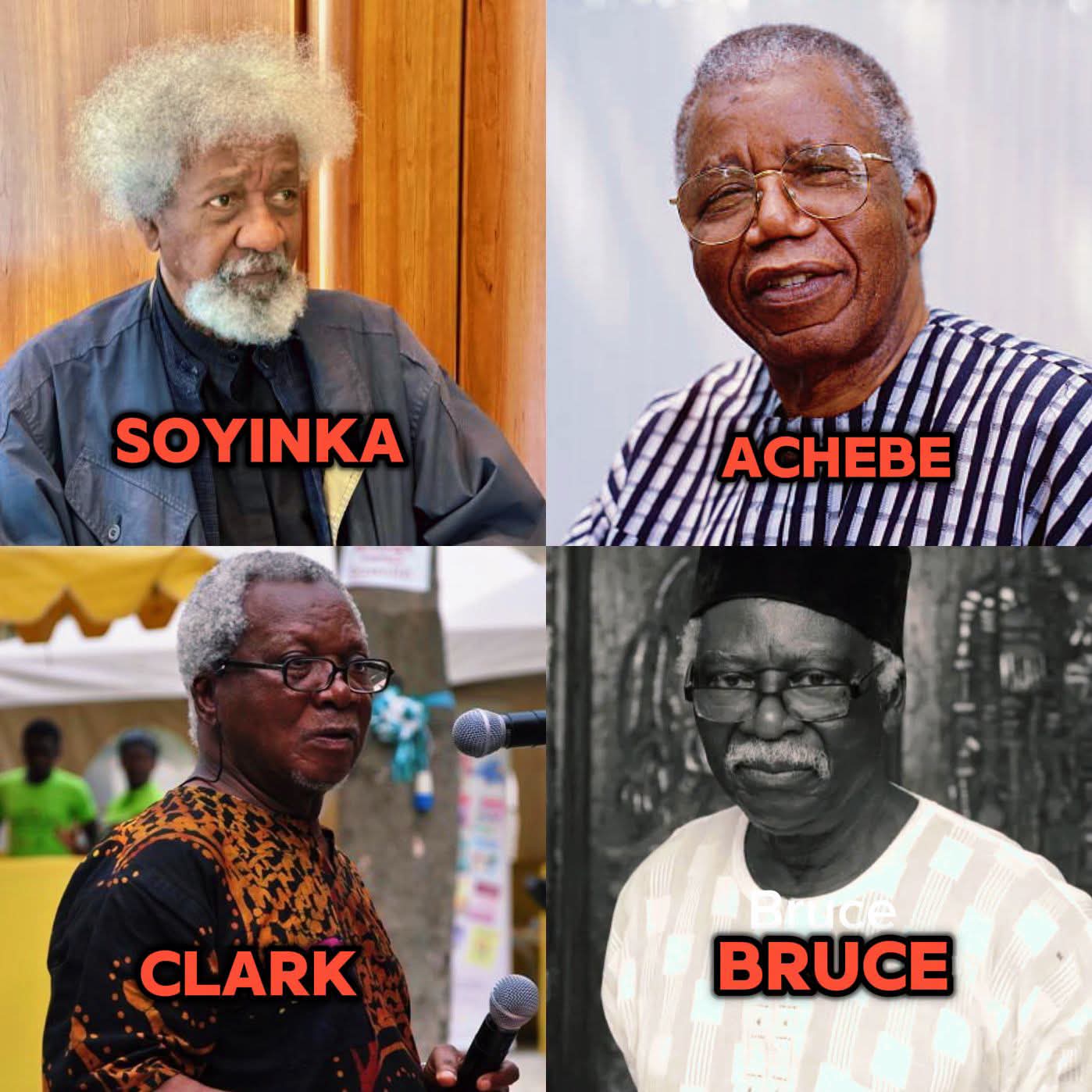
1. Wole Soyinka

Nobel Laureate Wole Soyinka does not hold a PhD.
He began his university education at the University College Ibadan (now the University of Ibadan) before completing a Bachelor of Arts (BA) in English at the University of Leeds in 1958.
Although he never pursued a doctoral degree, Soyinka established himself as one of the world’s greatest playwrights, poets, essayists, and public intellectuals. His exceptional body of literary work earned him numerous honorary doctorates from universities across the globe.
In 1986, he made history as the first African to receive the Nobel Prize in Literature, cementing his place among the world’s most influential writers.
2. Chinua Achebe
Chinua Achebe also never earned a PhD.
He studied at the University College Ibadan, where he obtained a bachelor’s degree. Through groundbreaking works such as Things Fall Apart, Achebe transformed African literature and became one of the continent’s most celebrated authors.
His exceptional literary contributions led to his appointment as a professor despite not possessing a doctoral degree.
Over the course of his career, he received more than 30 honorary doctorates from prestigious institutions worldwide, including Harvard University, Brown University, the University of Cape Town, the University of Toronto, and Dartmouth College.
3. John Pepper Clark (J. P. Clark)
John Pepper Clark, popularly known as J. P. Clark or J. P. Clark-Bekederemo, also attained the rank of professor without a PhD.

He graduated with a Bachelor of Arts in English from the University College Ibadan and went on to build a distinguished academic and literary career at the University of Lagos.
His scholarship and creative achievements earned him national and international acclaim. Some of his most celebrated works include Song of a Goat, The Raft, Ozidi, and Casualties: Poems 1966–68.
4. Bruce Onobrakpeya
Celebrated artist Bruce Onobrakpeya also became a professor without obtaining a PhD.
He studied at the Nigerian College of Arts, Science and Technology, Zaria (now part of Ahmadu Bello University), where he earned a Diploma in Fine Arts and a teacher’s qualification. Although he undertook further professional training, he did not complete a doctoral degree.
His pioneering contributions to Nigerian and African art earned him widespread recognition, including honorary doctorates such as an Honorary Doctor of Letters (D.Litt.) from the University of Ibadan and an Honorary Doctor of Arts from Delta State University.
Why Was This Possible?
During the early decades of Nigerian higher education, universities occasionally appointed exceptional scholars, writers, and artists as professors based on internationally recognised achievements and outstanding contributions to knowledge and society. This practice was uncommon and reserved for individuals whose work had already earned global acclaim.
Today, however, Nigerian universities generally require a PhD, alongside substantial research output, publications, teaching experience, and community service before an academic can be promoted to the rank of professor.
Conclusion

The stories of Wole Soyinka, Chinua Achebe, John Pepper Clark, and Bruce Onobrakpeya demonstrate that excellence can take different paths. While they did not earn PhDs, their extraordinary contributions to literature, the arts, scholarship, and national development were so significant that universities recognised them with professorial appointments.
Their journeys also highlight how academic standards have evolved over time. In modern Nigeria, the PhD remains the established route to a professorship, making these four figures remarkable exceptions in the history of Nigerian higher education.If you’d like, I can also make this more engaging for Facebook with a stronger hook and storytelling style that encourages comments and shares.







 EduTimes Africa, a product of Education Times Africa, is a magazine publication that aims to lend its support to close the yawning gap in Africa's educational development.