
























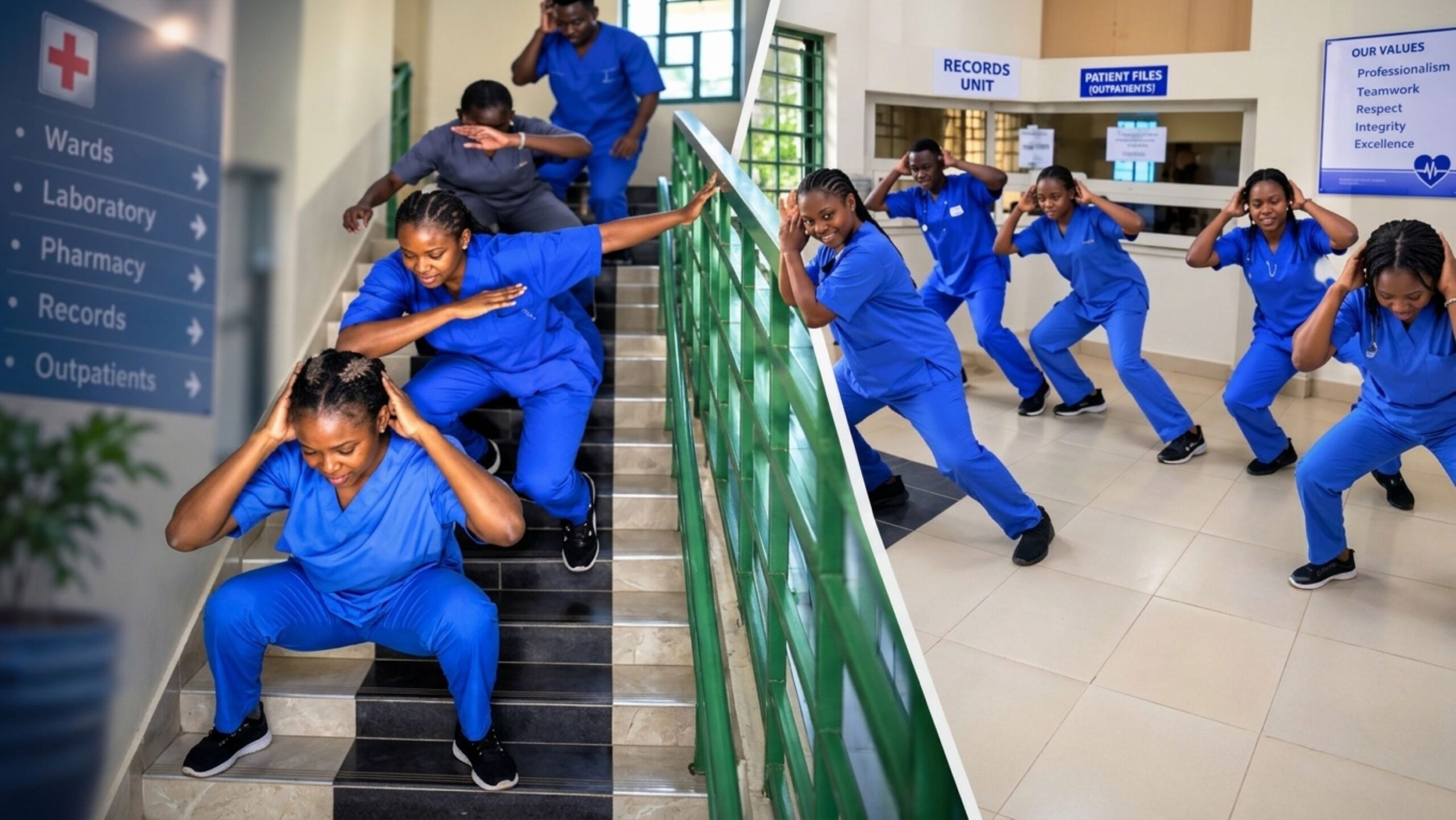


A TikTok video captioned “No sick oo, na Gen Z full hospital” sparked a national conversation few weeks ago, following reports that Madonna University expelled one final-year nursing student and suspended 14 others for one year over a dance video recorded within its teaching hospital.
The said video went viral and some Nigerians criticised the students’ conduct as unprofessional, other netizens and citizens questioned the severity of the punishment. This controversy raises an important question: should a mistake in digital space and expression jeopardise students’ education and their dreams of becoming nurses?

In my opinion, although the students’ actions may have crossed professional boundaries, the reported sanctions appear excessively harsh. A formal warning, fair disciplinary hearing and compulsory professional ethics training could have addressed the concerns while giving the students an opportunity to learn from their actions.
Although, freedom of expression does not exempt students from institutional regulations or professional responsibilities. However, disciplinary authority must be exercised fairly, with sanctions proportionate to established misconduct.

The controversy has attracted calls for reconsideration from the National Association of Nigerian Students (NANS), the Nigerian Universities Nursing Students’ Association (NUNSA) and Amnesty International. NANS appealed for the expulsion to be replaced with a warning, while Amnesty International described the sanctions as disproportionate and urged dialogue and mediation.

As of 20 October 2026, I could not verify that Madonna University had reversed its decision. Neither could I establish from the public reports reviewed whether patients’ privacy was compromised, which specific regulations the students were found to have breached or the full details of the disciplinary proceedings.
These unanswered questions matter. Professional accountability must be balanced with fair procedures, proportionality and the educational purpose of discipline. Without sufficient information, it would be premature to conclude that the students deserved the harshest sanctions or that the university had no legitimate reason to act.
Beyond the controversy lies a deeper issue: the growing influence of Generation Z culture on professional environments. For many young people, social media provides
opportunities for entertainment, fun, creativity, self-expression and connection. Participating in viral trends has become a familiar part of digital life. However, the judgement required to create entertaining content is not always the same as the judgement required in a professional environment.
A hospital is not simply another location for content creation. It is a place where people experience pain, fear and vulnerability. Healthcare professionals must protect patients’ dignity, respect confidentiality and maintain an environment centred on care.
The caption, “No sick oo, na Gen Z full hospital,” may have been intended as humour rather than an insult to patients. Nevertheless, it raises an uncomfortable question: what happens when patients needing care find themselves under the responsibility of young professionals (Gen Z) whose online content appears to trivialise illness?
A dance video alone cannot establish that the students lack compassion or clinical competence. However, it provides an opportunity to examine how young healthcare professionals distinguish personal expression from professional responsibility. The question is not whether Gen Z should bring its culture into healthcare, but whether it can adapt that culture to the ethical demands of the profession.
Nursing education in Nigeria must extend beyond clinical knowledge, examinations and practical competence. It must also develop more empathy, emotional intelligence, ethical judgement and an understanding of professional boundaries.
Today’s nursing students are training in a digital age where online visibility, viral trends and the pursuit of engagement can influence behaviour. Digital professionalism should therefore become an essential component of nursing education.
Students need to understand the risks of recording content in clinical environments, the importance of patient confidentiality and the professional consequences of publishing inappropriate material. They must also learn that wearing a nursing uniform/scrub or entering a healthcare facility carries responsibilities that extend beyond personal entertainment.
However, institutions must communicate these expectations clearly. Students should not discover the consequences of digital misconduct only after a video goes viral.
Expulsion, particularly during a student’s final year, can disrupt years of academic journey, financial investment and personal sacrifice. Although students must be accountable for established misconduct, the severity of sanctions should reflect the circumstances of each case.
A fair disciplinary process should establish the facts, allow students to respond, apply
clearly communicated rules and impose appropriate sanctions.
Depending on the circumstances, a formal warning, temporary suspension, counselling or compulsory professional ethics training may be appropriate. These alternatives should not automatically replace severe sanctions where serious misconduct is established, but they deserve consideration.
The purpose of discipline in an educational institution should extend beyond punishment. It should help students understand their mistakes, accept responsibility and develop the judgement required in their future careers.
Preventing similar incidents requires action from both institutions and students. Firstly, nursing schools should establish clear social media policies explaining acceptable online conduct, restrictions on recording within clinical environments and the consequences of violating professional standards.
Secondly, digital ethics should be integrated into nursing education through practical scenarios that teach students about confidentiality, patient dignity, consent and professional reputation.
Thirdly, universities should adopt transparent disciplinary procedures that distinguish minor misconduct from serious ethical breaches and ensure that sanctions are fair and proportionate.
Finally, students must recognise that freedom of expression comes with responsibility. Not every trend deserves participation, and not every moment should become content to be posted online.
In conclusion, the Madonna University controversy should not become a battle between those who defend Gen Z and those who condemn it. Instead, it should encourage a meaningful conversation about the future of nursing education in Nigeria. Gen Z will increasingly shape the healthcare workforce. Its creativity and technological familiarity can benefit the profession when balanced with compassion, discipline and ethical responsibility.
The reported sanctions deserve careful scrutiny, just as the students’ conduct deserves examination. Ultimately, Nigeria must prepare Gen Z not merely to become competent nurses, but also to become responsible digital citizens and compassionate healthcare professionals. The future of nursing depends not on eliminating youthful expression, but on teaching young professionals when, why, where and how to exercise it responsibly.
———————–

Agholor Ndunka Henry is a Nigerian writer and social commentator with a background in Social Studies Education and an MSc in Sociology and Anthropology from Obafemi Awolowo University, Ile-Ife. His writing explores education, youth development, technology, and contemporary social issues, with a focus on inspiring meaningful conversations and promoting positive social change.
Below are my social media handles and contact information.
LinkedIn: /henryndunkaagholor
Facebook: /Ndunka
Instagram: @henrindunca
TikTok: @henry.ndunka
YouTube: @HenryNdunkaAgholor
WhatsApp: 08139000453
Email: henryndunka@gmail.com










 EduTimes Africa, a product of Education Times Africa, is a magazine publication that aims to lend its support to close the yawning gap in Africa's educational development.
