






















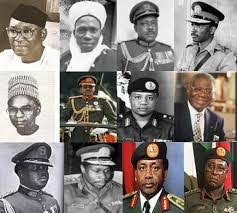


Military rule in Nigeria lasted during several periods between 1966 and 1999, with a brief return to civilian government from 1979 to 1983. Although military rule restricted democratic participation and civil liberties, successive military governments introduced several policies, institutions and development programmes that shaped the country.
You might also like thesePosts


1\. Creation of States: General Yakubu Gowon created 12 states in 1967 to replace the four-region structure, while subsequent military governments increased the number to 36 states by 1996.

2\. Establishment of the NYSC: The National Youth Service Corps (NYSC) was established in 1973 to promote national unity and encourage interaction among Nigerian graduates from different ethnic and cultural backgrounds.
3\. Development of Federal Capital Territory, Abuja: Military governments initiated the relocation of Nigeria’s capital from Lagos to Abuja. Abuja became the seat of the federal government in 1991 under General Ibrahim Babangida.


4\. Expansion of Universities: Military administrations established and expanded federal universities and other tertiary institutions to increase access to higher education.
5\. Introduction of Universal Primary Education: The Universal Primary Education (UPE) programme was launched in 1976 under General Olusegun Obasanjo’s military administration to widen access to primary education.
6\. Establishment of the Federal Road Safety Corps: The Federal Road Safety Corps (FRSC) was established in 1988 under General Ibrahim Babangida to improve road safety and reduce traffic accidents.
7\. Creation of the National Universities Commission: The National Universities Commission (NUC) was strengthened under military rule to coordinate university education, establish minimum academic standards and promote quality assurance.
8\. Development of Road Infrastructure: Military governments constructed and expanded federal highways, bridges and expressways to improve transportation and connect different parts of the country.

9\. Establishment of the Directorate of Food, Roads and Rural Infrastructure: The Directorate of Food, Roads and Rural Infrastructure (DFRRI) was established in 1986 to promote rural development, improve access roads and support agricultural production.
10\. Introduction of the Structural Adjustment Programme: General Babangida’s government introduced the Structural Adjustment Programme (SAP) in 1986 to restructure the economy, encourage exports and reduce dependence on oil revenues. However, the programme also imposed significant economic hardships on many Nigerians.
11\. Promotion of Local Industries: Military governments introduced indigenisation policies, including the Nigerian Enterprises Promotion Decree of 1972, to increase Nigerian participation and ownership in selected business sectors.
12\. Establishment of the National Drug Law Enforcement Agency: The National Drug Law Enforcement Agency (NDLEA) was established in 1989 to combat illicit drug production, trafficking and abuse.
13\. Creation of the National Directorate of Employment: The National Directorate of Employment (NDE) was established in 1986 to address unemployment through vocational training, entrepreneurship development and employment-generation programmes.
14\. Establishment of the People’s Bank of Nigeria: The People’s Bank was established in 1989 to provide accessible credit to low-income earners and small-scale entrepreneurs who often struggled to obtain loans from conventional banks.
15\. Preparation for the Return to Civilian Rule: Military governments initiated constitutional drafting and transition programmes that contributed to the return to civilian government in 1979 and again in 1999. The 1979 transition introduced the Second Republic, while the 1999 transition ushered in the current democratic era.
Conclusion: Military rule contributed to Nigeria’s political, educational, economic and infrastructural development through various institutions and programmes. However, these contributions must be considered alongside the negative consequences of military government, including coups, civil-war casualties, restrictions on civil liberties and the suspension of democratic institutions.









 EduTimes Africa, a product of Education Times Africa, is a magazine publication that aims to lend its support to close the yawning gap in Africa's educational development.