




















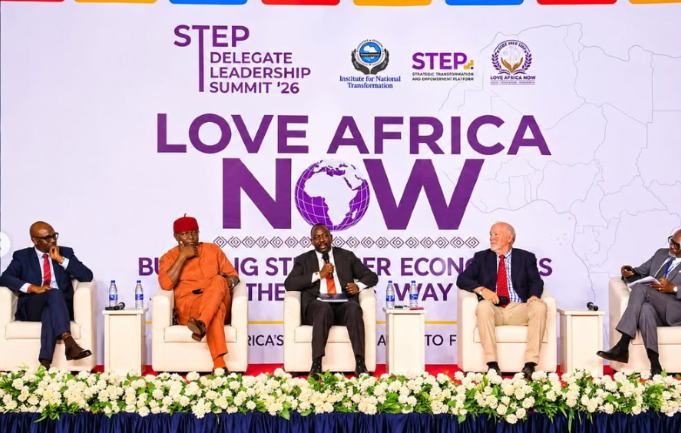


ABUJA, NIGERIA — For decades, the story of Africa’s development has been recounted in carpeted conference halls, punctuated by high-sounding declarations and neatly shelved in heavy policy binders. We have listened to experts talk about our potentials, only to watch our richest mineral resources leave our shores in raw form, only to return months later as finished products priced beyond the reach of the average citizen.
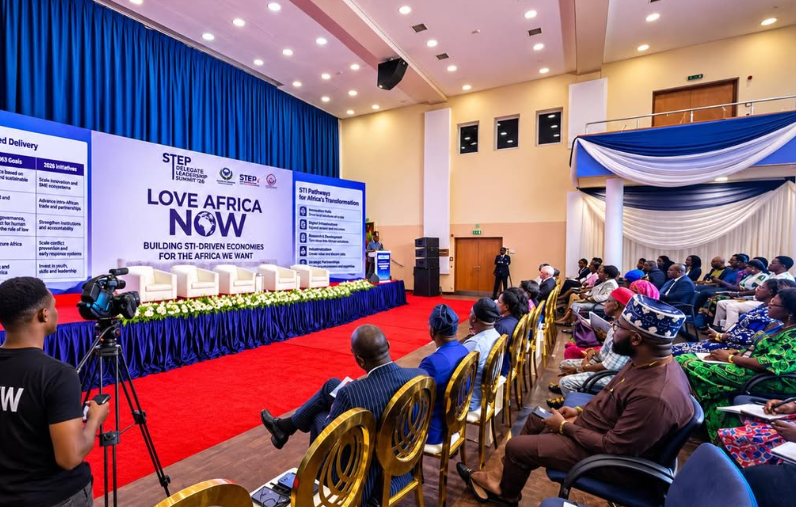
Yesterday at the Shehu Musa Yar’Adua Center in Abuja, that tired narrative faced a decisive challenge.
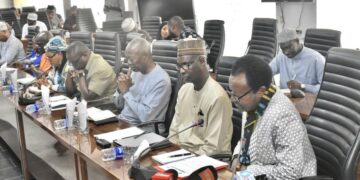
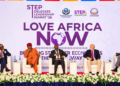
Attending Day 2 of the 2026 INT International STEP Delegate Leadership Summit, convened by the Institute for National Transformation International (INT INT’L) in partnership with the LOVE AFRICA NOW STI Transformation Network (LANST-NET), we witnessed what can only be described as a strategic departure from traditional talk to an operational implementation roadmap.
Under the theme “Love Africa Now: Building STI-Driven Economies for the Africa We Want”, the day’s deliberations tackled the critical components needed to convert continental visions into bankable realities: finance, trade, digital architecture, value-chain conversion and implementation readiness under the African Continental Free Trade Area (AfCFTA) and African Development Bank (AfDB) agendas.
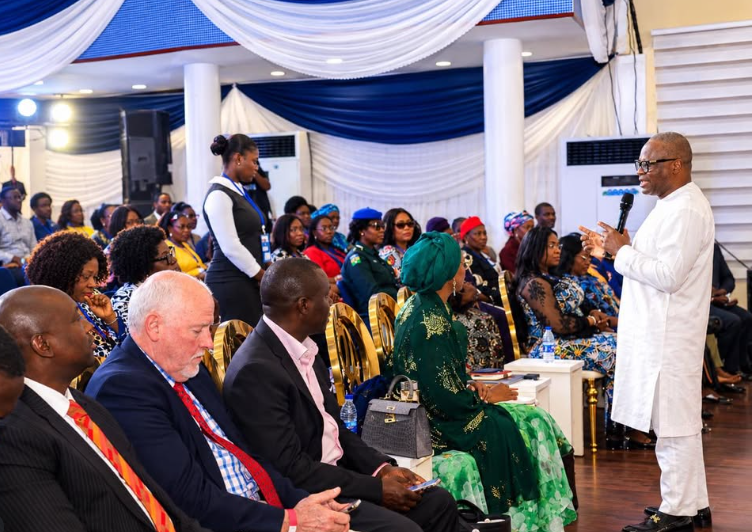
The weight of the summit was evident in its distinguished gathering of continental policymakers, institutional heads, and reformists. Among the prominent figures gracing the summit was the Convener and Director General of INT INT’L, Prof. Vincent Chinedum Anigbogu, alongside Mrs Peggy Anigbogu (Director of Administration, INT INT’L).

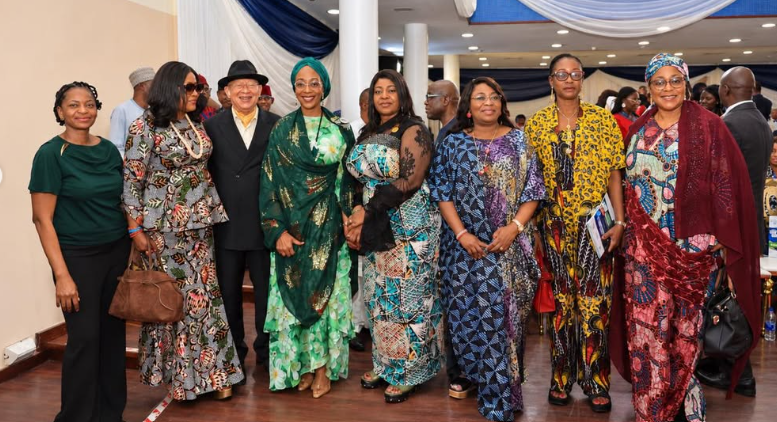
Representing national governance, diplomacy, and civil society across the summit were key figures, including Hon. Dr Monica Musenero Masanza (Minister of Energy and Mineral Development, Uganda) and Her Excellency Erelu (Mrs) Ngozi Abeni Adeleke (Wife of the Governor of Osun State).

Prominent private sector, academic, and development leaders present included Mr Valentine Ozigbo (Founder, The Valiant Movement; former CEO, Transcorp), Dr Chuks Okpaka (CEO, Manifold Enterprise Solutions), Dr Mark Beliles (CEO, Global Transformation Network, USA).
DAY 2 KEY HIGHLIGHTS
The agenda for Day 2 moved with military precision, dissecting why sound policies routinely collapse during implementation and laying out concrete methodologies to bridge the execution gap.
Dr Chuks Okpaka, CEO of Manifold Enterprise Solutions, delivered a sobering assessment of digital transformation efforts across public and private sectors. Drawing from his extensive work auditing national examination bodies and financial institutions, Dr Okpaka debunked the myth that buying software automatically transforms an institution.
“Technology rarely fails,” Dr Okpaka asserted. “Show me a failed digital transformation project, and I will show you a failure in governance, skills, or change management behind it.”
Dr Okpaka argued that smart institutions are built on absolute clarity of ownership. When initiatives lack a single accountable individual, a defined timeline, and a public scorecard, digital tools become expensive “good-to-haves” rather than instruments of efficiency. He urged African leaders to establish data-driven operational dashboards and invest continuously in workforce certification, noting that static knowledge cannot survive an era where knowledge bases shift every few weeks.
Following Dr Okpaka, Mr Valentine Ozigbo, Founder of The Valiant Movement and former CEO of Transcorp Corporation, addressed the plenary on turning local production into globally competitive regional value chains.
Ozigbo highlighted the structural traps of commodity export, where African nations capture less than 10% of the final market value of their raw endowments. He stressed that AfCFTA will remain a paper agreement unless African enterprises intentionally build standardised manufacturing ecosystems capable of trading value-added finished goods across state borders.
The anchor sessions of Day 2 belonged to Hon. Dr. Monica Musenero Masanza, Uganda’s Minister of Energy and Mineral Development, who delivered a masterclass on transforming policy into scalable economic outcomes.
Dr Musenero challenged delegates to look back at African history to understand our present stagnation. Centuries ago, African societies possessed indigenous technological systems—from smelting iron in local foundries to processing agricultural staples like millet end-to-end. However, colonial educational systems disrupted this continuity, creating a system that trained individuals for administrative assistance or raw material extraction rather than local industrial production.
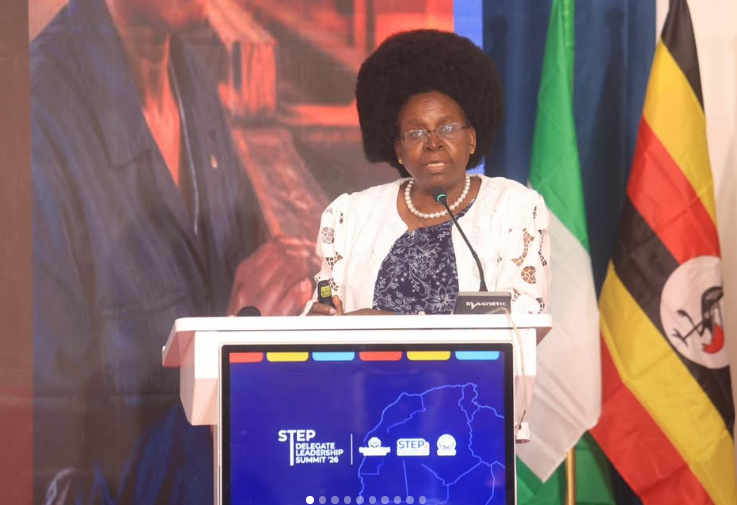
To reverse this trajectory, Dr Musenero introduced the framework of the National Development Triad (comprising Natural Resources, Time, and Human Capital) and mapped out the Science, Technology, and Innovation (STI) Economy Highway
In one of her most striking moments, Dr Musenero re-framed the debate surrounding systemic corruption in Africa.
“Corruption is not the primary disease; it is the symptom of a visionless system,” she explained. “When rain falls heavily without a clear, engineered riverbed, the water floods homes and destroys infrastructure. Similarly, when national financial resources flow into an economy without a clearly mapped development pathway, those resources naturally dissipate into corrupt channels. You cannot cure the fever without treating the underlying condition: a lack of disciplined execution structures.”
Using examples such as Kiira Motors Corporation—which evolved from a university prototype into an electric vehicle manufacturing plant in Uganda—and cassava chemistry research that revealed over 50 industrial applications, Dr Musenero proved that African self-reliance is an achievable reality when science meets political willpower and structural execution.
HOW THIS WILL TRANSFORM AFRICA IN THE NEAR FUTURE
What distinguishes the 2026 INT STEP Delegate Leadership Summit from standard conferences is its structural design. Participation is restricted to institutional delegate teams equipped with finance, planning, monitoring, and technical officers.
From the insights gathered on Day 2, the summit is setting in motion a clear trajectory for continental transformation:
1. Conversion of Raw Materials to Domestic Industrial Complexes: By adopting the STI Highway model, participating state and regional institutions are shifting focus from exporting raw tubers and unrefined minerals to mapping domestic industrial value chains that retain jobs and capital within Africa.
2. Institutional Dashboards and 90-Day Implementation Sprints: Delegates are not leaving with mere declarations;
each institution is required to commit to a 90-day implementation sprint followed by a 10-month monitored mentorship programme supervised by INT INT’L.
THE ROAD AHEAD
As Day 2 concluded at the Shehu Musa Yar’Adua Center, one message resonated throughout the hall: Africa’s transformation will not be delivered by external benevolence but by disciplined people engaging in disciplined thinking and executing disciplined action.
The STEP Summit has provided the blueprint and the platform. For the delegates and institutions assembled in Abuja, the challenge now shifts from understanding the map to driving down the STI highway toward an industrialised, self-determining Africa.








 EduTimes Africa, a product of Education Times Africa, is a magazine publication that aims to lend its support to close the yawning gap in Africa's educational development.