























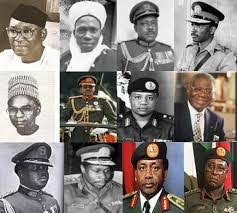


Military rule in Nigeria was not a single administration, so these initiatives should not be presented as if they all came from one government. They were introduced under different regimes, including those of **Aguiyi-Ironsi, Yakubu Gowon, Murtala Mohammed, Olusegun Obasanjo, Muhammadu Buhari, Ibrahim Babangida, Sani Abacha and Abdulsalami Abubakar.



1. Creation of 12 states (1967)– General Yakubu Gowon’s government replaced the four-region structure with 12 states, partly to address regional tensions and minority concerns.

2. Indigenisation Decree (1972) – The Gowon government introduced policies aimed at increasing Nigerian ownership and participation in businesses previously dominated by foreign interests.
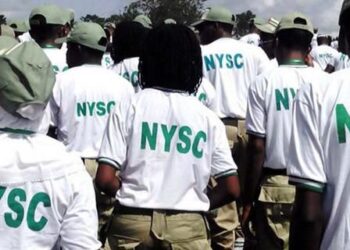
3. National Youth Service Corps (NYSC) (1973)– Established by Gowon to promote national integration by deploying young Nigerian graduates across different parts of the country.

4. Universal Primary Education (UPE) (1976) – General Olusegun Obasanjo’s military government launched a nationwide programme to expand access to primary education.
5. Land Use Decree (1978) – The military government under Obasanjo introduced the Land Use Act, placing land in each state under the control of the state governor on behalf of the people.

6. Operation Feed the Nation (OFN) (1976) – Launched by Obasanjo to increase agricultural production, encourage Nigerians to farm and reduce dependence on imported food.
7. Federal Road Safety Corps (FRSC) (1988)– General Ibrahim Babangida’s administration established the FRSC to improve road safety and reduce road crashes.
8. Structural Adjustment Programme (SAP) (1986) – Babangida introduced SAP to restructure the economy, promote exports and reduce dependence on oil revenues, although its social and economic effects remain debated.

9. National Directorate of Employment (NDE) (1986) – Established under Babangida to address unemployment through skills development, employment programmes and support for self-employment.
10. Better Life Programme for Rural Women (1987)– Initiated by Maryam Babangida to improve the socio-economic conditions of women in rural communities.
11. Mass Transit Programme – Military administrations introduced and expanded mass-transit schemes in response to transportation challenges, particularly during the Babangida era.
12. National Housing Fund (1992) – The military government under Babangida established the National Housing Fund to improve access to housing finance for Nigerians.
13. Federal Road Maintenance Agency framework and road rehabilitation programmes – Various military administrations undertook major road construction and rehabilitation projects as part of national infrastructure development.
14. National Economic Empowerment and Development-related reforms – Late military administrations introduced economic and institutional reforms intended to improve public-sector management and prepare the country for democratic governance.
15. Transition to civil rule programme (1998–1999) – General Abdulsalami Abubakar’s administration rapidly implemented a transition programme that led to the 1999 Constitution, political parties, elections and the return to civilian government.












 EduTimes Africa, a product of Education Times Africa, is a magazine publication that aims to lend its support to close the yawning gap in Africa's educational development.