























Lagos State has the highest number of registered voters ahead of Nigeria’s 2027 general elections, as the Independent National Electoral Commission (INEC) puts the total number of registered voters nationwide at 103,428,715.
The development was announced on Tuesday by INEC Chairman, Prof. Joash Amupitan, during a world press conference in Abuja to mark 100 days to the presidential and National Assembly elections scheduled for January 16, 2027.

According to the commission, Lagos has 7,488,633 registered voters, followed by Kano State with 6,570,276 and Kaduna with 4,662,640.
Katsina ranks fourth with 3,876,051 registered voters, while Rivers has 3,736,434, Oyo 3,588,111, Delta 3,525,988, Benue 3,057,225, Ogun 3,037,981 and Bauchi 3,012,547.

At the other end of the register, Ekiti has the lowest number of registered voters with 1,055,708, followed by Bayelsa with 1,200,691.
The Federal Capital Territory has 1,732,043 registered voters, while Ondo has 1,733,641 and Gombe 1,768,560.
The North-West geopolitical zone has the largest voter population with 25,083,411 registered voters. It is followed by the South-West with 19,614,274 and North-Central with 16,965,787.
The South-South has 15,823,550 registered voters, while the North-East has 13,965,475 and the South-East has 11,976,218.
The North-West therefore has 5,469,137 more registered voters than the South-West.
Amupitan said male voters account for 53,528,218, representing 51.75 per cent of the register, while female voters number 49,900,497, representing 48.25 per cent.
Voters aged between 35 and 49 form the largest age group, with 43,265,946 people, representing 41.83 per cent of registered voters.
Those aged between 18 and 34 account for 29,777,576 voters, representing 28.79 per cent, while voters aged 50 to 69 number 22,982,900, or 22.22 per cent.
Voters aged 70 and above account for 7,402,291, representing 7.16 per cent of the register.
INEC also recorded 232,658 persons with disabilities across 10 categories, representing about 0.23 per cent of registered voters.
The commission said the voter register would be displayed nationwide from October 9 to 15, 2026, to allow members of the public to scrutinise the register in line with the Electoral Act 2026.
Amupitan said INEC had completed nine of the 14 critical milestones contained in its revised timetable and schedule of activities for the 2027 elections.
He said the commission had also converted its statutory timetable into an operational plan covering its headquarters, 36 state offices, the Federal Capital Territory and offices across the 774 local government areas.
As part of preparations for the elections, INEC has established a dedicated Artificial Intelligence Division within its ICT Department to detect anomalies in election results and tackle election-related disinformation.
The commission said AI auditing tools had already been integrated into its results verification process under a five-pillar AI governance framework, with human oversight remaining mandatory.
INEC also expressed concern over the increasing use of generative artificial intelligence, voice cloning and deepfake videos to fabricate the voices of election officials, result sheets and other official documents.
The commission urged journalists and media organisations to verify election-related information and use digital forensic tools before publication, while warning against publishing privately collated results or premature declarations.
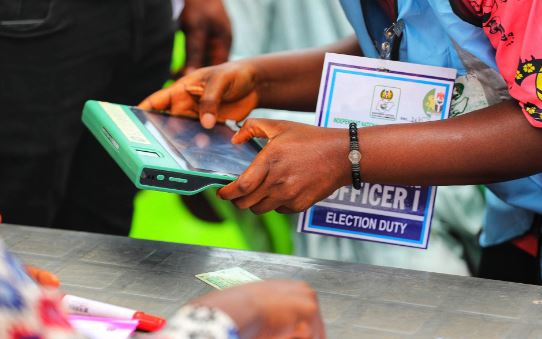
Amupitan said INEC was also upgrading its Bimodal Voter Accreditation System devices and conducting nationwide audits and stress tests ahead of a planned mock accreditation exercise in November.
The commission is expected to deploy 57,000 newly procured BVAS devices for voter verification and other electoral processes. It will also establish a situation room to monitor activities before, during and after the elections.
INEC disclosed that 1,414,768 ad hoc personnel would be engaged for the two phases of the 2027 elections.
Of the figure, 707,384 personnel will be deployed for the presidential and National Assembly elections on January 16, while the same number will be required for the governorship and State Houses of Assembly elections on February 6.
The personnel will be deployed across 176,846 polling units nationwide, representing an increase from the approximately 1.2 million ad hoc personnel engaged during the 2023 general elections.

Meanwhile, the Nigeria Police Force said it was strengthening security arrangements in areas affected by security challenges ahead of the elections.
The police said operational and tactical assets had been activated to assess threats and protect voters, electoral materials and collation centres.
The European Union also pledged continued support for Nigeria’s electoral process, with its ambassador to Nigeria and ECOWAS, Gautier Mignot, saying the 2027 elections would provide an opportunity to strengthen confidence in the country’s democracy.
Mignot disclosed that the EU would again deploy an electoral observation mission to Nigeria to monitor preparations, the conduct of the elections and the immediate post-election period.
The Senate Committee on Electoral Matters also pledged to work with INEC and other stakeholders to strengthen the country’s electoral framework.
Meanwhile, INEC said it was reviewing the Supreme Court’s September 24, 2026 judgment in INEC v. Zenith Labour Party and its implications for the 2027 elections.

Amupitan said the commission had received the certified true copy of the judgment and was reviewing its implications to ensure that its timetable and preparations remained consistent with the court’s decision.
With 100 days to the presidential and National Assembly elections, INEC said its remaining preparations would focus on completing outstanding milestones, testing electoral technology, strengthening security coordination, training personnel and ensuring that the voter register undergoes public scrutiny.












 EduTimes Africa, a product of Education Times Africa, is a magazine publication that aims to lend its support to close the yawning gap in Africa's educational development.