


























As school leaders, you hold a remarkable responsibility and an incredible opportunity: shaping not just the minds, but also the values of the young people in your care. Today, more than ever, students are growing up in a world where the effects of climate change are visible in their communities, in the news, and even in their everyday lives. Schools are uniquely positioned to respond, not just by teaching about climate science, but by embedding climate action into the very rhythm of learning.



This isn’t about adding another “subject” to the curriculum. It’s about creating a school culture where sustainability is woven into everyday decisions, what students learn, how classrooms operate, and how the school engages with the wider community. By making climate-conscious choices visible, tangible, and meaningful, you give students more than knowledge, you give them agency. This guide is designed to help you turn climate action from a concept into a lived experience, empowering your staff, students, and families to take part in shaping a healthier, more resilient future.

Here are ten compelling reasons why environmental literacy must be embedded in contemporary education.
1. It Prepares Students for Real-World Challenges
Today’s students will inherit a world shaped by environmental issues. Understanding topics such as climate change, water scarcity, deforestation, and sustainable resource management helps learners navigate complex global challenges and become informed citizens capable of contributing to practical solutions.


2. It Develops Critical Thinking and Problem-Solving Skills
Environmental issues are rarely straightforward. They involve scientific, social, economic, and ethical dimensions. Environmental literacy encourages students to analyze information, evaluate evidence, consider multiple perspectives, and develop creative solutions to complex problems.
3. It Promotes Responsible Citizenship
Environmental literacy helps students recognize the connection between individual actions and broader environmental outcomes. Learners become more aware of their responsibilities as citizens and are better prepared to participate in community initiatives, policy discussions, and sustainability efforts.
4. It Encourages Sustainable Behaviors
Students who understand environmental issues are more likely to adopt sustainable habits in their daily lives. Simple actions such as conserving water, reducing waste, recycling, and protecting natural resources can have lasting positive impacts when practiced consistently.

5. It Supports Academic Achievement
Research has shown that environmental education can enhance learning across multiple subjects. Environmental themes can be integrated into science, mathematics, geography, language arts, and social studies, making learning more relevant, engaging, and interdisciplinary.
6. It Strengthens Students’ Connection with Nature
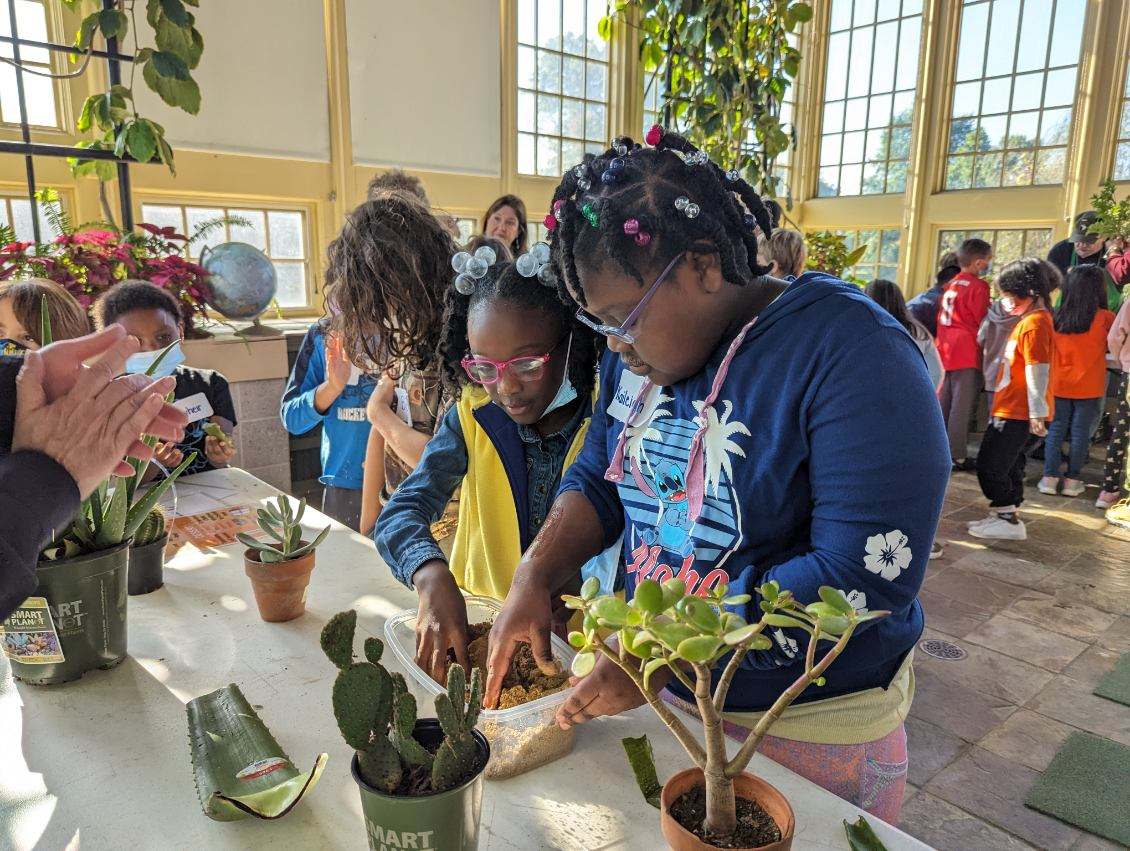
Many young people spend increasing amounts of time indoors and online. Environmental literacy encourages direct engagement with nature through outdoor learning, field studies, school gardens, and conservation projects. These experiences foster appreciation, respect, and stewardship for the natural world.
7. It Prepares Learners for Emerging Green Careers
The global transition toward sustainable development is creating new career opportunities in renewable energy, environmental management, conservation, sustainable agriculture, green technology, and climate science. Environmental literacy helps students explore these growing fields and develop relevant skills for future employment. For more on this, read my article on: Shaping Tomorrow: Preparing Students for Green Careers (https://edutimesafrica.com/shaping-tomorrow-preparing-students-for-green-careers/)
8. It Enhances Community Engagement
Environmentally literate students often become active participants in community improvement initiatives. Whether organizing clean-up campaigns, planting trees, conserving water, or raising awareness about local environmental issues, they contribute to positive change beyond the classroom.
9. It Builds Resilience in a Changing World
Communities worldwide are experiencing the effects of climate change, including extreme weather events, droughts, floods, and changing ecosystems. Environmental literacy helps students understand these challenges and develop the adaptability, resilience, and preparedness needed to respond effectively.
10. It Contributes to a More Sustainable Future
Perhaps the most important reason for environmental literacy is its potential to shape a more sustainable world. Educated and environmentally conscious citizens are more likely to support sustainable policies, make responsible consumer choices, and lead initiatives that protect ecosystems and natural resources for future generations.
So, environmental literacy is not simply about teaching students to care for nature. It is about preparing them to thrive in a rapidly changing world where environmental, economic, and social systems are increasingly interconnected. By integrating environmental literacy into modern education, schools can cultivate informed, responsible, and empowered learners who are equipped to build a healthier and more sustainable future for all.
—————————–
Oluwatosin Osemeobo is an educator, writer, speaker, and School Sustainability Strategist with decades of experience at the intersection of education, Sustainability, leadership, and human development. An AFS Global Up–certified educator with deep expertise in intercultural learning and global competence, he operates at the intersection of future skills and sustainable development, empowering schools and educators to move beyond intention and achieve lasting impact.
His academic foundation includes a Bachelor of Education from Obafemi Awolowo University, advanced certifications from the Open University (UK) and the University of Cambridge, and specialized training through the UN Climate Change platform, covering inclusive leadership, the SDGs, trade and rights frameworks, and the UN Convention on the Rights of the Child.
As a Transformational Thought Leader and coach, Tosin has worked with teachers and professionals across multiple countries, equipping them to lead with clarity, adaptability, and purpose. His approach blends practical strategy with deep insight into how people and institutions actually change.
As a writer, he explores the ideas he is most invested in: sustainability, education reform, teacher wellbeing, global competence, and what it truly takes to build schools that serve the future. His work speaks to educators, policymakers, and anyone who believes that transforming education is one of the most important things a generation can do.
Tosin is a sought-after speaker and strategic consultant, and is based in Abuja, Nigeria. He is open to speaking engagements, writing commissions, consulting, and partnerships with organizations working on school sustainability, future skills, and human-centered education globally.
Email: tosemeobo@gmail.com Phone: +234 806 561 1550
Linkedin: www.linkedin.com/in/oluwatosin-osemeobo-9b8a7a12a














 EduTimes Africa, a product of Education Times Africa, is a magazine publication that aims to lend its support to close the yawning gap in Africa's educational development.