






















































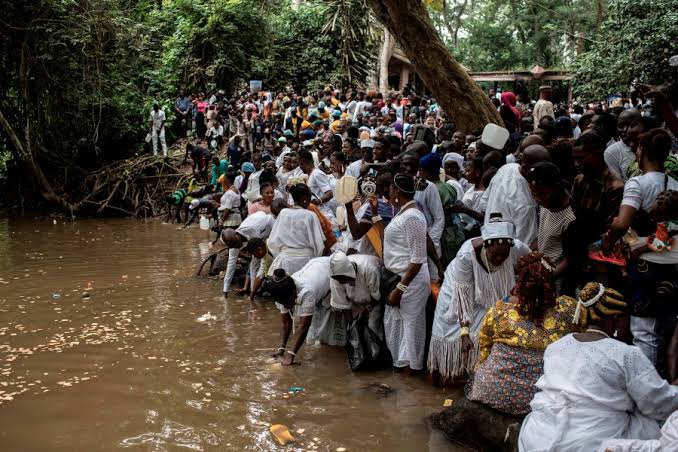


The Osun-Osogbo Festival is one of Nigeria’s most important traditional festivals and a major celebration of Yoruba culture and spirituality. Held annually in Osogbo, Osun State, the festival attracts worshippers, tourists, cultural enthusiasts, researchers and visitors from different parts of Nigeria and beyond.



At the centre of the celebration is the Osun Sacred Grove, a historic forest associated with Osun, the Yoruba deity of water, fertility and motherhood.

1. The Osun-Osogbo Festival takes place annually in Osogbo, the capital of Osun State in southwestern Nigeria.
2. The festival is dedicated to Osun, one of the Yoruba river deities, traditionally associated with water, fertility, motherhood and prosperity.

3. The festival has a history spanning several centuries and is deeply connected to the history and identity of the people of Osogbo.
4. According to Yoruba oral tradition, the founding of Osogbo is linked to a hunter named Olutimehin.
5. Tradition holds that Olutimehin and other settlers encountered the Osun River and established a relationship with the deity.
6. The Osun Sacred Grove is the spiritual centre of the festival and one of its most important landmarks.

7. The sacred grove contains shrines, sculptures, artworks and sacred sites dedicated to Osun and other Yoruba spiritual figures.
8. The Osun Sacred Grove was designated a UNESCO World Heritage Site in 2005.
9. The grove is recognised internationally for its cultural, religious and environmental importance.
10. The Sacred Grove is also significant because it preserves an important area of forest in a region where much of the original forest vegetation has disappeared.
11. The festival is usually celebrated over several weeks rather than being limited to a single day.
12. Several traditional and cultural activities take place before the grand finale of the festival.
13. Iwopopo is one of the traditional activities associated with the festival and involves the spiritual cleansing of Osogbo.
14. Another important ceremony is the lighting of the traditional lamp known as Ina Olojumerindinlogun.
15. The Iboriade ceremony is another significant event connected with the festival. It involves the presentation and display of the crowns of past Ataojas of Osogbo.
16. The Ataoja is the traditional ruler of Osogbo and plays an important role in the festival.
17. The grand finale involves a colourful procession towards the Osun Sacred Grove.
18. One of the most recognisable figures in the grand procession is the Arugba, a young woman who carries the sacred calabash.
19. The Arugba has an important symbolic and spiritual role in the festival and is traditionally regarded as the representative of the community in the offering to Osun.
20. Traditional music, drumming, dancing, chanting and colourful cultural costumes are major features of the festival.
21. The festival provides an opportunity for different generations to participate in and transmit Yoruba cultural traditions.
22. The celebration attracts international visitors, including tourists, researchers, photographers, artists and members of the African diaspora.
23. Austrian-born artist Susanne Wenger played a significant role in the preservation and artistic development of the Osun Sacred Grove. She was given the Yoruba name Adunni Olorisa.

24. The festival contributes to cultural tourism in Osun State and helps promote Nigeria’s rich Yoruba heritage to a global audience.
25. Beyond its religious significance, the Osun-Osogbo Festival represents the preservation of Yoruba history, spirituality, traditional art, environmental heritage and community identity.
Conclusion
The Osun-Osogbo Festival is more than an annual cultural celebration. It is a living expression of Yoruba heritage that brings together spirituality, history, art, music, environmental conservation and tourism. The preservation of the Osun Sacred Grove and the continued celebration of the festival demonstrate the importance of protecting Nigeria’s indigenous cultures for future generations.
read also: 20 Facts About the Osun Osogbo Festival













 EduTimes Africa, a product of Education Times Africa, is a magazine publication that aims to lend its support to close the yawning gap in Africa's educational development.