
























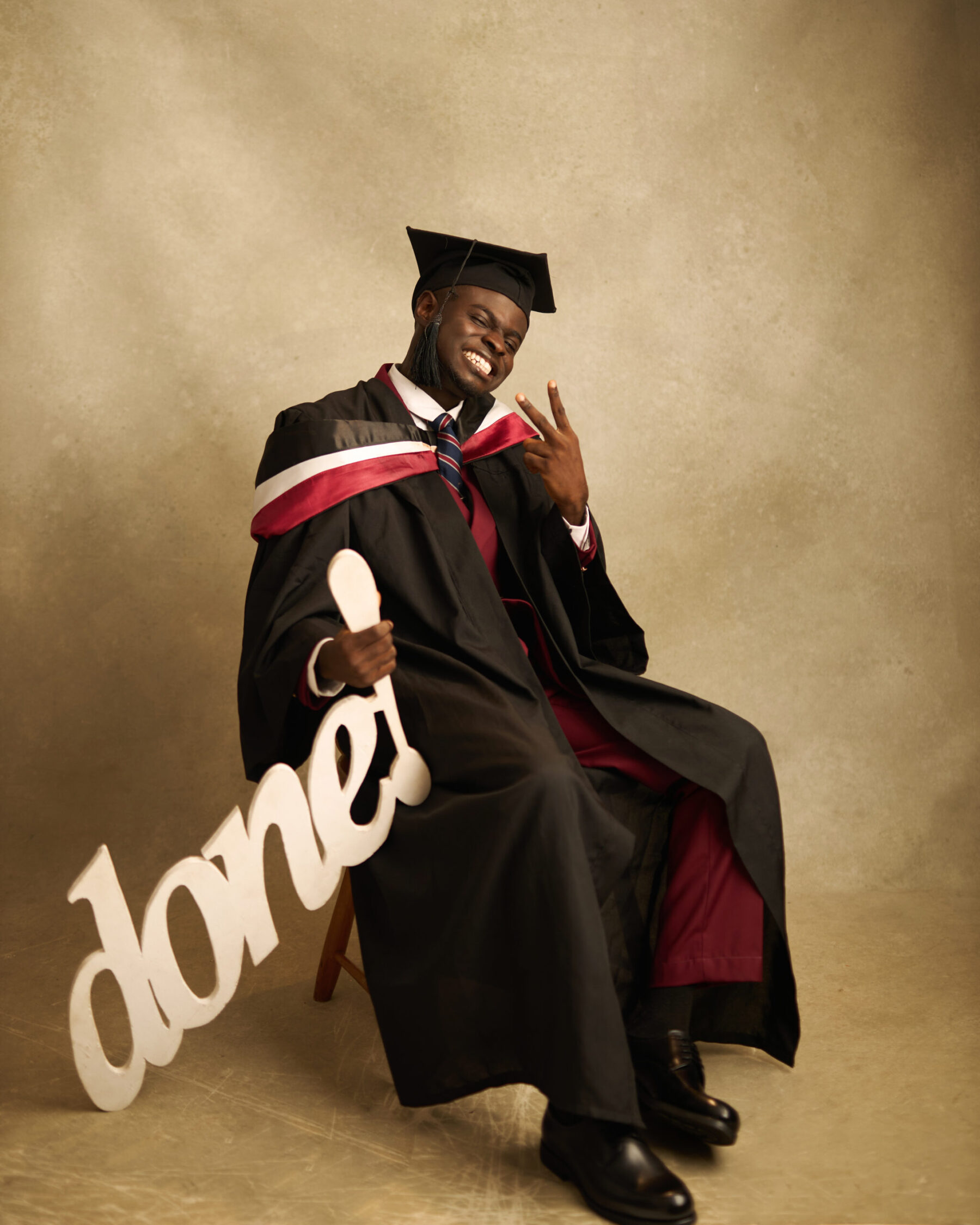


Behind some remarkable academic feats are stories of family pressure, difficult decisions, struggles, and rollercoasters of emotions that people rarely get to see. While many people in similar situations may remain stuck and unhappy, Tobi bravely navigated his way through the difficult circumstances.
In an interview with Lateef Adepoju, Oluwatobiloba Abiodun Oni recounted his academic journey, from studying nursing and considering mass communication to eventually becoming the second-best graduating student in the Department of Social Work at Babcock University, Ilishan-Remo, Ogun State, with a CGPA of 4.76 out of 5.00.

Beyond his academic achievement, Tobi is also the author of How to Get a 5.0, a book in which he shares insights on achieving academic excellence.
In this chat, he discussed his experience navigating family-influenced educational choices, the challenges he encountered along the way, and practical tips and advice for students seeking to achieve impressive academic results.

- Kindly give us a brief background of your educational journey, from secondary school to navigating nursing school and eventually reaching this level.
Let’s start from primary school. I was a star student, almost always the best, but that didn’t follow into my first year of secondary school. I was excited about the freedom that the boarding house gave me—I was away from home for the first time—and I lost focus on my academics. In my first and second terms, I came ninth and eighth, respectively. I picked up in the third term, where I came 4th.
Things changed when I met God and decided to become more intentional about my academics. For the rest of junior secondary school, I remained within the top three. In JSS 2, I came first, and I eventually finished junior school as the best student in Religious and Social Values, which covered Social Studies, Civic Education, and CRS.
At the end of junior secondary school, the big decision came: sciences, arts, or commercial class. After taking a psychometric assessment, the results showed that arts and humanities was my first option. But my dad had conditioned me from childhood to become a doctor. During the conversations with the counsellors about the psychometric assessment, my dad made it clear that he wouldn’t support me if I went to the arts class. So, I went into the sciences.
I did fairly well at first. It wasn’t anything intense, and I was doing okay. However, it gradually became evident that I wasn’t performing at my optimal best. I pushed through—average, not great, not bad. But in my final year of secondary school, the reality hit harder. I knew there was more to me; I felt like I had to be married to a future I didn’t want.
The frustration was extreme. I was mentally breaking down because I knew I was in the wrong field. For my WAEC, NECO, and JAMB, I even tried to self-sabotage because, deep down, I knew I didn’t want to go down that path. Unfortunately, I passed.
I eventually got into Babcock University to study nursing, and at first, I breezed through it. My first year wasn’t excellent, but it wasn’t poor either. It felt a little like secondary school. Then it became more “nursing”, and I began to resent it because I couldn’t see myself building a future in it .

I was barely surviving until I finally made the decision to switch to social work and human services in the first semester of my third year. That decision changed everything. I went on to graduate as the 2nd best graduating student in social work.
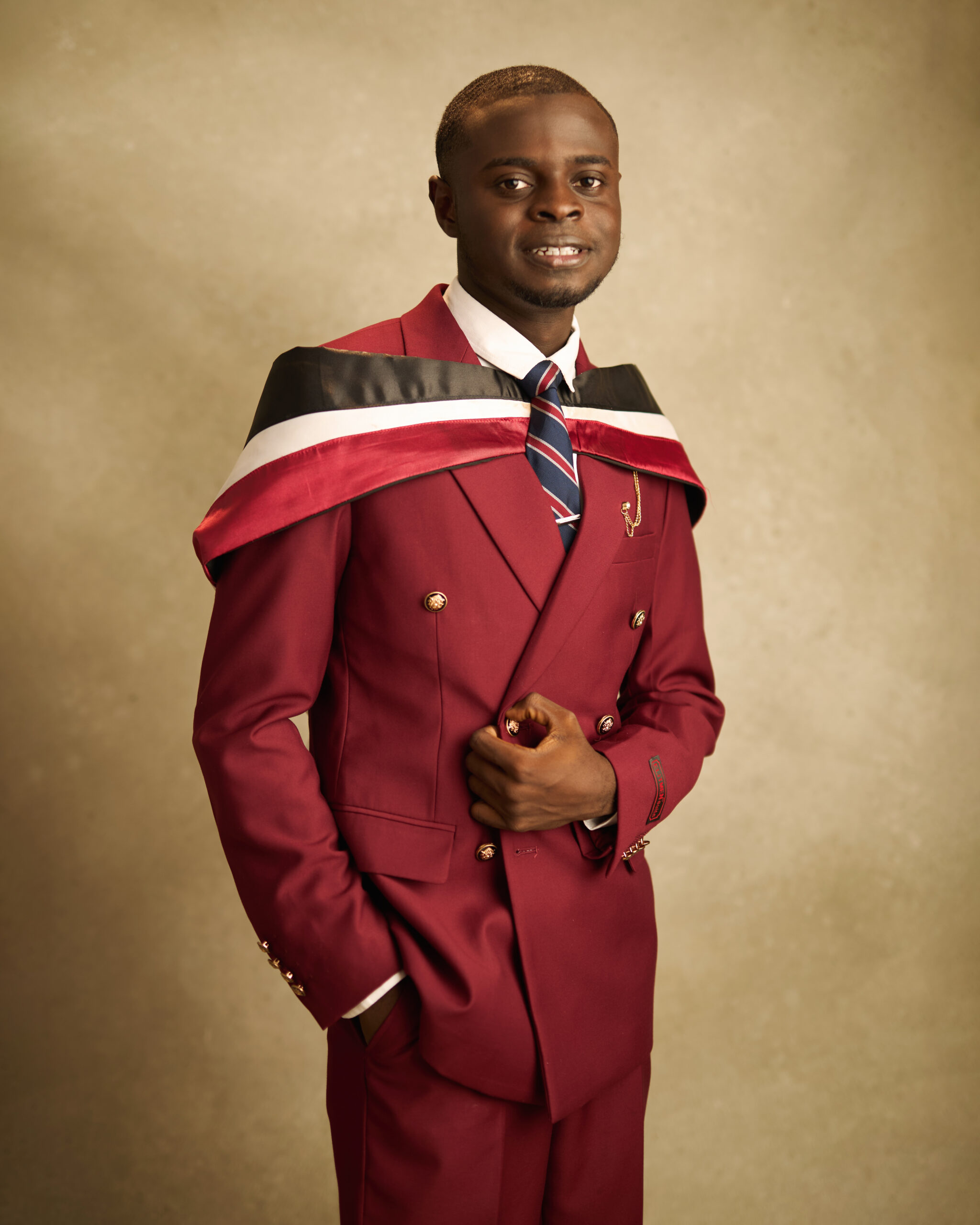
- How does it feel to emerge as the second-best graduating student of your set?
I’m elated. It’s honestly one of the best things that has happened to me in a while, especially considering my journey. I’m genuinely grateful to God, and I’m incredibly proud of myself.
- How did your family, friends, and mentors react to this remarkable achievement?
They are so proud of me. My family places a lot of emphasis on academic success, so graduating with a first-class degree in a family of high achievers means a lot to everyone—from my dad and mum to my older siblings, the twins, and Odunayo. They are especially proud because I achieved something remarkable within my immediate and extended family.
My friends are also very proud of me. Many of them know my journey and the struggles I had along the way, so they understand how much this achievement means to me. They recognise the journey behind it, and they are genuinely happy for me.
- You graduated with a CGPA of 4.7 out of 5.00. What would you say were the key factors that helped you achieve such an outstanding academic feat?
I’ve streamlined it into five key principles, which are the same five principles I discuss in my book, How to Get a 5.0.
- Interest: You have to be genuinely interested in what you’re doing, and you have to be interested in excellence. I was genuinely interested in my course, and that made it easier for me to stay committed and give my best.
- The God Factor: God is at the centre of it all. He gives me the strength and wisdom to succeed. God is foundational to this achievement, and I’ll scream that from the mountaintops. He gave me the spirit of excellence and helped me through some of the toughest moments of my academic journey.
- Goal Setting: I know my goals, and I write them down—the courses, the grades I want, and even the exact scores I’m aiming for. This gives me a roadmap for navigating each semester.
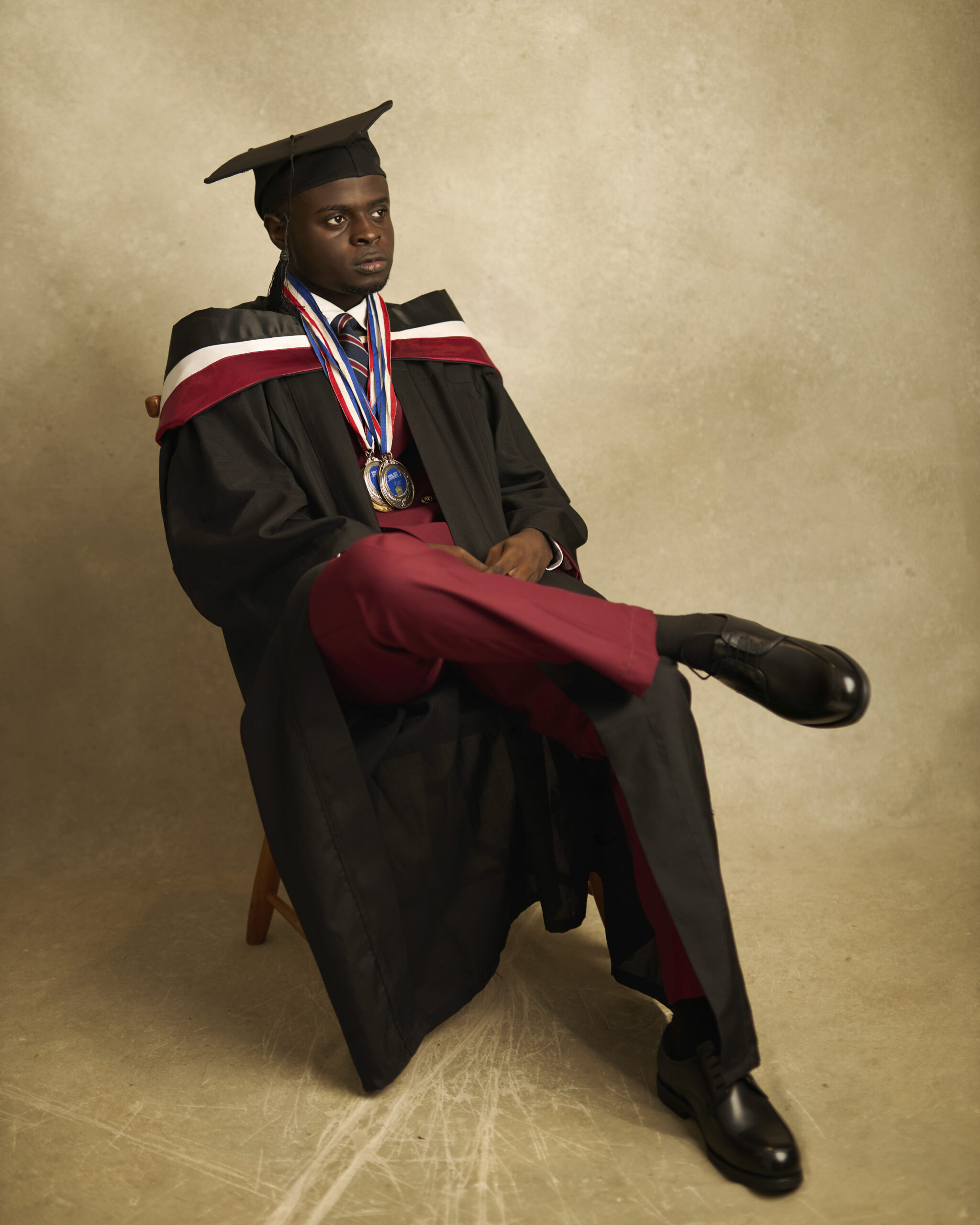
- Fighting for Every Mark: This is my academic success philosophy. It means leaving nothing behind and making sure I do everything within my power to get the maximum marks available
- Doing Too Much: I go the extra mile. I don’t settle for “good enough”; I always look for ways to do more and give more than what is required.
These five principles are foundational to my academic journey, and I explore each of them much more deeply in my book, How to Get a 5.0.
- Reflecting on your academic journey, what lessons has it taught you?
There’s a quote that says, “If you judge a fish by its ability to climb a tree, it will live its whole life believing that it is stupid.” One of the biggest lessons my academic journey has taught me is to optimise for my strengths. Understand what I am naturally good at and find ways to maximise those strengths. However, that doesn’t mean neglecting my weaknesses.
I should still work on them, improve, and become a more well-rounded person.
- You authored a book titled “How to Get 5 Points”. Kindly share with us how you were able to achieve such an impressive fear.
I was the academic director of my student association, and one of the academic support programmes I organised was the How to Get a 5.0 seminar. It featured some of the top students in the department and an external guest, who shared practical insights on how to excel academically.
The event had a decent turnout, and many students testified to the impact it had on them. In fact, some students achieved their first 5.0 GPA after attending the programme.
The book was born from that experience. It is a documentation of the seminar, my personal journey as a student, and the strategies I developed along the way. Writing it was a fun experience because I was essentially documenting my own journey and the things that worked for me.
I started by writing the manuscript in a notebook before typing it out. For the sake of excellence, I also worked with a professional book editor, Mrs Happiness, to ensure the book met the right standard. And now, it’s finally out!
- Tell us about your thesis. What was it about, what major challenges did you encounter, and how did you overcome them?
My thesis was titled “The Role of Social Support in Mitigating Career-Related Stress Among Adolescents in Selected Secondary Schools in Ikenne Local Government”.
The study was essentially an investigation into the experiences of final-year secondary school students, many of whom might have been in the same position I was about five years ago—trying to navigate career choices and the pressure that comes with them.
I genuinely enjoyed working on the research because I felt connected to the topic and could relate to the experiences of the students. Interestingly, I didn’t encounter any significant challenges throughout the process, largely because I was passionate about the subject and deeply interested in the findings and the potential impact of the research.
- Looking back, was there any particular semester or moment when you doubted yourself? How did you push through?
Looking back, there were a few moments when I doubted myself. In my penultimate semester, I had a 4.89 GPA. Before then, I had recorded several perfect GPAs, so that result really hurt. However, it didn’t make me doubt my abilities because I already had evidence that I could replicate that success, by the grace of God.
What helped me push through was, first, having my sister remind me that the result didn’t define who I was or determine the kind of student I was. I also took time to honestly reflect on what happened. I considered the circumstances surrounding that semester, the nature of the courses, and what I could have done differently. That honest self-reflection helped me identify where I fell short without allowing the result to define me.
And then, in my final semester, I went on to achieve a 5.0 GPA.
I think that experience taught me that one disappointing result does not erase years of excellence. Sometimes, you just need to understand what went wrong, learn from it, and keep moving.
That said, during my time in nursing school, I doubted myself much more. I struggled and genuinely didn’t believe in my abilities at the time. Looking back now, I realise just how much I had to grow from that version of myself.
- Some students are currently studying courses they do not enjoy or feel connected to. What is your honest advice to such students?
I think the first question to ask is, can interest be built, or is it either there or not? My honest answer is that it depends on the person and the situation.
Interest can actually grow through exposure. Sometimes, you don’t know what you care about until you spend enough time with something to develop competence. And competence can build curiosity. That is real, and it happens.
But there are also situations where, no matter how long you stay, the connection never forms. Forcing yourself to perform indefinitely in a course that is genuinely wrong for you is not discipline; it can be damaging.
The signal I would pay attention to is this: Is your lack of interest affecting your mental health, tanking your performance, or making you completely indifferent to your academic life? If it is, then it may not simply be a motivation problem. It could be a problem of fit, and it deserves a serious conversation with someone you trust, whether that’s a parent, counsellor, or mentor.
But I also don’t think changing courses is always the answer. Neither is staying. You have to honestly assess your situation, understand why you feel disconnected, and make a decision based on what is genuinely best for you.
- From nursing to mass communication and eventually social work, kindly shed more light on your educational transitions, what social work entails, and why you eventually chose to study it.
From secondary school, I actually wanted to study mass communication. I was in the science class at the time, but I was still very clear that I wanted to go into mass communication. I was even willing to go back and rewrite JAMB if that was what it took to study it. Law was another option, but my brother was already a lawyer, and I didn’t find the profession particularly interesting.
Eventually, I succumbed to the pressure to study nursing. I went into nursing, but I quickly realised that I didn’t enjoy it and, more importantly, that I didn’t see myself building the future I wanted in it. I knew I had to make a change.
By my third year, first semester, I had had enough. I was genuinely struggling in nursing and had started failing at school. I discussed it with my sister, who already knew how much I was struggling, and she asked me to write down all the options I had and what I wanted to do. So I listed them out.
The first was to leave school, rewrite JAMB and start again with mass communication. The second was to look for a scholarship abroad, although I knew that would take a lot of time. The third was to change courses within my university.
My sister and I reviewed the options together, and we eventually narrowed it down to finding a course within the university that I was genuinely interested in. That was how I arrived at social work.
I chose social work myself, and one of the major reasons was its connection to psychology and human relations. I’ve always been interested in understanding people, why people think and behave the way they do, and how I can help people. Social work felt like the perfect launchpad for a career built around those interests. It also aligned with my personality and the kind of person I am.
At its simplest, social work is a helping profession. There are different areas of society where people need support, and social workers are professionally trained to provide that support.
For example, there are social workers in hospitals who look beyond the medical aspect of a person’s situation and provide psychological, social and other forms of support. Social workers also work in the corporate world, government and social welfare systems, where they can influence policies and advocate for better outcomes for individuals and communities. They also work directly with families and individuals.
In countries with more developed social service systems, social workers have a much stronger presence across different sectors.
The particular area of social work that I’m interested in is mental health social work. It focuses on understanding people, providing counselling and psychological support, understanding mental health conditions, and helping people develop strategies to manage the challenges they face.
So, although my journey from nursing to social work was not straightforward, I’m grateful for how it turned out. Social work ended up being a course that genuinely fits my interests, my personality and the kind of impact I want to make.
- Beyond academics, were you involved in extracurricular activities? If so, how did you balance them with your studies?
I was never someone who was strictly about academics. My personality did not revolve around school, and that is actually one of the core ideas I share in my book. I believe that to succeed in school, you also need to have a life outside school because it serves as a buffer for the stress that school creates.
Beyond academics, I had my own business at some point. I also worked a full-time job as a marketing associate at a marketing agency. I sang in the choir, and I was involved in a few other things. I was doing all these things concurrently with school.
People often ask me how I was able to balance everything while still excelling academically. My view of balance is that it is not always 50/50. I don’t believe you have to give equal attention to everything all the time. For me, balance was about giving each area the amount of attention it required at a particular time.
There were periods when school needed 80% of my attention, while work or other activities got 20%. I also had a good workplace that understood I was a student, so I could give a lot to my job while still prioritising school.
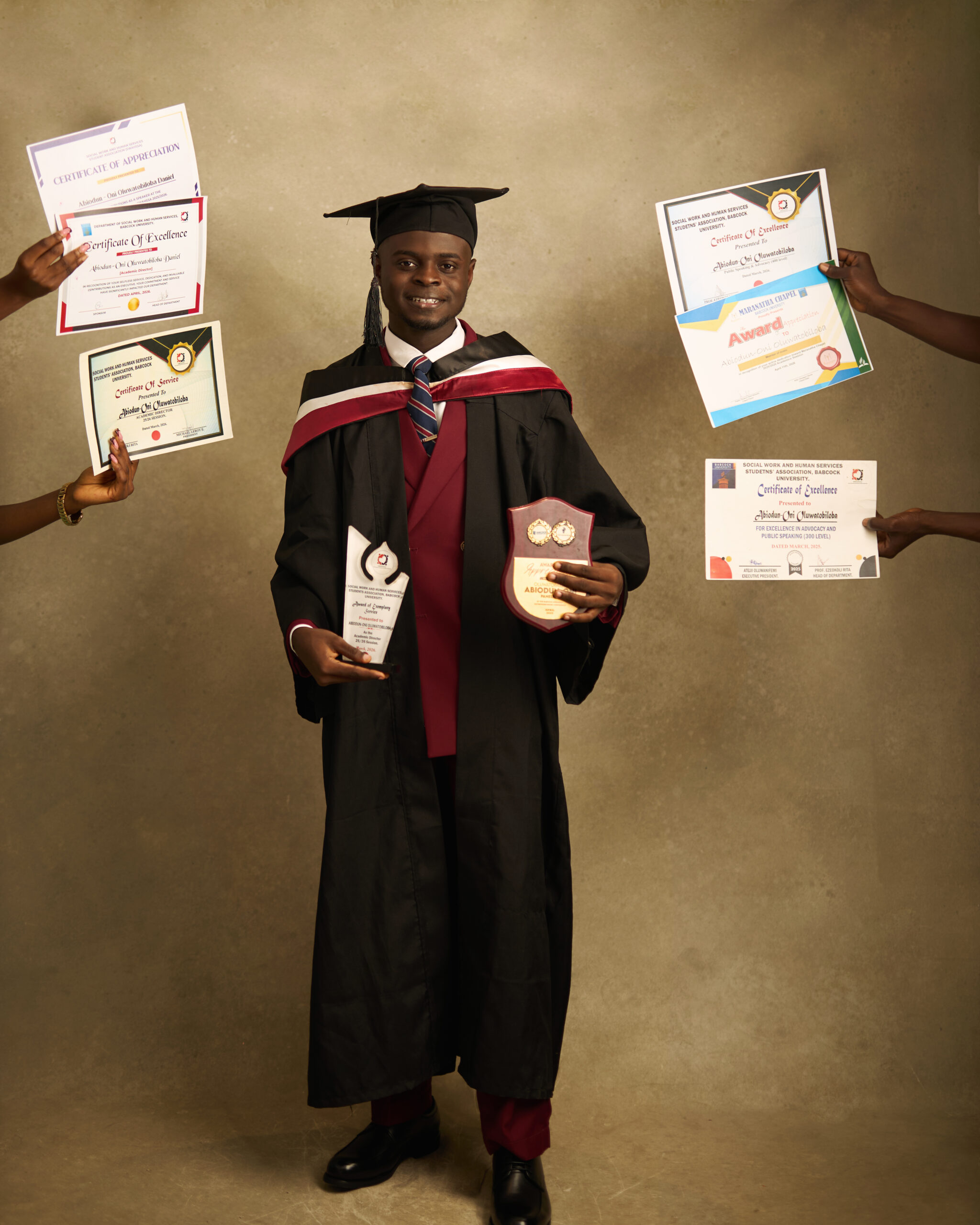
At the same time, doing so many things meant I had to make sacrifices. There came a point when I had to put my business aside so I could focus more on school and the other things that mattered at that stage of my life.
So, for me, balance was never about doing everything equally. It was about knowing what season I was in, understanding what needed my attention the most, and being willing to make sacrifices when necessary.
- What comes next? What are your immediate and long-term academic plans?
As I mentioned earlier, I was already working in marketing while I was in school, so I have built experience in the field. I like to describe myself as a full-stack marketing professional, with experience across end-to-end campaign planning and strategy, as well as digital marketing.
Immediately after school, I moved into a new marketing role, which is what I’m currently doing. I want to continue building my experience and expanding my knowledge in the field.
At the same time, I plan to further my education in social work and earn more degrees. Ultimately, I want to use the knowledge and qualifications I gain to create meaningful impact.
Long-term, I also plan to own my own venture. So, for me, the journey ahead is a combination of building my career, continuing my education, creating impact, and eventually building something of my own.
- Finally, what message would you like to leave for students who aspire to achieve what you have achieved today?
The template is simple. Be genuinely interested in what you do. Put God at the centre of it all. Know your goals, fight for every mark, and fight for every mark like your life depends on it. Then, go the extra mile. Do too much.
If you build your academic journey around these principles, you have a solid foundation for excellence. You don’t have to be the smartest person in the room. You just have to be intentional, consistent, and willing to do what is required to achieve the results you want.











 EduTimes Africa, a product of Education Times Africa, is a magazine publication that aims to lend its support to close the yawning gap in Africa's educational development.