





















Imagine a surgeon operating on a baby who was still inside her mother’s womb.




Now imagine that the baby is temporarily brought out of the womb, operated on to remove a life-threatening tumour, and then placed back inside so the pregnancy can continue.
That is what happened to Lynlee Hope Boemer in Texas in 2016, in one of the most remarkable cases in modern fetal surgery.

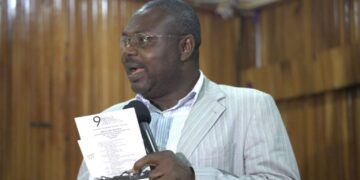
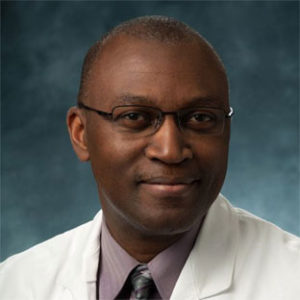
At the centre of the medical team was Dr Oluyinka Olutoye, a Nigerian-born paediatric and fetal surgeon.
Here are the key things to know about his remarkable story.
1. Who is Dr Oluyinka Olutoye?
Dr Oluyinka Olutoye is a Nigerian-born surgeon who specialises in paediatric surgery and fetal surgery.
He has built an international career treating complex medical conditions affecting babies and children and has been associated with the Texas Children’s Fetal Center.
2. He studied medicine in Nigeria
Olutoye earned his medical degree from Obafemi Awolowo University, Ile-Ife, in 1988.
He later moved to the United States, where he pursued further medical and academic training, including a PhD in anatomy from Virginia Commonwealth University.
3. His speciality is paediatric and fetal surgery
Fetal surgery involves treating certain medical conditions before a baby is born.
It is an extremely specialised field because doctors have to consider the health of both the mother and the unborn baby.
4. The case that made him internationally famous involved Lynlee
During Margaret Boemer’s pregnancy, doctors discovered that her unborn daughter, Lynlee, had a rare tumour known as a sacrococcygeal teratoma (SCT).
The tumour was located near the baby’s tailbone and was growing rapidly.
5. The tumour was threatening the baby’s life
The tumour required a large amount of blood flow.
As it grew, Lynlee’s heart was forced to work increasingly hard to supply both her body and the tumour with blood.
Doctors feared that the baby could develop heart failure and die before birth.
6. The operation happened at 23 weeks
At 23 weeks and five days of pregnancy, the medical team decided that waiting was becoming too dangerous.
They performed an emergency open fetal surgery.
The procedure involved opening Margaret’s uterus and carefully bringing Lynlee partially out of the womb.
7. Olutoye and his team removed most of the tumour
The surgeons removed approximately 90 per cent of the tumour while Lynlee was temporarily outside the womb.
The procedure lasted about five hours, although the actual surgical work on the baby was much shorter.
The team then carefully returned Lynlee to the womb and repaired the uterus so the pregnancy could continue.
8. Lynlee’s heart actually stopped during surgery
The operation was extraordinarily risky.
According to Texas Children’s Hospital, Lynlee’s heart stopped at one point during the procedure.
The surgical team was able to continue the operation, remove most of the tumour and return her to the womb.
9. She was eventually born by Caesarean section
After the fetal surgery, Margaret remained under close medical supervision and spent about 12 weeks on bed rest.
Lynlee was eventually delivered by Caesarean section at nearly 36 weeks.
Because she had effectively been removed from the womb during the first operation and later delivered normally, her extraordinary story became known around the world as that of a “baby born twice.”
10. Her treatment did not end at birth
Eight days after her birth, Lynlee underwent another operation to remove the remaining tumour tissue.

The tumour had affected some of the muscles and structures around her spine and pelvis, requiring continued medical monitoring and therapy.
11. The procedure was not the first of its kind for Olutoye

Olutoye was already experienced in fetal surgery before Lynlee’s case.
Texas Children’s records show that he had been involved in complex fetal procedures, including surgery for sacrococcygeal teratoma.
12. The operation involved a large multidisciplinary team
Fetal surgery is not the work of one doctor alone.
It requires specialists including fetal surgeons, paediatric surgeons, obstetricians, anaesthesiologists, neonatologists, cardiologists and other experts working together. Texas Children’s Fetal Center has developed a broad multidisciplinary approach to such cases.
13. Why was the tumour so dangerous?
Sacrococcygeal teratoma is a rare tumour that develops near the base of the baby’s spine.
Some SCTs are relatively manageable, but large and highly vascular tumours can place enormous demands on the fetal heart.
In Lynlee’s case, the tumour was threatening to overwhelm her circulation before she was mature enough to be safely delivered.
14. The case demonstrated what fetal medicine can achieve
Lynlee’s surgery showed that, in carefully selected cases, doctors can intervene surgically before birth when a fetal condition threatens the baby’s survival.
Texas Children’s Fetal Center continues to perform and develop advanced fetal therapies for conditions including SCT, neural tube defects, lung lesions and other fetal abnormalities.
15. The story is also a story of Nigerian medical excellence
Dr Oluyinka Olutoye’s journey — from studying medicine in Nigeria to becoming an internationally recognised paediatric and fetal surgeon — is a powerful example of Nigerian professionals making significant contributions to specialised medicine around the world.
And perhaps the most remarkable part of the story is this:
Lynlee was not simply operated on after birth. Doctors operated on her while she was still developing inside her mother’s womb — and gave her the chance to return, continue growing and eventually be born.
That is the extraordinary medical story behind Dr Oluyinka Olutoye and the “baby born twice.










 EduTimes Africa, a product of Education Times Africa, is a magazine publication that aims to lend its support to close the yawning gap in Africa's educational development.