























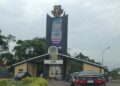
The Federal University of Technology, Ilaro, Ogun State, formerly the Federal Polytechnic, Ilaro, has announced plans to commence operations as a full-fledged university in the 2027/28 academic session.



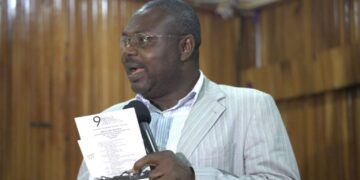
The Acting Vice-Chancellor and Rector of the institution, Dr Mukail Aremu Akinde, disclosed this while marking his fourth anniversary in office.

Akinde, who assumed office on September 27, 2022, said the transition from the Federal Polytechnic, Ilaro, to the Federal University of Technology, Ilaro, was progressing, with the institution preparing for verification by the National Universities Commission.
He said the institution was also working on an Academic Brief, after which a new institutional Master Plan would be finalised as part of the transition process.

“Our people should know that the work of changing FPI to FUTI is progressing. Only that thing must be done strategically,” Akinde said.
“God willing, we are targeting the 2027/28 academic session as a start-off year.”
According to the institution, the transition is being supported by committees headed by former University of Lagos Vice-Chancellor, Prof Ramon Bello, and the Acting Deputy Vice-Chancellor (Academics), Dr Charlotte Bose Iro-Idoro.
The institution has also recorded significant growth in student enrolment and academic programmes since Akinde assumed office.
Akinde said the student population had increased from fewer than 10,000 to more than 27,000, while the number of academic programmes had risen from 34 to more than 100.

The institution, which previously had six schools, now has eight specialised schools following the establishment of the School of Agriculture and the School of Art, Design and Printing Technology.
The expansion has also led to the creation of departments and programmes in areas including Metallurgical Technology, Automotive Technology, Auto-body Technology, Mechanical Engineering Technology, Mechatronics, Cement Technology, Welding and Fabrication, Renewable Energy, Agricultural Technology, Animal Health, Horticulture, Crops and Agricultural Extension.
Akinde said the Welding and Fabrication and Cement Technology programmes were designed to provide specialised manpower for cement companies, including Dangote Cement Plc at Ibese, as well as the Dangote refinery.
The Acting Deputy Vice-Chancellor (Academics), Iro-Idoro, said the proposed university would commence with nine faculties covering Engineering Technology, Sciences, Environmental Technology, Communication and Information, Administrative and Management Sciences, Social Sciences, Computing, Agricultural Technology and Visual Arts.
The institution is also expected to have a Centre for General Studies.
Akinde said the institution had recorded progress in research and innovation, including patents for a 3-in-1 electric tricycle incorporating solar and compressed natural gas technology, as well as an Internet of Things-enabled solar egg incubator and hatcher.
Other innovations developed by the institution include an integrated mixer and extruder for mechanised kokoro production, a motorised digester for palm-oil extraction, a plastic-bottle shredder and a biometric system for student and staff attendance and access control.
The Registrar, Mrs Aderonke Folasade Babatola, said the increase in student enrolment and academic programmes had created a greater need for additional manpower.

She disclosed that the institution currently had at least 80 PhD holders and had recruited 371 new members of staff in two batches of 146 and 225.
Babatola added that the institution was seeking waivers to enable it to recruit more professors.
Akinde also disclosed that the institution was digitising students’ records and results dating back to 1979, with a target of producing transcripts within 24 hours.
He said the automation would also enable students to complete registration online without relying on physical files and paper-based processes.
The Rector added that the Directorate of Printing currently produced about 30 per cent of examination booklets and all students’ files.
He said government and Tertiary Education Trust Fund interventions had contributed to the development of infrastructure and other facilities at the institution through various capital projects, innovation hubs and other interventions.
According to Akinde, the institution’s capital expenditure had increased from about N400m in 2022 to billions of naira.
He added that the administration had facilitated 43 projects through internally generated revenue and constructed a Squadron Mobile Police base to strengthen security for students and staff.
Akinde attributed the institution’s development to the collective efforts of the governing council, principal officers, management, staff, students and unions.
He also said the growth in student enrolment had generated economic benefits for the host community, with transport operators, food vendors and traders benefiting from the increased population.
The Acting Vice-Chancellor attributed the cordial relationship between the institution and the host community to the cooperation of the Olu of Ilaro and Paramount Ruler of Yewaland, Oba Kehinde Gbadewole Olugbenle.
Akinde began his career at the institution in 1987 as a clerk in the Bursary Department and later served in various administrative positions before becoming an instructor in 1999.











 EduTimes Africa, a product of Education Times Africa, is a magazine publication that aims to lend its support to close the yawning gap in Africa's educational development.