





















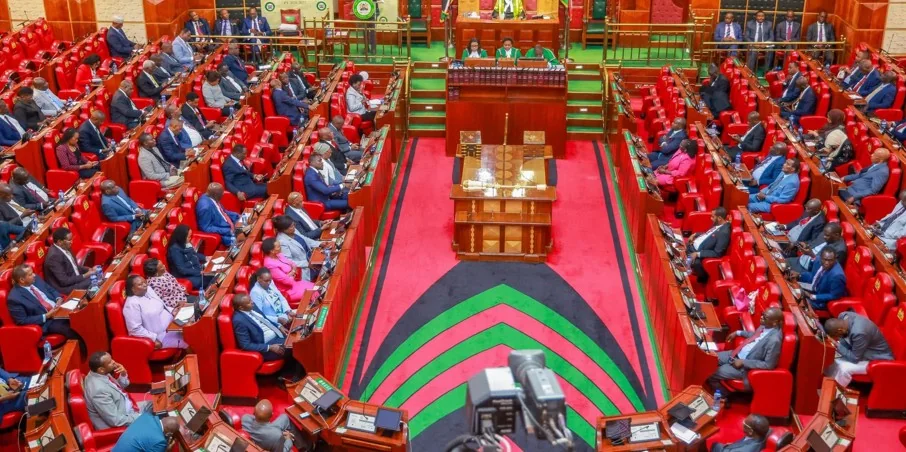


Kenya’s National Assembly has extended the public participation exercise on six proposed education Bills to 2 October 2026, giving citizens and education stakeholders additional time to submit their views on reforms that could significantly change the country’s education system. The extension comes after the Kenya Union of Post-Primary Education Teachers (KUPPET) called for the hearings to be suspended, arguing that the consultation process was too rushed and did not sufficiently engage stakeholders.
The National Assembly Departmental Committee on Education initially scheduled the public hearings from 14 to 25 September. It has now added hearings in 16 counties between 28 September and 2 October, while extending the deadline for written memoranda to 5pm on 2 October. The additional counties include West Pokot, Marsabit, Mandera, Nandi, Bungoma, Garissa, Busia, Lamu, Vihiga, Kitui, Siaya, Migori, Tharaka-Nithi, Nyamira, Bomet and Samburu.

The six Bills cover major areas of Kenya’s education system. They include the Tertiary Education, Placement and Funding Bill, 2026; Basic Education Bill, 2026; Kenya National Educational Assessments Council Bill, 2026; Pre-Service Education and In-Service Training Bill, 2026; Kenya National Qualifications Framework (Amendment) Bill, 2026; and Kenya Institute of Curriculum Development (Amendment) Bill, 2026. The proposed legislation was first introduced in the National Assembly in August as part of efforts to reform education under the country’s Competency-Based Education system.
Among the proposed changes is a new framework for financing tertiary education. The Tertiary Education, Placement and Funding Bill proposes the establishment of a Tertiary Education Funding Authority and a Loans and Scholarships Fund. It would also re-establish the Kenya Universities and Colleges Central Placement Service and repeal the existing Higher Education Loans Board Act. Under the proposed framework, students would receive loans and scholarships to support their education, with students expected to repay loans after completing their studies.


The Basic Education Bill seeks to replace the existing Basic Education Act and establish provisions covering free and compulsory basic education, school administration, quality assurance, scholarships and bursaries. Other proposed laws would restructure the country’s approach to national educational assessment, teacher training and qualifications. The Kenya National Educational Assessments Council Bill, for example, proposes replacing the Kenya National Examinations Council with a new assessment body responsible for examinations, certification and certificate verification.
However, KUPPET has questioned the pace and process of the reforms. The union has argued that some of the proposed legislation lacks a clear policy foundation and costing framework, particularly provisions relating to tertiary education funding. KUPPET Secretary-General Akelo Misori has also raised concerns about inadequate public sensitisation and the accessibility of some venues being used for the hearings.

The position has not been shared by all teachers’ representatives. The Kenya National Union of Teachers (KNUT) has supported the continuation of public participation, arguing that stakeholders should use the hearings to present their views before Parliament considers the Bills. KNUT Secretary-General Collins Oyuu has also backed the proposed comprehensive school model while calling for adjustments to provisions concerning teachers’ representation in education governance.
The National Assembly says the extended consultation is being conducted under Kenya’s constitutional requirement for public participation in legislation. Members of the public and stakeholders in the affected counties can attend the hearings, make oral submissions or submit written memoranda.
If eventually enacted, the six Bills would affect learners, teachers, parents, universities, colleges, TVET institutions and education agencies across Kenya. For now, the legislation remains at the consultation stage, with Parliament expected to consider the views gathered from the public before the Bills proceed through the next stages of the legislative process.









 EduTimes Africa, a product of Education Times Africa, is a magazine publication that aims to lend its support to close the yawning gap in Africa's educational development.