

























President Bola Ahmed Tinubu has directed the Federal Government to develop a framework that will enable universities to move research and endowment funds from the Treasury Single Account (TSA) to commercial banks of their choice.


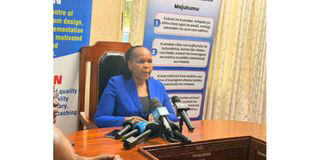
The Minister of Education, Dr Maruf Tunji Alausa, disclosed this at the National Advancement Forum 2026, explaining that the policy was aimed at improving universities’ access to funds and strengthening their ability to mobilise alternative sources of financing.

According to Alausa, some research and endowment funds belonging to universities had been transferred into the TSA before the Tinubu administration, making it difficult for institutions to access and utilise the funds effectively.
He said the new framework would give universities greater flexibility in managing funds generated through research grants, endowments and other non-government sources, while improving confidence in the management and deployment of such resources.

“President Bola Ahmed Tinubu has met you halfway. He has given you the leverage and the opportunity to do your jobs well. You must now take advantage of it,” Alausa told vice-chancellors at the forum.
The minister, however, said many universities were yet to take full advantage of opportunities to diversify their funding sources. He disclosed that only four of the 68 federal universities were currently making meaningful use of alternative funding opportunities such as research grants, endowments, alumni donations, philanthropy and industry partnerships.
Alausa said government funding alone was insufficient to meet the growing needs of universities, urging vice-chancellors to make resource mobilisation a central responsibility of their administrations.

“Government funding is not enough. Universities live, function and excel on blended funding,” he said.
He encouraged universities to strengthen relationships with alumni, businesses, philanthropists, research funders and industry partners to finance research, laboratories, scholarships, innovation programmes and other institutional needs.
The minister also clarified that the Federal Government was not withdrawing financial support from tertiary institutions, noting that the administration had increased budgetary allocations and continued to provide infrastructure and other interventions.

He said the Federal Government currently bears personnel costs in full, while universities retain 75 per cent of their internally generated revenue and continue to benefit from interventions by the Tertiary Education Trust Fund (TETFund).
As part of the new resource mobilisation strategy, Alausa directed universities to place their Advancement Offices directly under Vice-Chancellors rather than Registrars.
He also directed that Directors of Advancement should have a minimum five-year internal tenure, renewable where appropriate, to enable them to establish long-term relationships with donors, alumni, industries and philanthropic organisations.
“Advancement Office operation is a professional job,” the minister said, describing advancement officers as professional fundraisers who require stability and institutional support.
Alausa further urged universities to improve their alumni engagement systems by developing functional databases and using technology to maintain relationships with graduates in Nigeria and abroad.
He disclosed that the Federal Ministry of Education, in collaboration with the Nigerian Higher Education Foundation, would develop a national framework for sustainable financing of tertiary institutions.
The framework, he said, would cover endowment governance, accountability, research grants, Advancement Office structures, alumni giving, industry partnerships, philanthropy incentives, revenue management and transparency.
Alausa warned that universities that fail to diversify their funding sources could face challenges in sustaining institutional growth, research and academic development.











 EduTimes Africa, a product of Education Times Africa, is a magazine publication that aims to lend its support to close the yawning gap in Africa's educational development.