























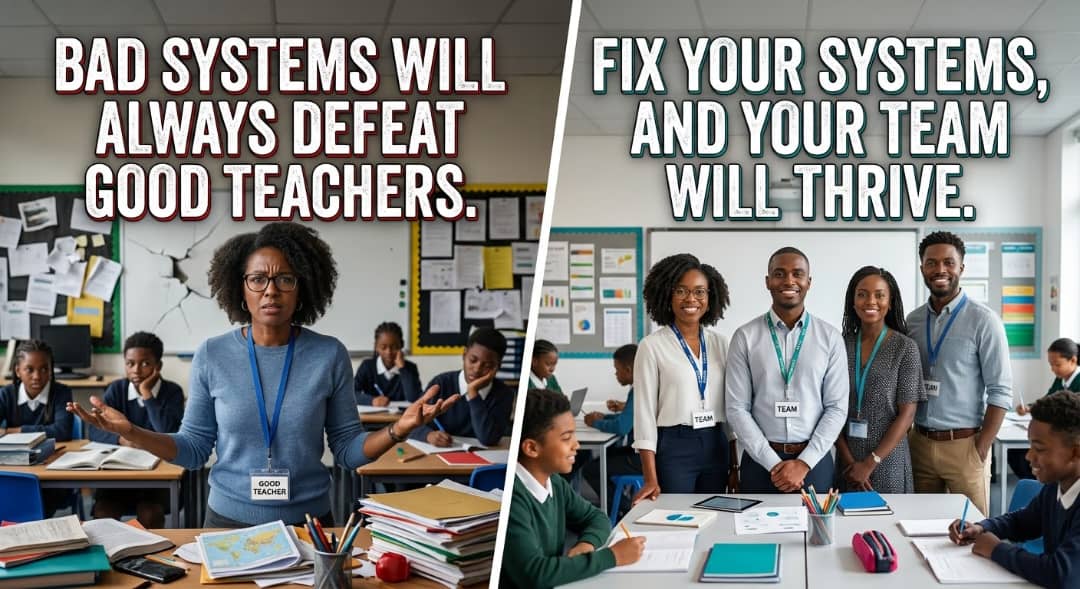


We have all seen it happen or even experience it: you hire an enthusiastic, talented teacher or administrator, but a few months in, they are burnt out, overwhelmed, and struggling to deliver.


It is easy to assume it is a performance issue, but more often than not, it is a structural one. Bad school systems will drain even your best staff. If you want to see real improvement in your school, stop relying on individual willpower and start building better operational systems.

Here are 5 ways to strengthen your school systems so your staff can actually succeed:
1️⃣ Stop relying on sheer effort build repeatable routines:

Dedicated teachers will pour their hearts into the classroom, but burnout is real. When lesson planning, classroom management, or grading processes aren’t standardized, performance fluctuates wildly. One week is amazing; the next week is chaotic.
Clearly define standard operational procedures from how lesson notes are submitted to how morning assemblies are run. When the routine is clear, quality stays consistent without exhausting your team.
2️⃣ Make expectations visible and measurable:
Telling your staff to “be more proactive” or “maintain high academic standards” sounds good, but it’s too vague. When expectations are cloudy, even top-tier educators get confused about what leadership actually wants.
Define what success looks like in concrete terms. Specify deadlines for report sheet submissions, clear criteria for classroom management, and exact guidelines for parent communication.
_Clarity eliminates anxiety._
3️⃣ Support execution, don’t create administrative confusion:
In many schools, critical information lives entirely in people’s heads, WhatsApp group chats, or verbal announcements made in passing. This leads to missed deadlines, last-minute panic, and unnecessary stress.
Set up simple, dependable channels for workflow. Clarify who approves lesson plans, who handles student discipline referrals, and how teaching aids are requested. Smooth logistics let teachers focus on teaching.
4️⃣ Track performance consistently, not reactively:
If you only look at teacher performance when parents complain or exam results drop, you’re not proactive; acting too late.
Accountability isn’t about micromanagement; it’s about giving your staff a safety net. It is not looking for victims but people to empower through constructive feedback.
Implement light-touch, regular check-ins. Weekly departmental reviews, brief lesson observations, and routine record checks keep everyone aligned and prevent small issues from becoming major crises.

5️⃣ Build a culture of continuous feedback and coaching
Even the most seasoned outstanding educators without constructive input. If feedback only happens during end-of-year or term reviews or when a mistake is made, teachers feel defensive rather than supported.

Here is what to do…
Offer ongoing, early guidance. Catch teachers doing things right, offer actionable suggestions after lesson observations, and provide professional development opportunities. Growth happens when support is continuous.
You can hire the best educators or manager in the world, but put them in a disorganized system, and their output will naturally drop.
_Structure is what protects performance._
Before you rush to replace staff or blame enthusiasm, take a close look at the environment they are working in. Fix the system first, that’s where real transformation begins.
My name is Stephen Aremu, I am an Education Strategist and a School Growth Consultant. 08055266237
Credit: IConcept Educonsult












 EduTimes Africa, a product of Education Times Africa, is a magazine publication that aims to lend its support to close the yawning gap in Africa's educational development.