



























The Federal Government has announced plans to support 40 tertiary institutions with up to ₦2 billion each under the Renewed Hope Tertiary Agricultural and Entrepreneurship Programme to boost food production, agricultural research and youth employment.
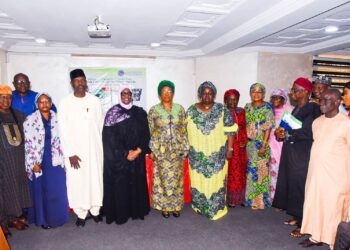
The Minister of Education, Dr Tunji Alausa, disclosed this during a meeting with heads of the selected tertiary institutions and the management of the Bank of Agriculture to discuss the implementation of the initiative.


According to Alausa, the programme aims to transform more than 500,000 hectares of underutilised land across tertiary institutions into productive agricultural hubs for commercial farming, research and entrepreneurship.
He explained that participating universities, polytechnics and colleges of education are expected to provide approximately 1,000 hectares of land each, although institutions with smaller landholdings may qualify based on the viability of their business proposals.


Under the arrangement, each participating institution will establish a limited liability company to partner with the Bank of Agriculture, which will provide between ₦1 billion and ₦2 billion in financing for agricultural production, equipment and other operational requirements.
The minister said the initiative would build on previous Federal Government interventions through the Tertiary Education Trust Fund (TETFund), which approved agricultural funding support of ₦1 billion for some institutions and ₦2 billion for others.
He added that the Federal Ministry of Education had also made provision of ₦20 billion in its 2026 capital budget to support 20 tertiary institutions under the agricultural development initiative.
On mechanisation, Alausa disclosed that participating institutions would have access to 10 tractors each at significantly reduced costs through the government’s agricultural mechanisation initiative.
The support package would also include improved seedlings, farm implements, irrigation equipment, water pumps, fertilisers and technical expertise to strengthen agricultural productivity.
To ensure a sustainable market for harvested produce, the government will establish partnerships with produce aggregators to facilitate purchases and introduce measures to minimise post-harvest losses.
Alausa noted that the programme would extend beyond primary agricultural production to include processing and other agro-allied activities, creating a sustainable agricultural value chain within participating institutions.
He said the initiative would also provide employment and entrepreneurship opportunities for students, unemployed graduates, alumni, academic and non-academic staff, as well as members of host communities.
According to him, students and graduates would gain practical farming experience under the supervision of lecturers and agricultural experts while participating in the economic benefits generated by the agricultural ventures.
The minister projected that the programme could attract investments worth trillions of naira in the coming years, while repositioning tertiary institutions as centres of agricultural innovation, commercial production and enterprise development.
The Vice-Chancellor of Ahmadu Bello University, Zaria, Professor Adamu Ahmed, welcomed the initiative, describing it as an opportunity to strengthen the institution’s agricultural research and production capacity.
He highlighted the university’s existing agricultural infrastructure, including the Institute of Agricultural Research, the National Agricultural Extension and Research Liaison Services and its Faculty of Agriculture, noting that the partnership would help translate research findings into commercial agricultural activities.
Similarly, the Rector of Federal Polytechnic Oko, Dr Chioma Irene Awuzie, commended the Federal Government for introducing the programme, saying it would enable the institution to maximise its available land through mechanised farming and improve agricultural production.
The Managing Director and Chief Executive Officer of the Bank of Agriculture, Ayo Sotinrin, said the bank would provide financing and market linkages to help participating institutions commercialise agricultural research, increase productivity and generate revenue.
He added that the programme would enable tertiary institutions to contribute to food supply beyond their immediate communities while creating opportunities for students and unemployed graduates.
Alausa reaffirmed the ministry’s commitment to working with the Bank of Agriculture, relevant government agencies and participating institutions to ensure the successful implementation of the initiative.
He said the programme was part of the Federal Government’s broader efforts to strengthen food security, empower young Nigerians and position tertiary institutions as active contributors to the country’s agricultural economy.













 EduTimes Africa, a product of Education Times Africa, is a magazine publication that aims to lend its support to close the yawning gap in Africa's educational development.