


























Nigeria’s Minister of Education, Dr Tunji Alausa, has held discussions with the leadership of Harrisburg University of Science and Technology in Pennsylvania, United States, on potential Transnational Education partnerships to strengthen practical Science, Technology, Engineering and Mathematics education in Nigerian universities.



The discussions focused on emerging fields including robotics, artificial intelligence, data science, cybersecurity, biotechnology, health sciences and advanced manufacturing, as the Federal Government explores ways of connecting Nigerian higher education institutions with international expertise and industry-oriented training.

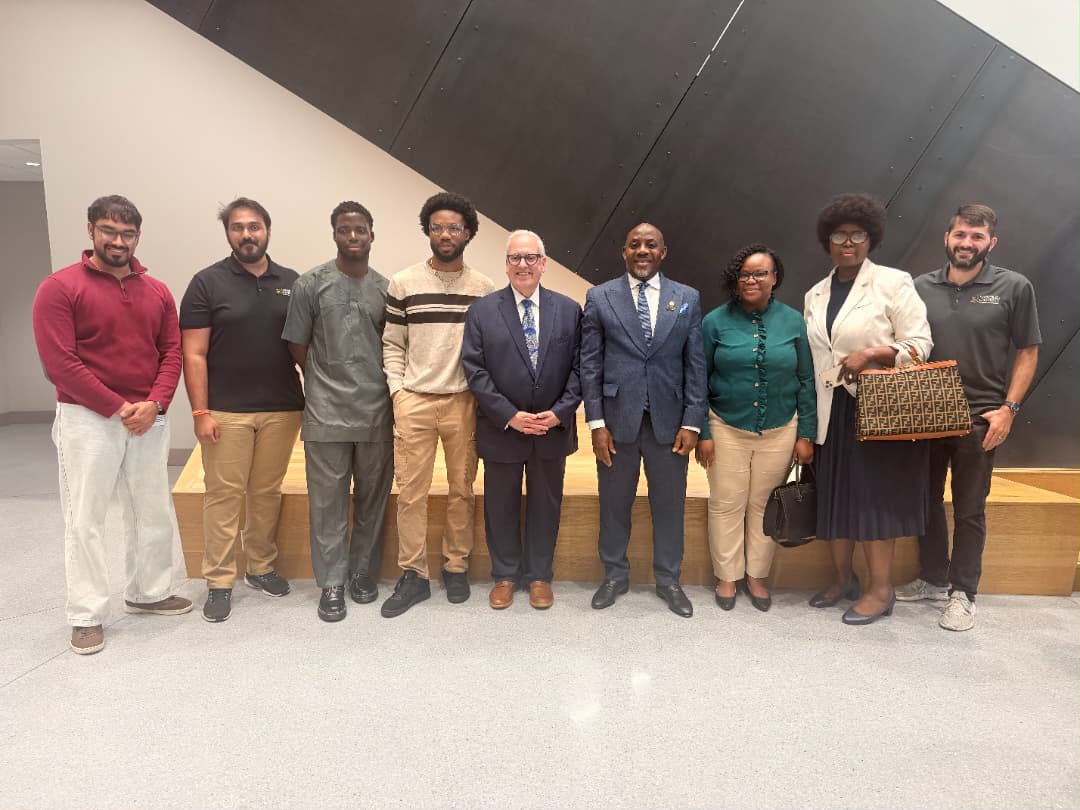
Alausa led a Nigerian delegation on a tour of Harrisburg University’s hands-on STEM laboratories and applied learning facilities, where the delegation met the university’s President, Dr Christopher M. Reber, and other senior officials.
During the visit, the delegation examined facilities including the university’s health sciences and advanced manufacturing spaces. Students also demonstrated practical applications of their training in advanced manufacturing, robotics, cybersecurity, data analytics, biotechnology, health sciences and interactive media.

The demonstrations gave the Nigerian delegation an insight into an education model that combines classroom instruction with laboratory experimentation, research, technology and practical problem-solving.

According to the Federal Ministry of Education, the engagement forms part of efforts to develop international academic partnerships capable of improving practical training, research, innovation and technology transfer in Nigerian universities.
Alausa said Transnational Education could provide a structured mechanism for Nigerian universities to establish academic links with reputable institutions abroad. Nigeria, through the National Universities Commission, has a framework that provides for joint, twinning and articulation programmes, branch campuses, online and blended learning, franchised programmes, joint academic and research initiatives, as well as faculty and student exchanges.
The minister stressed that such partnerships should go beyond providing access to foreign qualifications, noting that properly structured international collaborations could support knowledge exchange, research and innovation, faculty development, technology transfer and stronger relationships between universities and industry.
The areas examined during the visit are among fields experiencing rapid growth globally. The ministry said collaboration in artificial intelligence, data science, cybersecurity, robotics, advanced manufacturing, biotechnology and health sciences could help Nigerian universities strengthen laboratory-based learning, expand research capacity and improve the practical skills of graduates.
The visit also provided an opportunity for Alausa to interact with Nigerian and other African students at Harrisburg University. The engagement coincided with the 2026 African Cultural Festival in Harrisburg, which was held under the theme, “The Great Reunion: Culture, Education, and Collaboration.”
Harrisburg University had earlier said the visit would include discussions on potential collaboration in STEM education, student pathways and workforce development. University President Christopher M. Reber said the institution was interested in exploring ways its programmes could serve Nigerian students and strengthen educational ties between Pennsylvania and Africa.
Those involved in the engagement included Harrisburg University’s Chief Strategy Officer, David Clickner; Richard Pitts Jr., chair of the Department of Manufacturing Systems; Dr Luanne Reese Hutchinson, Executive Director of the Strategic Healthcare Initiative; Wole Adeniyi of the African Cultural Festival; and Nigerian and other African students at the university.

The Federal Ministry of Education said the discussions were aimed at ensuring that international academic relationships translate into practical benefits for Nigerian students and institutions, particularly in skills development, research, innovation and technology.
Alausa said the Federal Ministry of Education would continue to pursue reforms and strategic international initiatives aimed at strengthening education, skills development and innovation as part of the Federal Government’s broader development agenda.
He said the ministry remained committed to equipping Nigerian students with the knowledge, practical competencies and technological skills required to contribute to innovation and participate effectively in the global knowledge economy.













 EduTimes Africa, a product of Education Times Africa, is a magazine publication that aims to lend its support to close the yawning gap in Africa's educational development.