
























At least 223,749 children are completely out of school in Cameroon’s North-West and South-West regions, while 2,463 schools are currently non-operational following years of conflict and displacement.
The figures were disclosed by UNICEF in a report published on September 11, 2026, highlighting the continuing impact of the crisis on children’s access to education in the two regions. ([UNICEF][1])

According to UNICEF, 2,005 schools are non-operational in the North-West, while another 458 schools have been affected in the South-West.
The prolonged crisis has forced families to flee their communities, disrupted teaching and left thousands of children without consistent access to formal education.

For many affected children, the disruption has meant missing several years of schooling and falling behind their peers.
UNICEF, with support from the European Union Humanitarian Aid and Cameroon’s education authorities, is implementing programmes aimed at helping children recover lost learning and return to formal education.
One of the interventions is the Accelerated Curriculum for the Reintegration of Dropout Children, known as CARED.
The programme provides accelerated lessons for children who have been out of school, with a focus on foundational skills including reading, writing and mathematics, as well as science, technology and environmental education.
The initiative is designed to serve as a bridge back into formal education rather than a permanent alternative to conventional schooling.
UNICEF said teachers involved in the programme use multigrade teaching approaches to support children with different learning levels, while parents and communities are also encouraged to support the children’s return to school.
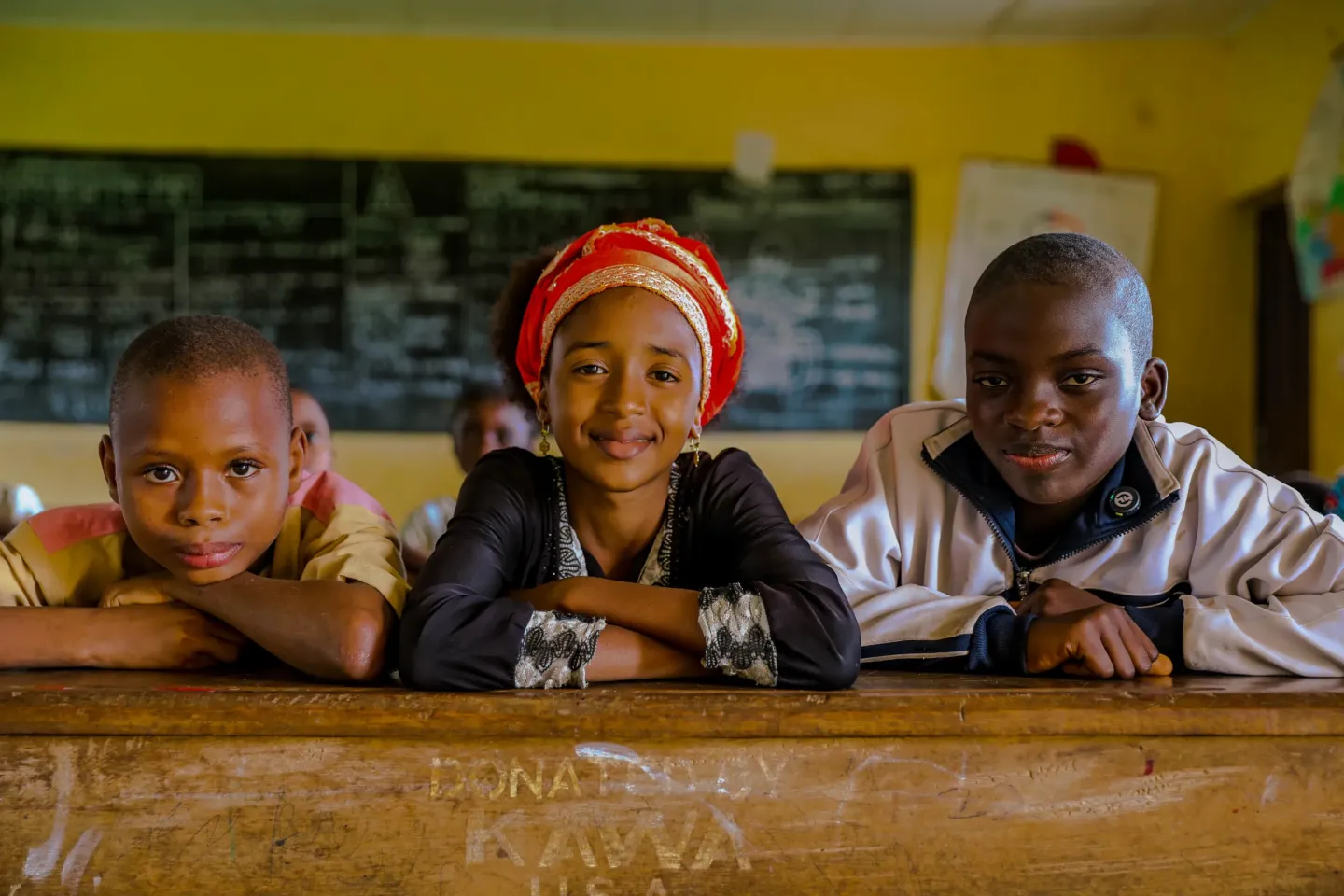
The organisation highlighted the experiences of children such as 10-year-old Aminatou, who fled Bamenda with her family and settled in Kumba.
Aminatou is currently attending CARED classes and said she hopes to become a nurse.
Another beneficiary, 10-year-old Ali Baba, is rebuilding his reading, writing and mathematics skills through the programme and hopes to become a police officer.
Eleven-year-old Treasure, who enjoys mathematics, also hopes to become a doctor.

UNICEF said the experiences of the children demonstrate the importance of providing alternative learning opportunities for children whose education has been interrupted by conflict.
The situation in Cameroon also illustrates the wider education crisis created by insecurity across parts of Africa, where school closures, displacement and attacks on education continue to prevent millions of children from accessing learning.
Earlier data from UNICEF and education partners showed that school closures linked to insecurity have become a major challenge across West and Central Africa. Nearly 15,000 schools were reported closed across 24 countries in the region in 2025, affecting an estimated three million children. ([UNICEF][2])
For Cameroon, the challenge is not simply reopening schools. Children who have missed years of education require targeted academic support, safe learning environments, trained teachers and sustained assistance to help them return and remain in school.
UNICEF said continued investment in accelerated learning, safe education and support for affected families would be essential to ensuring that children disrupted by the crisis are not permanently excluded from education. ([UNICEF][1])











 EduTimes Africa, a product of Education Times Africa, is a magazine publication that aims to lend its support to close the yawning gap in Africa's educational development.