






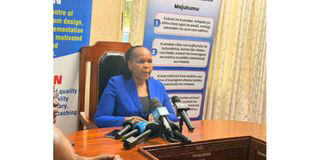

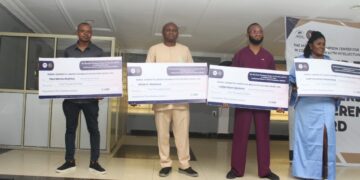















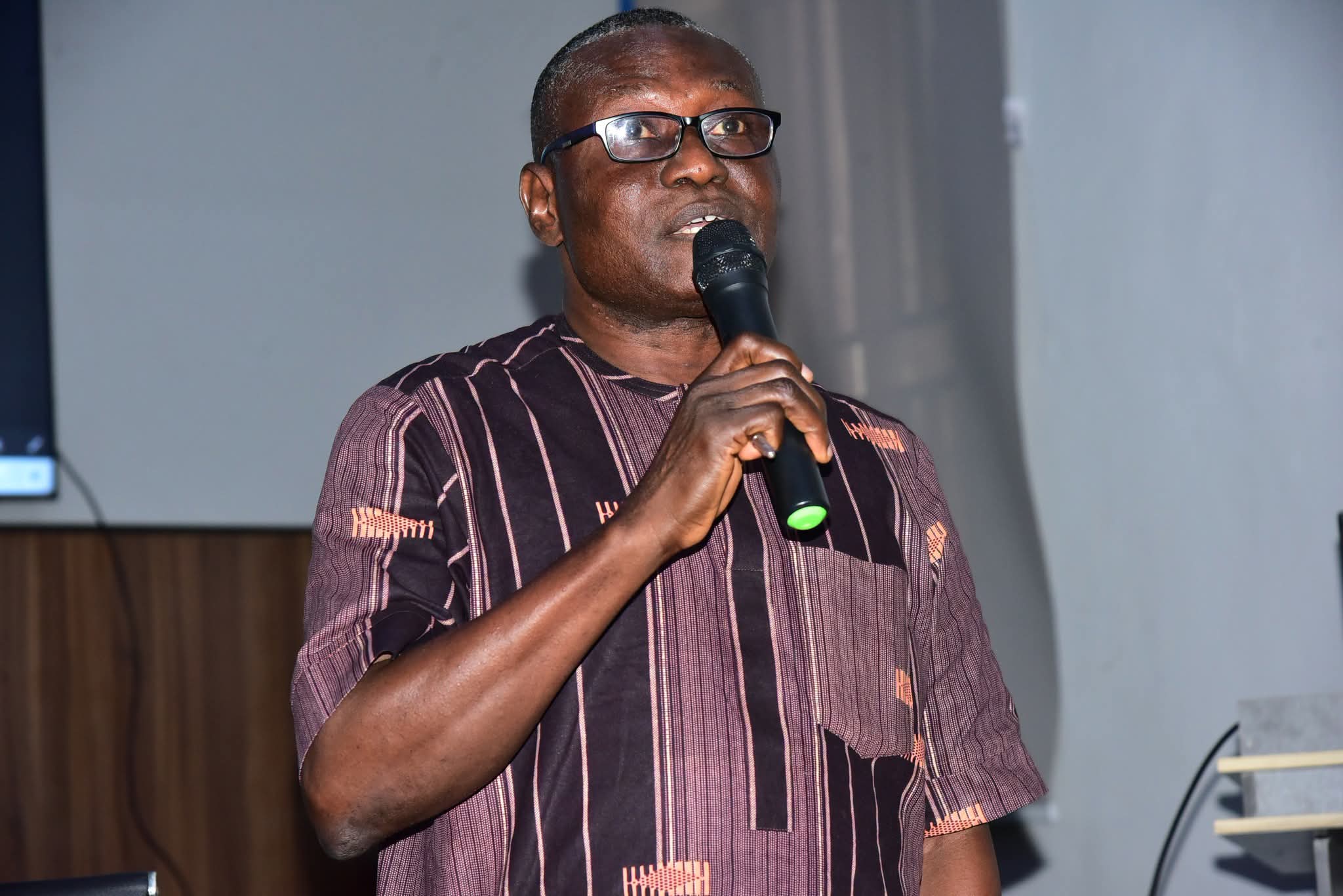


The management of the Federal University of Technology Akure FUTA has reaffirmed its commitment to boosting the quality of research output in the institution by equipping staff and students with practical knowledge and modern analytical skills for research, engineering, iindustrial, and technological applications. The Vice Chancellor of the institution, Professor Adenike Oladiji, made this known while declaring open a three-day hands-on training organized by the institution’s Centre for Research Development CERAD, in collaboration with the Tertiary Education Trust Fund TETFUND, for staff and students of the postgraduate school.



Speaking during the training tagged “Enhancing Multi-Disciplinary Material Characterization and Analysis Capacity”, the Vice Chancellor stressed the importance of the training to enhancing research competence in the institution and meeting the institution’s core responsibility as a research-focused university. She affirmed, “FUTA is a specialized institution. One of the things that sets us apart is our research. FUTA ranks among the top Nigerian institutions in research output and scientific impact.”
Oladiji, who was represented by the Deputy Vice Chancellor Academic, Professor Timothy Amos, therefore enjoined participants to take maximum advantage of the training to equip themselves with the practical skills required as researchers. The Vice Chancellor encouraged them, “You don’t get this type of training easily. Appreciate the fact that you have this privilege. Make your impact. You should be able to have a catalogue of what you are taking away at the end of this training.”

In a remark, the Director, CERAD, FUTA, Professor Kenneth Alaneme, noted that the training was necessitated by the desire to equip participants with both the technical and analytical skills required to utilize and generate data from characterization facilities, interpret data, enabling them to make sound decisions and provide more incisive insights from results, improve performance, and ensure everything that concerns their research is done effectively. Prof Alaneme, who stressed that the university has thousands of documents published in Scopus, with many authors acknowledged, hence the need for this training to develop themselves and help the university gain more presence and publications in the global indexing community.
According to the CERAD Director, “Adopting computational techniques has become so important. Translate it to your respective work so that your research output will continue to improve. Exercise of this nature will improve the number of research works on Scopus.” The CERAD boss appreciated the Vice Chancellor, Professor Oladiji, for her dedication and commitment to the institution’s mandate to advance technological development through innovative research.
Earlier in his welcome address, a resource person principal research investigator , Professor Davis Folorunso, pointed out that the essence of the “hands-on training” on equipment design and statistical analysis was to bridge the gap between theory and practical application. The principal investigator noted that ,”This training is beneficial to all in FUTA, as it is linked to the medical sciences, life sciences, agriculture, as well as other fields.” Folorunso explained that the outcome of the three-day ” Hands-on training “will determine the next line of action, as it will enable evaluation and documentation to help track progress, measure outcomes, and decide subsequent editions of the training.



The three-day workshop featured a training on Design of Experiments and Statistical Data Analysis. Dr. O.O Ojo anchored the Design of Experiments part, which covered key areas such as Plackett–Burman Design and Response Surface Methodology (RSM),among others. The training on Computational Molecular Biology (CMB) was presented in two lecture sessions by Mr. Haruna I Umar, Department of Biochemistry, Federal University Lokoja and Dr. O. W. Fasakin, Department of Medical Biochemistry, Federal University of Technology, Akure.
Dr. Chukwuemeka C. Ugwu, Data Science Department, Federal University of Technology, Akure introduced participants to the fundamental concepts and real-world applications of machine learning. It was divided into two main sessions: a theoretical session and a practical session. During the theoretical session, participants were introduced to the basic principles of machine learning, including how computer systems learn from data, identify patterns, make predictions, and support informed decision-making.











 EduTimes Africa, a product of Education Times Africa, is a magazine publication that aims to lend its support to close the yawning gap in Africa's educational development.