

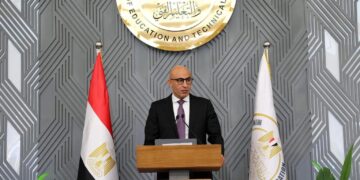





















The Minister of Education, Dr Maruf Tunji Alausa, has said President Bola Ahmed Tinubu’s administration has invested more than ₦1 trillion in Nigeria’s tertiary education sector over the past two years while removing financial barriers that have prevented many qualified students from accessing higher education.
Alausa stated that the Federal Government’s reforms are aimed at ensuring that no qualified Nigerian is denied access to higher education because of financial hardship, while strengthening universities, polytechnics and colleges of education to produce the skilled workforce required for national development.

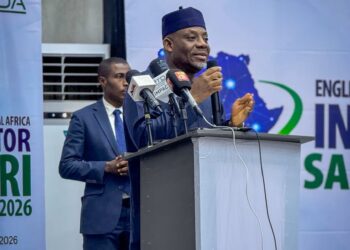
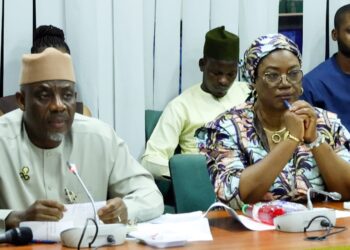
The minister made the remarks on Tuesday during a meeting with members of the National Committee for the Advancement of Occupational Therapy, Audiology and Speech and Language Therapy Education in Abuja.
According to him, the Tinubu administration has prioritised investment in human capital development through sustained funding for infrastructure, specialised training facilities and modern learning environments across tertiary institutions.

“This President, President Bola Ahmed Tinubu, has opened up access to students so that not having money, or coming from an indigent family, or your parents being poor, will no longer stop you from achieving the opportunities you can achieve in life. Education is no longer a barrier for students in this country,” Alausa said.
He described the reforms as a strategic investment in Nigeria’s future, adding that the President had demonstrated confidence in the country’s youth through policies designed to expand educational opportunities and improve the quality of tertiary education.
Providing a breakdown of the investments, the minister disclosed that ₦250 billion has been committed to the construction of new student hostels across tertiary institutions, while more than ₦150 billion has been invested in the rehabilitation of existing hostels, classrooms, engineering workshops and other academic facilities.
He also revealed that over ₦130 billion has been invested in rehabilitating medical schools and expanding their training capacity nationwide.
In addition, the Federal Government has committed another ₦52 billion to provide modern equipment for 18 medical schools and nearly ₦30 billion to establish 11 state-of-the-art medical simulation laboratories to improve practical clinical training.

To strengthen engineering education, Alausa said the government has invested almost ₦110 billion in constructing and rehabilitating engineering workshops and equipping federal universities of technology, conventional universities offering engineering programmes and polytechnics.
He described the interventions as among the largest investments ever made in Nigeria’s tertiary education sector, noting that the funds cover new infrastructure, rehabilitation of facilities, procurement of modern equipment, expansion of specialised laboratories and workshops, and institutional capacity building.
According to him, the investments are expected to produce graduates equipped with the technical knowledge and practical skills needed to drive innovation, industrialisation and long-term economic growth.
During the meeting, the Chairman of the National Committee for the Advancement of Occupational Therapy, Audiology and Speech and Language Therapy Education, Dr Victoria Omua Amu, presented the committee’s progress report.

She said the committee had developed a one-year implementation plan with clear timelines and performance indicators, established a governance framework and constituted three specialised subcommittees covering advocacy and communication, academic liaison and clinical training, and manpower development and transition pathways.
Amu disclosed that a baseline assessment showed that six Nigerian universities currently offer Audiology programmes, five offer Occupational Therapy programmes, while three offer Speech and Language Therapy programmes.
She added that the committee has commenced consultations with the National Universities Commission, the Medical Rehabilitation Therapists (Registration) Board of Nigeria, universities, professional associations and private tertiary education providers.
According to her, the University of Benin will begin offering Occupational Therapy in the 2026/2027 academic session, while delayed release of TETFund support remains the committee’s major implementation challenge.
Alausa reaffirmed the Federal Ministry of Education’s commitment to collaborating with tertiary institutions and stakeholders to ensure that the ongoing reforms translate into improved educational outcomes, stronger institutions and expanded opportunities for Nigerian students.
He reiterated that no qualified student should be denied access to higher education because of financial constraints and pledged continued government support for world-class teaching, research and innovation in Nigeria’s tertiary institutions.








 EduTimes Africa, a product of Education Times Africa, is a magazine publication that aims to lend its support to close the yawning gap in Africa's educational development.