























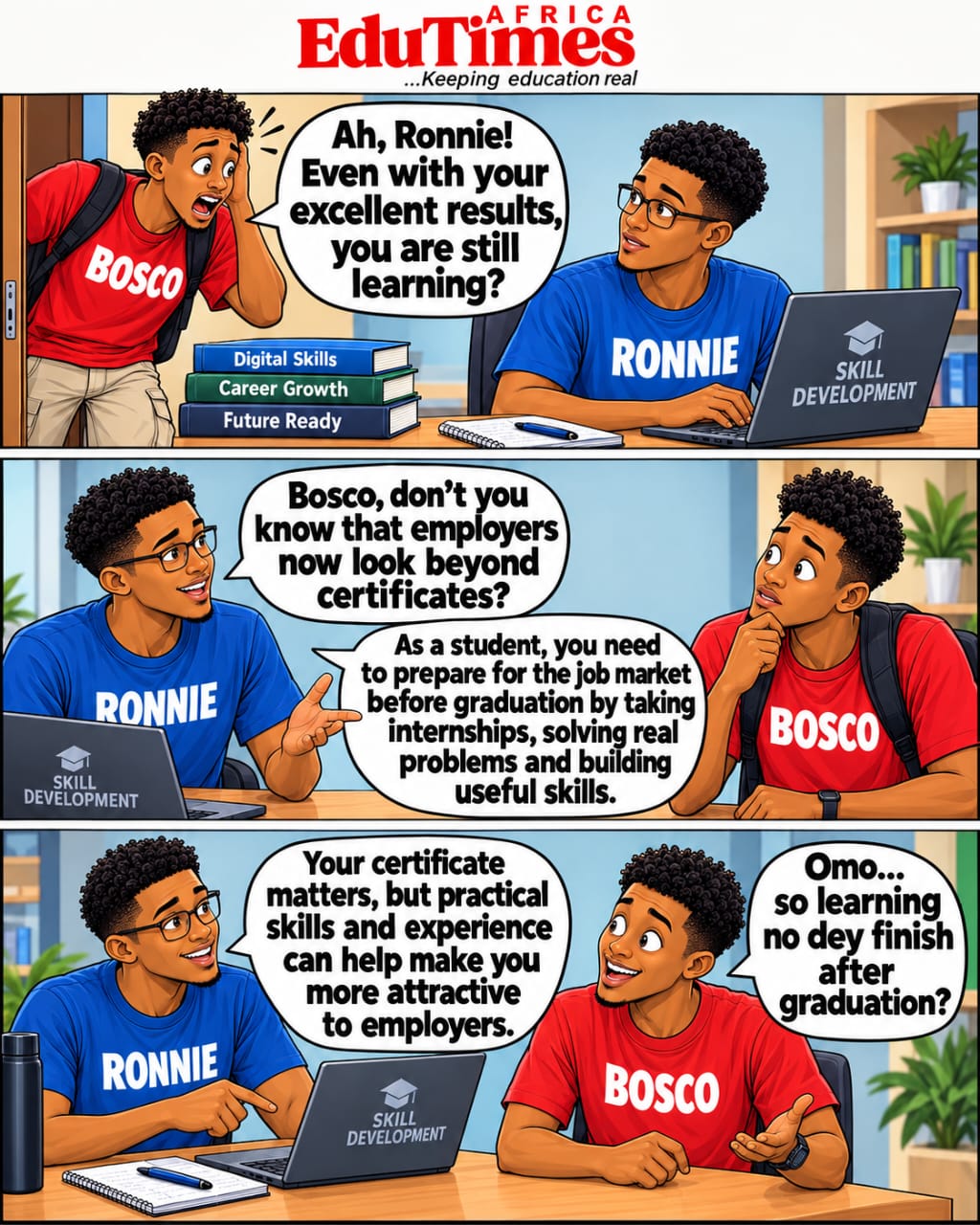
The University of Lagos (UNILAG) has strengthened its institutional relationship with the United States following a high-level engagement between the university’s management and senior officials of the US Department of State.



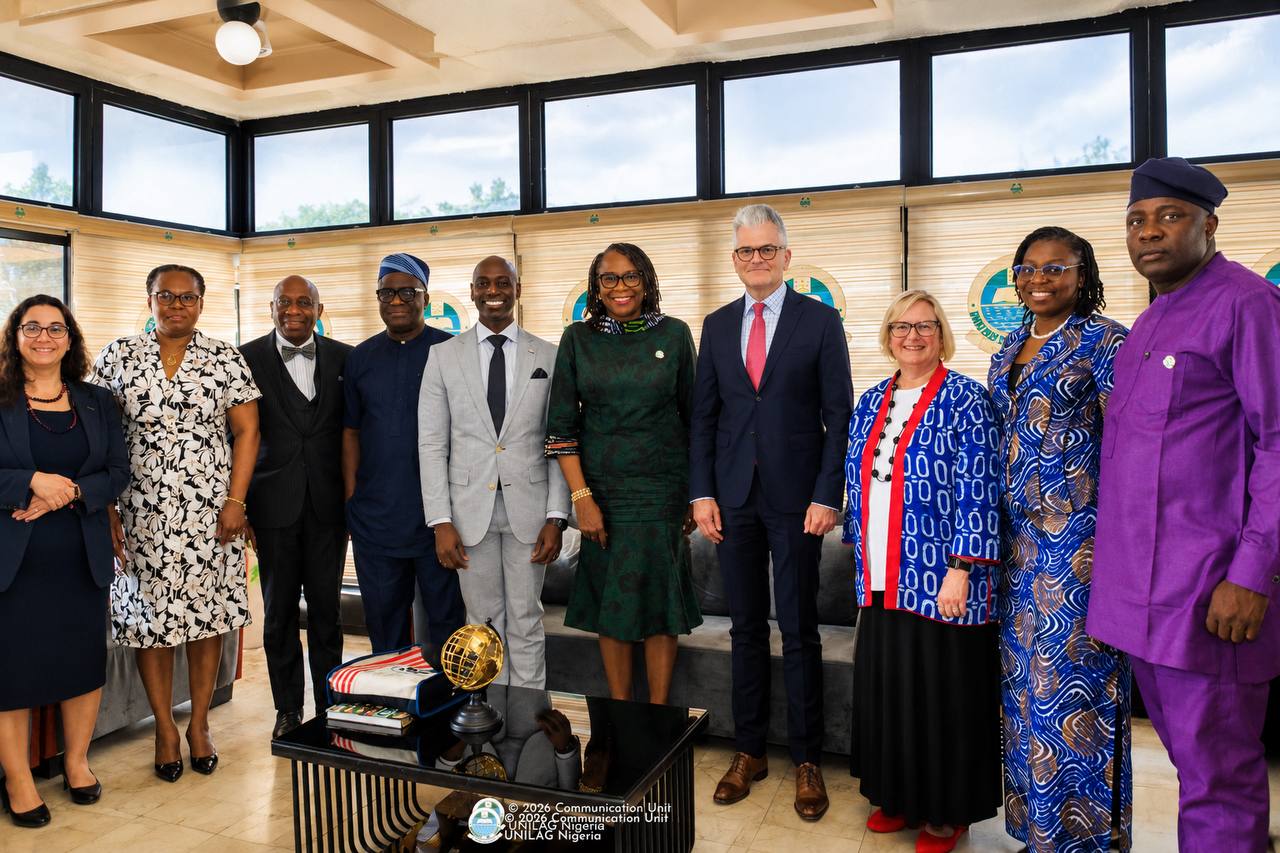
The engagement took place on Tuesday, October 6, 2026, when UNILAG Vice-Chancellor, Professor Folasade Ogunsola, OON, FAS, received Richard C. Michaels, Deputy Assistant Secretary in the US Department of State’s Bureau of African Affairs, and Brandon Hudspeth, the new US Consul General in Lagos.

The officials were received at the Senate House Office of the Vice-Chancellor alongside members of the university’s management team, including Deputy Vice-Chancellor (Management Services), Professor Olumuyiwa Falaiye; Registrar and Secretary to Council, Mrs Victoria Abosede Wickliffe; Bursar, Mrs Oluwafunmilola Yetunde Adekunle; and University Librarian, Professor Christopher Olatokunbo Okiki.
During the meeting, Ogunsola highlighted UNILAG’s existing partnerships with several American institutions, including the University of Iowa, Case Western Reserve University, Spelman College and the University of Virginia.

She also outlined some of the university’s initiatives, including its community college programme in film, which brings together students from Mass Communication and Creative Arts, as well as the Foundation Programme, a one-year preparatory programme for prospective university students.
According to the Vice-Chancellor, students of the university have benefited from interactions and engagements with American institutions and partners.
The visit also featured an exchange of gifts between UNILAG management and the visiting officials, reflecting the university’s interest in deepening its relationship with US institutions.
Following the courtesy visit, the delegation participated in a Creative Commerce Panel organised by the US Mission Nigeria and American Spaces Nigeria at the UNILAG Window on America.
The panel, themed “Connecting US and Nigerian Talent, Technology and Business”, focused on opportunities for Nigerian creatives to build sustainable businesses while strengthening links between the Nigerian and American creative industries.
Speaking at the event, Michaels said the United States was placing greater emphasis on trade and investment rather than dependency and assistance in its engagement with Nigeria.
He disclosed that Nigeria was the second-largest US trading partner in sub-Saharan Africa, with almost $15 billion in goods and services trade recorded last year.
Michaels also said more than 100 US companies currently operate in Nigeria, adding that the country’s creative economy had emerged as a major area of opportunity.
He described Nigeria as home to Africa’s largest entertainment industry and one of the world’s leading film industries, while pointing to growing collaborations in music, film and fashion.
He cited the international growth of Afrobeats, investments by American music companies such as Universal Music Group, EMPIRE and Warner Music Group, as well as cultural exchange programmes including the American Film Institute, Global Media Makers and American Music Mentorship exchanges.
The Creative Commerce Panel featured Tobi Ayeni, popularly known as Miss Techy and a content creator and tech storyteller; Kolawole Fashola, Vice-President, Business Affairs and Operations at Temple Group; Esther Kemi Gbadamosi, CEO and Creative Director of Radioixity Media; and Fatimah Gimsay, a screenwriter, director and producer.

The panellists encouraged emerging creatives to focus on creating clear value rather than relying solely on large social media followings.
They advised creators to identify and develop their unique skills, participate in relevant workshops and industry programmes, and pursue partnerships with established brands by demonstrating professionalism, readiness and value.
The discussion also focused on storytelling and the need for Nigerian creators to preserve the cultural identity of their stories while making them accessible to international audiences.
Participants noted that authenticity was increasingly important in attracting global audiences, particularly in areas such as animation, film, cosplay and festival culture.
Artificial intelligence also featured prominently during the discussion, with panellists noting that the technology was lowering barriers to entry for creators by making it possible to produce visual and dramatic content at a lower cost.
However, they stressed that technology alone could not replace originality, arguing that personal voice, cultural perspective and strong storytelling would remain key differentiators as AI-generated content becomes more widespread.
The panellists also identified the limited representation of Nigerian and African narratives in AI-generated content as both a challenge and an opportunity for local creators to influence how African stories are represented in emerging technologies.
They identified continuous skills development, professionalism and collaboration as key requirements for attracting more investment into Nigeria’s creative sector.
The engagement between UNILAG and the US delegation highlights the growing role of the creative economy in strengthening educational, cultural and commercial ties between Nigeria and the United States.
It also positions universities and young creatives as important players in developing new opportunities around technology, intellectual property, entrepreneurship, investment and job creation.










 EduTimes Africa, a product of Education Times Africa, is a magazine publication that aims to lend its support to close the yawning gap in Africa's educational development.