























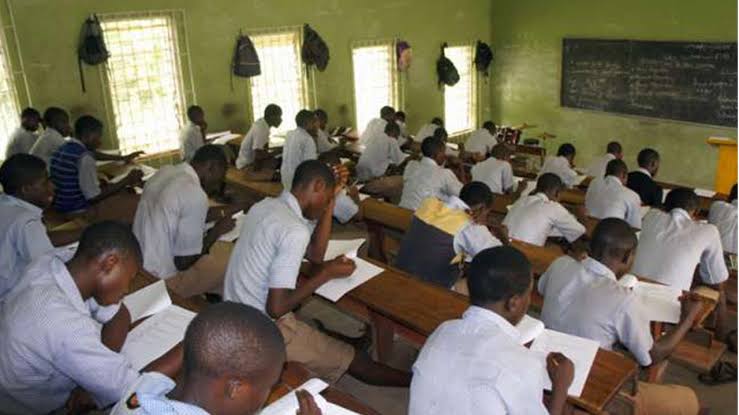


As examination bodies across Nigeria, Ghana, Sierra Leone, The Gambia, and Liberia accelerate the transition to Computer-Based Testing (CBT) for the late-2026 GCE private candidate series and the 2027 May/June WASSCE and NECO SSCE, secondary school candidates face two hurdles at once. First, they must get comfortable navigating timed digital exam halls under pressure. Second, and even more important, they have to stop losing marks to recurring conceptual traps that show up year after year in core subjects.
Most traditional revision tools only tell a student their raw score at the end of a practice paper, such as “You scored 6 out of 10.” While a score tells a candidate where they stand, it rarely explains why the other 4 marks slipped away. In multiple-choice papers across Mathematics, English Language, Chemistry, Physics, Biology, Economics, Government, and Literature-in-English, wrong options (distractors) are carefully designed around predictable student mistakes: inverting a stoichiometry formula, misreading a negative sign in quadratic equations, or confusing closely related constitutional terms.

When a student repeats the same underlying mistake across three different topics, simply drilling more past questions without diagnosing that pattern only reinforces the habit.


To help West African candidates close that gap before entering the CBT hall, our curriculum team built GradeRadar (https://graderadar.app/), a free, offline-first WASSCE and NECO study desk that works in any mobile or desktop browser with zero sign-up required.
Instead of grading a paper and stopping at a percentage, every wrong option across GradeRadar’s bank of 2,502 original WASSCE-style objective questions is mapped to one of 388 specific curriculum misconceptions. Whenever a student triggers the same misconception twice across different questions, the platform automatically opens a 3-minute “Repair Loop”: a focused micro-lesson explaining the exact trap, a side-by-side review of the student’s own wrong answers, and three confirmation questions to verify the concept is fixed for good.
Free Interactive Subject Challenges for EduTimes Africa Readers
Students and teachers reading EduTimes Africa can try any of the following tools right away on their phones or computers, completely free and without creating an account:
– 60-Second 5-Question Diagnostic (Find Your Top Exam Traps): https://graderadar.app/#/start
– Daily WASSCE & NECO Question of the Day (With Worked Solutions): https://graderadar.app/qotd.html
– Weekly 10-Question National CBT Mock (Everyone Sits the Same Paper): https://graderadar.app/#/mock
– Paper 2 Written Theory Practice (161 Structured Questions with Self-Checked Marking Rubrics): https://graderadar.app/#/written
– Free Class Leagues for Secondary School Teachers & Lesson Centres (10-Second Setup, No Student Phone Numbers or Emails Collected): https://graderadar.app/#/league
Three Practical Habits for 2026/2027 WASSCE and NECO Candidates
1. Practise Under Realistic CBT Timing Early: Don’t wait until the final month before the exam to switch from paper booklets to a screen. Even 10 timed questions a week builds familiarity with on-screen navigation and pacing.
2. Track Why You Missed a Question, Not Just Your Score: Every time you miss a practice question, ask why the wrong option looked tempting. Identifying the trap once saves three or four marks across the rest of the paper.
3. Pair Objective Drills with Paper 2 Marking Schemes: CBT speed gets you through Paper 1, but final grades still depend heavily on structured Paper 2 theory answers. Practise writing concise points that match official marking-scheme keywords rather than long paragraphs.
About GradeRadar
GradeRadar is an independent, free-to-use exam readiness and misconception-repair platform built for West African secondary school students and teachers. Follow daily WASSCE and NECO Question of the Day challenges across X (https://x.com/GradeRadar), TikTok (@graderadar), and Instagram (@graderadar). GradeRadar is completely free for students and schools and is not affiliated with or endorsed by WAEC, NECO, or JAMB.












 EduTimes Africa, a product of Education Times Africa, is a magazine publication that aims to lend its support to close the yawning gap in Africa's educational development.
