


























































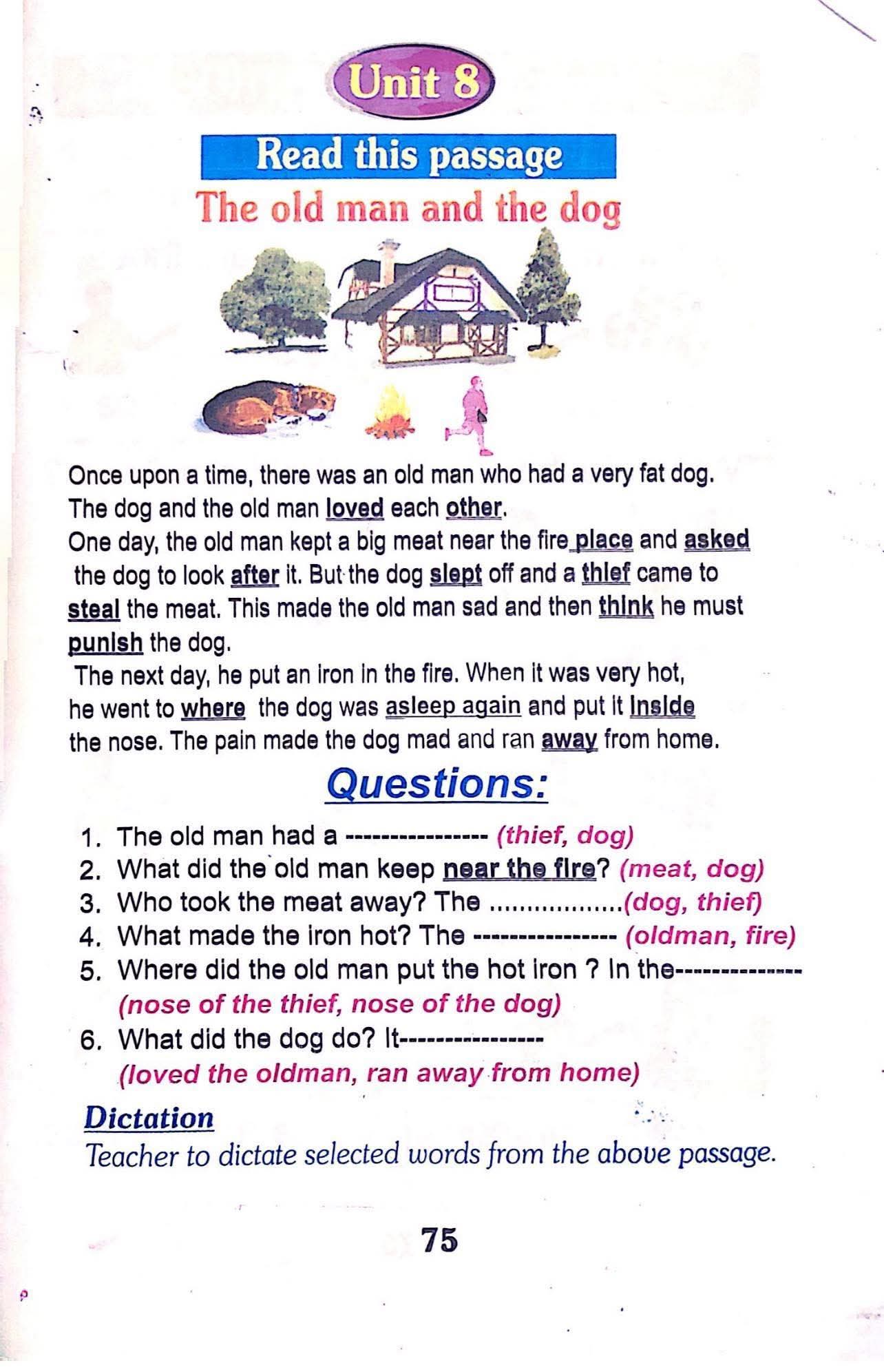


In many classrooms, particularly at the foundational level, reading passages serve as more than tools for literacy. They help to shape values, attitudes and worldviews. For this reason, the content of instructional materials deserves as much attention as grammar and structure. A closer look at the passage “The Old Man and the Dog” reveals concerns that go beyond language errors and point to deeper issues within the story itself.



The passage begins on a positive note, presenting a bond of affection between the characters: “The dog and the old man loved each other.” This introduction sets an expectation of care and companionship. However, the narrative quickly shifts in a troubling direction. When the dog fails in its duty, the response is neither guidance nor understanding. Instead, the text states that the old man “think he must punish the dog.”

The form this punishment takes is particularly disturbing. The passage explains that the man heated an iron and “put it inside the nose.” This act of cruelty, followed by the outcome that “the dog mad and ran away from home,” introduces young readers to a model of behaviour rooted in anger and violence rather than correction and empathy.
For children, stories are not merely for decoding words. They are a means of interpreting behaviour and learning what is acceptable. When a text presents such an extreme reaction to a simple mistake, in this case the dog having “slept off” while guarding meat, it risks normalising harmful responses. Rather than teaching responsibility, the story suggests that harsh punishment is justified.


Equally concerning is the absence of a clear and constructive moral lesson. Effective classroom texts often guide learners towards values such as patience, forgiveness and accountability. In this passage, there is no reflection on the old man’s actions, nor any effort at reconciliation. The narrative ends with separation and distress, offering little direction on what should have been done differently.

The story also misses an opportunity to model problem solving. The situation could have been used to teach better supervision, communication or even the importance of training and care for animals. Instead, it reinforces impulsive behaviour and a lack of compassion.
As educators, curriculum developers and parents, it is important to consider what pupils absorb from such materials. When a passage includes lines such as “he must punish the dog” and depicts harmful actions without consequence or correction, it sends a message that extends beyond language learning.
To ensure that educational materials fulfil their purpose, stories used in classrooms should promote empathy, model appropriate responses to mistakes and provide clear moral guidance. They should reflect values that support the social and emotional development of learners.
In conclusion, literacy education must go hand in hand with ethical awareness. If the content of a story undermines the values we seek to instil, then its place in the classroom must be reconsidered. Children deserve texts that not only teach them how to read, but also guide them towards becoming thoughtful and compassionate individuals.
















 EduTimes Africa, a product of Education Times Africa, is a magazine publication that aims to lend its support to close the yawning gap in Africa's educational development.