














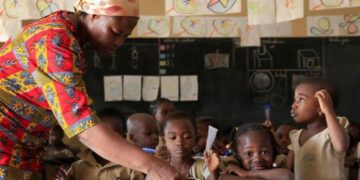
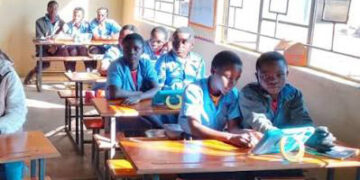

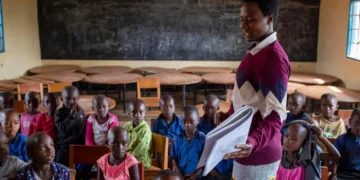






























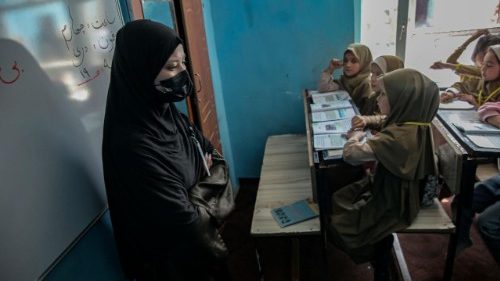


The UNICEF has reported that more than one million girls in Afghanistan have been denied access to secondary education since restrictions were imposed in 2021.



According to a recent UNICEF analysis titled “The Cost of Inaction on Girls’ Education and Women’s Labour Force Participation in Afghanistan,” the number of affected girls could rise to over two million by 2030 if the current policies remain unchanged.

UNICEF Executive Director Catherine Russell urged the authorities to reverse the ban, calling on the international community to continue supporting efforts to uphold girls’ right to education.
The report highlights the far-reaching consequences of the restrictions, warning that the country may lose more than 25,000 female teachers and healthcare workers by 2030. It also notes a decline in female participation in civil service roles, dropping from 21 percent to 17.7 percent between 2023 and 2025.

UNICEF cautioned that limiting women’s access to education and employment would significantly impact critical sectors, particularly education and healthcare. The reduction in female professionals is expected to hinder access to services, especially for women and children, due to cultural norms that often restrict interactions with male providers.
The report further warns of a growing gap in skilled professionals, as experienced women leave the workforce while younger girls are prevented from acquiring the education needed to replace them.
UNICEF stressed that continued restrictions could have long-term consequences for Afghanistan’s economic growth, public health, and overall development, effectively depriving the country of an entire generation of educated women.


Despite the challenges, UNICEF continues to support education initiatives in Afghanistan. In 2025 alone, the agency provided assistance to over 3.7 million children in public schools, supported community-based learning programmes reaching 442,000 children—most of them girls—and contributed to the construction and rehabilitation of 232 schools.
The organisation reiterated its call for urgent action to restore girls’ access to secondary and higher education, emphasizing that doing so is essential for the nation’s future stability and prosperity.
















 EduTimes Africa, a product of Education Times Africa, is a magazine publication that aims to lend its support to close the yawning gap in Africa's educational development.