


























Across Nigeria’s recent global academic triumphs, one pattern has become increasingly visible — students from private schools are taking the spotlight in international competitions.



From Mathematics and Science Olympiads to global examinations, students from privately owned schools have continued to record remarkable achievements, raising questions about why public school students are rarely seen among top performers.

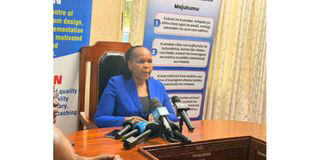
The President of the Nigeria Union of Teachers, Audu Amba, has attributed the trend not to the quality of teachers but to differences in learning environments, funding and available resources.
Amba said many of Nigeria’s most experienced and highly qualified teachers are found in public schools, but poor infrastructure, inadequate funding and welfare challenges have continued to affect the sector’s ability to compete favourably.

“You agree with me that the most experienced and most learned teachers are the teachers found in our public schools. But if you look at the learning conditions of our public schools, it speaks volumes,” he told The PUNCH.
“There are some of our public schools that do not work to be called where learning is supposed to take place.”
His comments come amid a growing pattern of private school dominance in global academic competitions. At the 2026 International STEM Olympiad in Rome, Nigerian students, largely drawn from private secondary schools, won several gold, silver and bronze medals in Mathematics, Science, Coding, Engineering and Artificial Intelligence.

The Nigerian delegation, comprising 133 students, 26 supervisors and nine parents, featured participants from schools including Charles Dale Memorial International School, Children’s International School, Bishop Okoye Spiritan Secondary School, Graceland International School and Jesuit Memorial College.
Among the top performers were Anele Marvellous, who won double gold in Mathematics and Science and was named the World’s Best in Science; Chimdiebube Onwubiko, who won gold in Junior Mathematics and silver in Science; and Egejurum Ethan, who emerged the World’s Best in Primary Mathematics.
According to Amba, the success of private school students is largely linked to the support systems available to them, including better facilities, learning materials and additional academic opportunities.
“If you take statistics of those children that must have excelled in the Olympiad and all what not, look at who their parents are. You will find that their parents are the elites among us within the country,” he said.
“They will give them the best education, even within the country, the best private school as the case may be.”
The NUT president, however, noted that not all private schools have world-class facilities, stressing that the major difference lies in creating a conducive environment where students can learn and develop their abilities.
“Among private schools, there are some which you and I know that when you go there, you find out that virtually everything that needs to be put in place is there,” he said.
Amba urged the government to prioritise investment in public schools through improved funding, better infrastructure and enhanced teachers’ welfare.

He said making public schools more attractive would encourage more parents, including elites, to enrol their children in government-owned institutions.
“When you make the public school very attractive and conducive, I want to assure you that the best brains will be there,” he added.
The trend of private school dominance has also been reflected in other international academic recognitions.
At the 2026 STEM Olympiad, The Ambassadors College, Ota, Ogun State, emerged among the biggest winners with 33 medals, including 15 gold, nine silver and nine …











 EduTimes Africa, a product of Education Times Africa, is a magazine publication that aims to lend its support to close the yawning gap in Africa's educational development.