












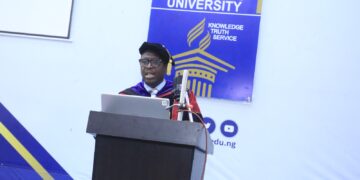











































Getting a university degree is important, but according to the Vice-Chancellor of Chrisland University, Prof. Oyedunni Arulogun, it is no longer enough to guarantee success in today’s world.



Speaking during the university’s 2026 Sustainability Project and Entrepreneurship Festival and Exhibition in Abeokuta, Arulogun urged young Nigerians to embrace entrepreneurship and value creation as practical solutions to unemployment and national development.

She said Nigeria’s greatest asset is its youthful population, adding that young people have the talent and potential to transform the country’s economy if they are equipped with the right mindset.
According to her, Chrisland University’s entrepreneurship programme is designed to help students discover their strengths, build resilience and create opportunities for themselves rather than depending solely on white-collar jobs or looking abroad.

“What informed this initiative is that we need to begin to think differently. Our greatest asset as a country is our young people. They have enormous potential and talents that can be used to drive sustainable development.
“What we are doing today is our contribution to nation-building, to help young people discover their potential, build resilience and understand that they can succeed and make Nigeria great without leaving the shores of the country,” she said.
Arulogun cautioned students against seeing entrepreneurship as simply learning vocational skills such as tailoring, bead-making or wig-making.
Instead, she described entrepreneurship as a mindset focused on solving problems and creating value.
“One of the greatest mistakes people make is to equate entrepreneurship with vocational training. They are different. Entrepreneurship is about a change of mindset.
“It is not about whether I know how to make beads, wigs or sew clothes. The real question is, what value am I adding? People do not pay for certificates or skills alone; they pay for value.
“There are many tailors with big shops who have no customers, while some professionals are highly sought after because of the value they provide. It is all about identifying needs and filling the gaps,” she explained.
She also disclosed that graduating students would receive an entrepreneurship certification alongside their academic degrees to better prepare them for self-employment and wealth creation.
Arulogun encouraged students to see entrepreneurship as more than a compulsory course, urging them to embrace it as a way of contributing to Nigeria’s development.
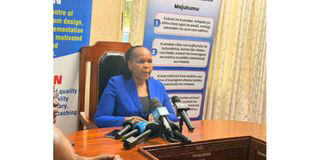
Earlier, the Director of the General Studies Directorate, Dr Lydia Chineyemba, said the exhibition demonstrated the university’s commitment to combining academic learning with practical skills.

She explained that the theme, “Developing Innovative Solutions and Practical Skills for Nigeria’s Sustainable Economy,” reflects the need to produce graduates who can solve real-life problems and build sustainable businesses.
The exhibition featured student projects in Adire production, agriculture, artificial intelligence literacy, vibe coding, web application development, carpentry, catering, fashion design, photography, cinematography, wig artistry and other vocational fields.
“The projects displayed today show that our students can contribute meaningfully to Nigeria’s sustainable economy through the practical skills they have acquired.

“This exhibition represents more than the completion of a course requirement. It marks the beginning of new possibilities. Some of these projects may grow into viable businesses that create income and employment,” Chineyemba said.
Also speaking, the Coordinator of the Centre for Entrepreneurship and Leadership Development Studies, Dr Obaloluwa Oyewo, described entrepreneurship as a way of thinking rather than simply starting a business.
He said students must learn to identify problems, develop innovative solutions and transform ideas into value.
“When we hear entrepreneurship, many people think only of buying and selling. But entrepreneurship is a way of thinking. It is about identifying problems where others see inconvenience and transforming ideas into value.
“Problems are not problems; they are the fuel for entrepreneurship. Waste can become wealth, environmental challenges can become sustainable businesses, innovation can create employment, and ideas can grow into industries,” he said.
Oyewo described the exhibition as “a marketplace of ideas,” encouraging students not to abandon their projects after the event but to refine them, register their businesses, seek mentors, apply for grants and participate in entrepreneurship competitions.
As graduate unemployment remains a major concern in Nigeria, the message from the event was clear: beyond earning a degree, students who learn to solve problems and create value may be better positioned to build successful careers and businesses.














 EduTimes Africa, a product of Education Times Africa, is a magazine publication that aims to lend its support to close the yawning gap in Africa's educational development.