























UBEC Sets November 15 Deadline for States to Access HOPE-EDU Funds



The Universal Basic Education Commission has given states participating in the Human Capital Opportunities for Prosperity and Equality programme, HOPE-EDU, until November 15, 2026, to demonstrate their readiness for implementation or risk missing the first round of programme disbursements.

The World Bank-supported initiative is designed to strengthen Nigeria’s basic education system, with a particular focus on improving foundational learning, teaching quality and the systems that support education delivery across the states.
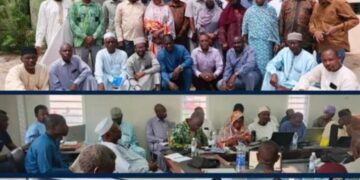
The Executive Secretary of UBEC, Dr Aisha Garba, disclosed the deadline during a four-day HOPE-EDU Result Area 1 Thematic Regional Workshop in Lagos, where officials from State Universal Basic Education Boards were trained on the implementation of the programme’s Structured Pedagogy Package.

Represented by UBEC Director, North Central, Elder Edward Abalaka, Garba described the workshop as an important step towards improving the foundation upon which Nigeria’s education system is built.
She stressed that states must demonstrate readiness by November 15, describing the deadline as the gateway to accessing the first round of programme funding.
“This is not negotiable. It is the gateway to unlocking the first round of programme disbursements and, more importantly, the future of our children,” she said.
The emphasis on readiness means states are expected to put the necessary plans, structures and systems in place before they can benefit from the initial funding under the initiative.
The programme places significant attention on how children learn at the foundational level. Through the Structured Pedagogy Package, states are expected to strengthen teaching and learning materials, improve teacher training and use learning assessments to measure whether pupils are actually making progress.
The initiative also includes a Book Supply Chain and Track-and-Trace System aimed at improving the distribution and accountability of learning materials. This is expected to address some of the challenges associated with ensuring that textbooks and other educational resources reach the schools and pupils for whom they are intended.
For UBEC, the focus is therefore not simply on providing educational materials but on ensuring that the resources translate into better learning outcomes.
The Programme Manager, HOPE-EDU, Dr Aisha Abdul, said UBEC had been working with the World Bank team, consultants, experts and states since February to prepare the groundwork for the reforms.
She urged participating states to work towards meeting the November 15 deadline for submitting their state action plans, stressing that the Structured Pedagogy Package was ultimately about improving the quality of learning available to children.
The workshop brought together 78 SUBEB directors and support officers from the South-West and North-Central zones. Participants included officials responsible for academic services, teacher professional development, monitoring and evaluation, procurement, planning, research and statistics, as well as Education Management Information Systems.
The broad composition of the participants reflects the scale of the reform. Improving foundational learning requires more than teachers alone; it also depends on planning, funding, monitoring, procurement and the availability of reliable education data.
A representative of the World Bank, Elice Elegbe, reaffirmed the institution’s commitment to working with the Federal Government to strengthen basic education, while stressing that states also have major responsibilities in ensuring that the programme succeeds.
The Federal Ministry of Education representative, Mr Kigbu Johnson, described the workshop as an opportunity to address challenges at the foundation of Nigeria’s education system.
UBEC said the workshops would be conducted in three phases, with Lagos hosting the first phase, followed by Uyo and Kano. The three phases are expected to cover all six geopolitical zones and provide participating states with the technical guidance and institutional support required to implement Result Area 1 of HOPE-EDU.
Ultimately, the success of the initiative will depend on what happens beyond the workshops.

The real test will be whether the training, learning materials, assessments and systems being introduced translate into better teaching and stronger literacy and numeracy outcomes in classrooms.














 EduTimes Africa, a product of Education Times Africa, is a magazine publication that aims to lend its support to close the yawning gap in Africa's educational development.