















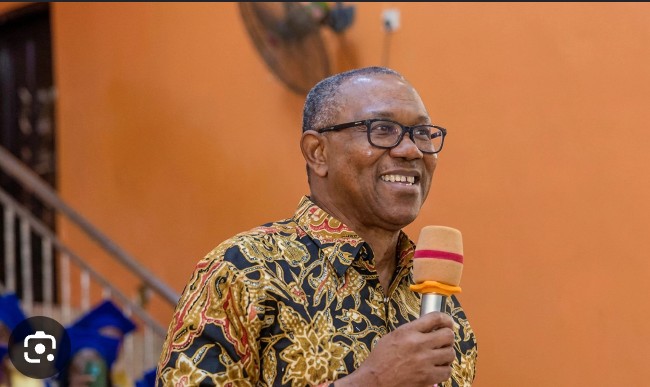


Peter Onwubuasi Gregory Obi is one of Nigeria’s most prominent opposition politicians and business figures. From his early career in commerce and banking to his tenure as Governor of Anambra State and his emergence as a major force in national politics, Obi has built a public profile around business experience, fiscal discipline and political resilience.



Ahead of the 2027 presidential election, Obi is once again at the centre of Nigeria’s opposition politics, this time as the presidential candidate of the Nigeria Democratic Congress (NDC).

Here are 15 facts you should know about him:
1. He was born in 1961

Peter Obi was born on July 19, 1961, in Onitsha, Anambra State. He is from Agulu in Anaocha Local Government Area of the state.
2. He studied Philosophy at the University of Nigeria
Obi attended Christ the King College, Onitsha, before proceeding to the University of Nigeria, Nsukka, where he studied Philosophy and graduated with a Bachelor of Arts degree in 1984.
3. He had a business career before entering politics
Long before becoming a politician, Obi worked in the private sector and built a career in business and financial services. His professional background included commerce, banking, investment and corporate management.
4. He was the youngest chairman of Fidelity Bank
One of the most notable milestones in Obi’s corporate career was becoming chairman of Fidelity Bank Plc. He was widely described as the youngest chairman of a Nigerian bank at the time.
5. He attended several leading business schools
Obi undertook executive and management programmes at institutions including the London School of Economics, Harvard Business School and Columbia Business School. He also attended other management institutions in Nigeria and abroad.
6. He first contested for governor in 2003
Obi contested the 2003 Anambra State governorship election under the All Progressives Grand Alliance (APGA). Although Chris Ngige was initially declared the winner, Obi challenged the result in court.
7. He eventually reclaimed his mandate
After several years of legal battles, the courts overturned Ngige’s election victory and Obi was sworn in as Governor of Anambra State on March 17, 2006.
8. He was impeached but returned to office
Obi was impeached by the Anambra State House of Assembly in November 2006. He subsequently challenged the impeachment and was reinstated as governor in February 2007.
9. His legal battle influenced Anambra’s election calendar
Obi successfully argued that his four-year tenure should run from the date he took the oath of office rather than from the date of the 2003 election. The Supreme Court case became an important part of the legal history surrounding Anambra’s distinctive election cycle.
10. He served as Governor of Anambra State until 2014
Obi served as governor from 2006 to 2014, including a second term after winning re-election in 2010. His administration became particularly associated with fiscal management, savings and investment in areas such as education and infrastructure.
11. He is popularly known as “Okwute”
Obi is popularly called “Okwute,” an Igbo word commonly translated as “Rock”. The nickname is associated with his reputation among supporters for political resilience and persistence.

12. His 2023 presidential campaign created the “Obidient” movement
In 2023, Obi contested the Nigerian presidency under the Labour Party. His campaign generated a large youth-driven support base popularly known as the “Obidients”, making him one of the most prominent political figures outside Nigeria’s traditional two-party structure.
13. He has received a papal honour
Obi has been associated with the Catholic Church and was made a Papal Knight of the Order of St Sylvester, one of the honours conferred by the Vatican on lay Catholics for distinguished service to the Church and society.
14. He has been married to Margaret Obi since 1992
Peter Obi is married to Margaret Brownson Obi. The couple married in 1992 and have two children.
15. He is the NDC’s 2027 presidential candidate
Obi joined the Nigeria Democratic Congress in May 2026 after leaving the African Democratic Congress. On May 30, 2026, the NDC formally adopted him as its presidential candidate for the 2027 general election at a special convention in Abuja. He subsequently announced former Kano State Governor Rabiu Musa Kwankwaso as his running mate.
With the 2027 election approaching, Peter Obi’s political journey now enters another major chapter. From a businessman and banker to a two-term governor, Labour Party presidential candidate and now NDC presidential candidate, his career has made him one of the most closely watched figures in Nigerian politics.






 EduTimes Africa, a product of Education Times Africa, is a magazine publication that aims to lend its support to close the yawning gap in Africa's educational development.