

























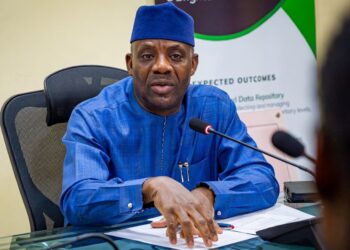
The Minister of Education, Dr Tunji Alausa, has revealed that National Examinations Council examination questions were allegedly sold for as little as ₦3,000 before candidates sat for their papers.



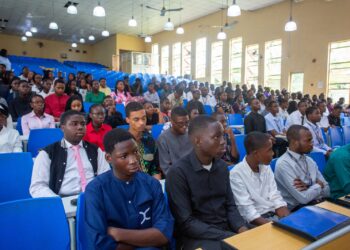
Alausa made the disclosure on Thursday during a meeting with the National Association of Proprietors of Private Schools and other stakeholders in the education sector, where he warned against examination malpractice and practices capable of undermining the credibility of Nigeria’s public examinations.

The minister described the scale of examination malpractice in Nigeria as “mind-boggling,” warning that the practice had become deeply rooted in parts of the education system.
According to him, examination malpractice does not only give dishonest candidates an unfair advantage but also puts pressure on students who prepare genuinely for their examinations.

Alausa said the situation could eventually encourage honest students to engage in malpractice simply to compete with candidates who had gained access to examination questions ahead of time.
«“The danger was that the good students would also become bad,” he said.»

‘They bought the questions for ₦3,000’
Recounting how examination questions were allegedly obtained before examinations, Alausa said some individuals were able to purchase leaked questions for just ₦3,000.
He recalled being told that candidates could access the questions before the examinations and described the situation as a serious threat to the integrity of the country’s education system.
«“They bought his question for N3,000. That was it. Before the examination,” the minister said.»
Alausa also recounted his experience during the 2025 examination period, saying he regularly received questions that had allegedly been obtained before candidates sat for the papers.
He said officials had to verify some of the questions with examination authorities, only to discover that they were indeed the questions scheduled for candidates that day.
The minister said the experience demonstrated the seriousness of the problem and prompted what he described as a more aggressive intervention to tackle examination malpractice.
Alausa shifts blame from students to education system
While warning students against cheating, Alausa said responsibility for examination malpractice should not be placed entirely on candidates.
He argued that parents, school proprietors, teachers, principals and invigilators all have important roles to play in protecting the integrity of examinations.
«“I don’t blame the students that much. Any child can be bad,” he said.»
The minister said the problem becomes more serious when adults within the education system allegedly participate in or facilitate examination malpractice.
«“When we have an ecosystem where parents, schools, teachers, invigilators and principals are in full connivance, the students are the smallest players,” he added.»
Federal Government promises tougher examination controls
Alausa said the Federal Government would strengthen measures to prevent candidates from gaining unauthorised access to examination materials and ensure that academic results reflect students’ actual knowledge and abilities.
He said the reforms were part of President Bola Tinubu’s efforts to restore standards and rebuild confidence in Nigeria’s education system.
The Minister of State for Education, Prof Suwaiba Ahmad, also urged private school proprietors and other stakeholders to support the reforms.
Ahmad said some students who perform exceptionally well in internal examinations could struggle when faced with external examinations if they had become accustomed to accessing leaked questions.
She disclosed that the use of serialised examination questions would make it more difficult for candidates to rely on leaked materials.

The government also urged schools to complete their curricula on schedule and encourage students to prepare consistently for examinations.
The renewed crackdown comes amid longstanding concerns over examination malpractice in Nigeria, including question-paper leakages, impersonation, collusion and unauthorised assistance.
The Federal Government says the measures are aimed at protecting students who prepare honestly and ensuring that public examination results remain a credible reflection of academic ability.











 EduTimes Africa, a product of Education Times Africa, is a magazine publication that aims to lend its support to close the yawning gap in Africa's educational development.