



















































The Old Boys Association of King’s College, Lagos, has defended its proposed involvement in the management of the institution, saying its objective is to restore the school’s deteriorating infrastructure and not to take ownership of or privatise the college.


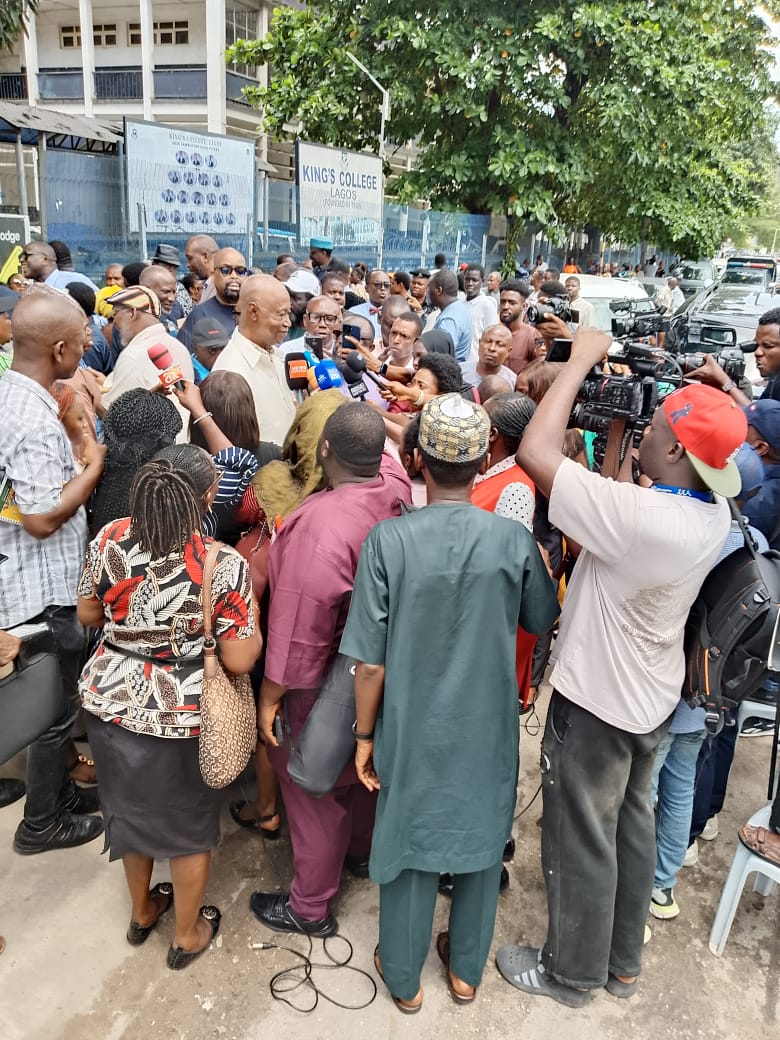
The association’s President, Kashim Ibrahim-Imam, stated this on Tuesday while addressing journalists at the main gate of the college after protesting staff members prevented the Old Boys from holding a planned press conference inside the school premises.

The development resulted in tension at the school as staff union members resisted efforts by security personnel to open the gates for the Old Boys to enter the premises.
Ibrahim-Imam said the Federal Government had resolved that the management of King’s College should be handed over to the Old Boys on a Public-Private Partnership basis, stressing that the arrangement did not amount to the sale of the institution.

He said the association had no intention of taking ownership of the college, but wanted to contribute to the development of an institution that had produced generations of Nigerians.
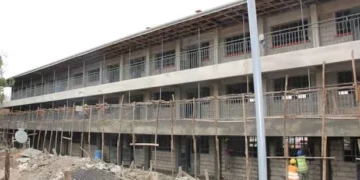
According to him, the Old Boys’ involvement is primarily aimed at addressing the poor state of infrastructure across the school’s two campuses.
“The Federal Executive Council met and resolved that the management of King’s College, Lagos, should be handed over to the Old Boys on a Public-Private Partnership basis.
“PPP does not in any way signify a sale of the school to the Old Boys. The Federal Government is not selling King’s College to anybody.
“Also, the Old Boys are not interested in buying King’s College. The role of the Old Boys Association, over the years, has been to invest in developing the infrastructure across the two campuses. That has primarily been our role,” he said.
The association also rejected concerns that the PPP arrangement would lead to an increase in school fees.
Ibrahim-Imam said there was no plan to increase fees, arguing that the immediate priority was to rehabilitate the school and restore its facilities.

“There has also been a lot of what I consider to be disinformation, especially concerning the payment of school fees. At no time did the Old Boys imply that we are going to increase school fees. Our objective is to develop the college,” he said.
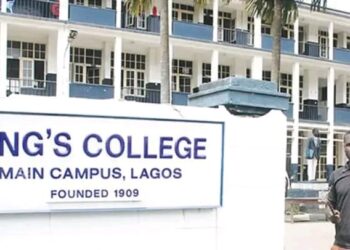
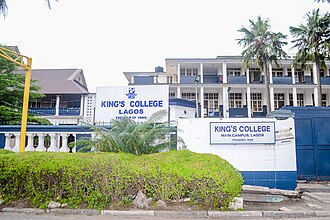
He described the condition of the school’s facilities as a major concern, noting that King’s College is more than 100 years old.
Ibrahim-Imam said the association’s ambition was not necessarily to transform the school beyond its historical standard but to restore it to the condition in which it was when many of its members attended the institution.
“My own personal aspiration is very modest. To take back, not even to take the school forward, take back the school to where I met it as a student. Now, all the facilities are dilapidated,” he said.

He described the association’s intervention as a “rescue mission”, adding that about 2,500 students were currently enrolled at the college.
The Old Boys also sought to allay concerns among teachers, promising improved remuneration for members of staff who decide to remain at the college under the proposed arrangement.
Ibrahim-Imam said teachers who remain at King’s College would have their salaries and allowances doubled as part of efforts to motivate them and improve the quality of education at the institution.
“For those who will elect to remain as teachers in King’s College, we will double their salaries and allowances. The Old Boys have made this commitment in order to motivate the teachers to work harder,” he said.
He added that teachers who did not wish to remain under the PPP arrangement would have the option of being transferred to other Federal Government-owned schools.
According to him, the Federal Ministry of Education had indicated that affected staff could be transferred to Federal Government College, Ijanikin, or Queen’s College.
The Old Boys’ position, however, met strong resistance from the protesting workers, who maintained that the college should remain under government management and funding.
The workers said they were opposed to what they described as the concessioning and privatisation of a Federal Government-owned unity school.
The National Coordinator of the Federal Workers Forum, Andrew Emelieze, said the workers would continue their protest until the government reversed the concession.
He argued that the responsibility for funding and maintaining public education institutions rested with government and urged the Federal Government to adequately finance King’s College rather than hand over its management.
The disagreement escalated when the Old Boys attempted to gain access to the school, leading to a confrontation between the protesting staff and security personnel.
The Lagos State Commissioner of Police, Fatai Tijani, later intervened to prevent a breakdown of law and order.
The police commissioner said an agreement had been reached for representatives of the protesting staff and the Old Boys Association to meet inside the school on Wednesday for dialogue.
Tijani said the police intervention was aimed at protecting lives and property while allowing both sides to exercise their rights peacefully.
While the workers maintained that the concession should be reversed, the Old Boys Association insisted that its intervention was driven by a desire to preserve and improve the institution.
For the association, the central issue is the deteriorating condition of the century-old college and the need to mobilise resources to restore its infrastructure, while the protesting workers remain concerned about the implications of transferring the management of a public school to a private-interest arrangement.








 EduTimes Africa, a product of Education Times Africa, is a magazine publication that aims to lend its support to close the yawning gap in Africa's educational development.