
























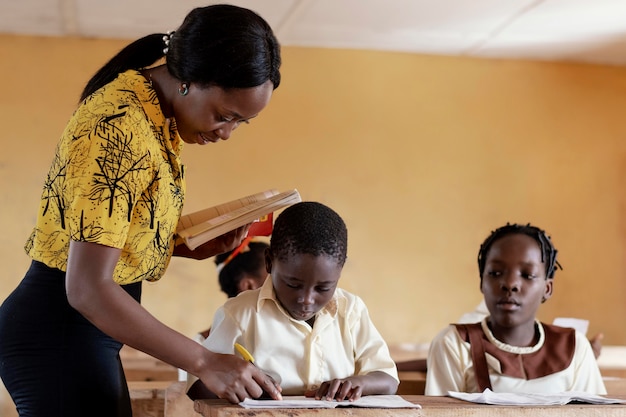
There used to be a simple question hanging over Nigerian education: are our children in school? These days, a harder one has crept in: who is actually teaching them once they get there?



We’ve never lacked people willing to stand in front of a classroom. What we’re quietly losing is something else: the teachers who’ve put in the years, built the patience, and know how to reach a struggling child. All over the country, some of our most capable teachers are packing up, moving into online classrooms, taking jobs abroad, or planning their exit. It’s tempting to file this under the usual “greener pastures” story we tell about every profession. But teaching is different. When a doctor leaves, we notice immediately that someone isn’t getting treated. When a teacher leaves, the damage creeps in slowly, and by the time we see it, years have already been lost.

COVID opened a door nobody expected
Nobody set out to change education forever; the pandemic just forced our hand. When Nigerian schools shut down in March 2020, over 20 million students were suddenly locked out of their classrooms, part of a wider global shutdown that affected more than a billion learners. But something unplanned happened in those months at home. Teachers, parents, and students got a crash course in Zoom, Google Classroom, WhatsApp groups, and recorded lessons, and it stopped feeling foreign. Studies done on Nigerian teachers at the time actually found many of them surprisingly ready to teach online, assess students digitally, and keep communication going without a physical classroom. That was the turning point. Teachers realized a classroom didn’t have to mean four walls and a chalkboard. A teacher in Lagos could suddenly reach a child in Abuja, or one in London. Once that door opened, it never really closed, and many teachers began to see that they didn’t have to stay tied to the school that employed them.

When the classroom stops paying the bills
It’s easy to say teachers are chasing money, but it’s rarely that simple. It’s usually about wanting a life that feels fair for the work they put in. Still, financial reality is a big part of it. While public school teachers are relatively insulated from this specific wave, private school educators are bearing the brunt of it.
They are the ones being picked off most aggressively, and private institutions will soon feel the full weight of this impact. Many of these teachers work grueling hours for salaries that fail to align with their qualifications or workload. Meanwhile, private schools themselves are squeezed by rising operational costs and simply can’t afford to offer competitive pay. It creates a vicious cycle: schools can’t pay, teachers can’t survive, and the most experienced educators inevitably start looking elsewhere. And the alternatives aren’t hidden anymore; they’re everywhere.
A teacher can now tutor students abroad from their living room, apply for a teaching post in the UK or Canada, or build an online following teaching from home. Reports have already flagged the growing wave of Nigerian teachers heading to the UK and Canada, even as private schools back home struggle to hold on to their best staff. Technology has made all of this visible in a way it never was before. A teacher doesn’t have to imagine what life abroad looks like anymore. It’s on their phone: another Nigerian teacher’s relocation story, photos of a new classroom overseas, a job listing on LinkedIn, a WhatsApp group full of people comparing notes. Research on Nigerian teachers has shown that platforms like WhatsApp and YouTube genuinely shape their decision to leave, simply by making relocation feel possible and within reach. So maybe the real question isn’t why teachers are leaving. It’s what exactly we’re giving them a reason to stay for.
Are our best teachers really the ones leaving?
This is the uncomfortable part. It wouldn’t be fair to say every good teacher is running for the exit. Plenty are still showing up every morning, still believe in their students, still refuse to give up on the system. But there’s a pattern we can’t pretend not to see: many of the teachers leaving are the most experienced, the most adaptable, the ones who could walk into almost any classroom in the world and thrive. And that’s exactly the danger. If it’s the strongest teachers who have the easiest time leaving, the system slowly loses its best hands, while the ones who stay carry heavier and heavier loads. Even the ones still in the classroom today aren’t guaranteed to stay tomorrow if nothing changes. So the real question isn’t how many teachers have left. It’s which ones, why, and what’s left behind in the classrooms they walk away from. You can hire a replacement teacher fairly quickly. What you can’t replace overnight is ten years of knowing how to calm a difficult class, spot a child who’s struggling before anyone else notices, or explain the same concept five different ways until one finally clicks.
Are we looking at an emergency?
It might sound dramatic to call this an emergency, but what else do you call it when a country already struggling with millions of out-of-school children and overcrowded classrooms is also losing the people meant to fix those problems? This isn’t a normal labor market shuffle; it’s a warning sign.
The bigger issue is what’s happening to teaching as a profession itself. When people work themselves thin for a salary that barely covers rent, with little support and little recognition, fewer bright young people will want to become teachers in the first place. That’s usually how a profession quietly falls apart, not overnight, but step by step. First, the experienced ones leave. Then, fewer people want to join. Then, schools can’t recruit. Then, the ones left behind are stretched even thinner. Then, quality slips. And eventually, everyone’s asking why standards have fallen, without remembering how it started.
A brain drain we can’t easily measure
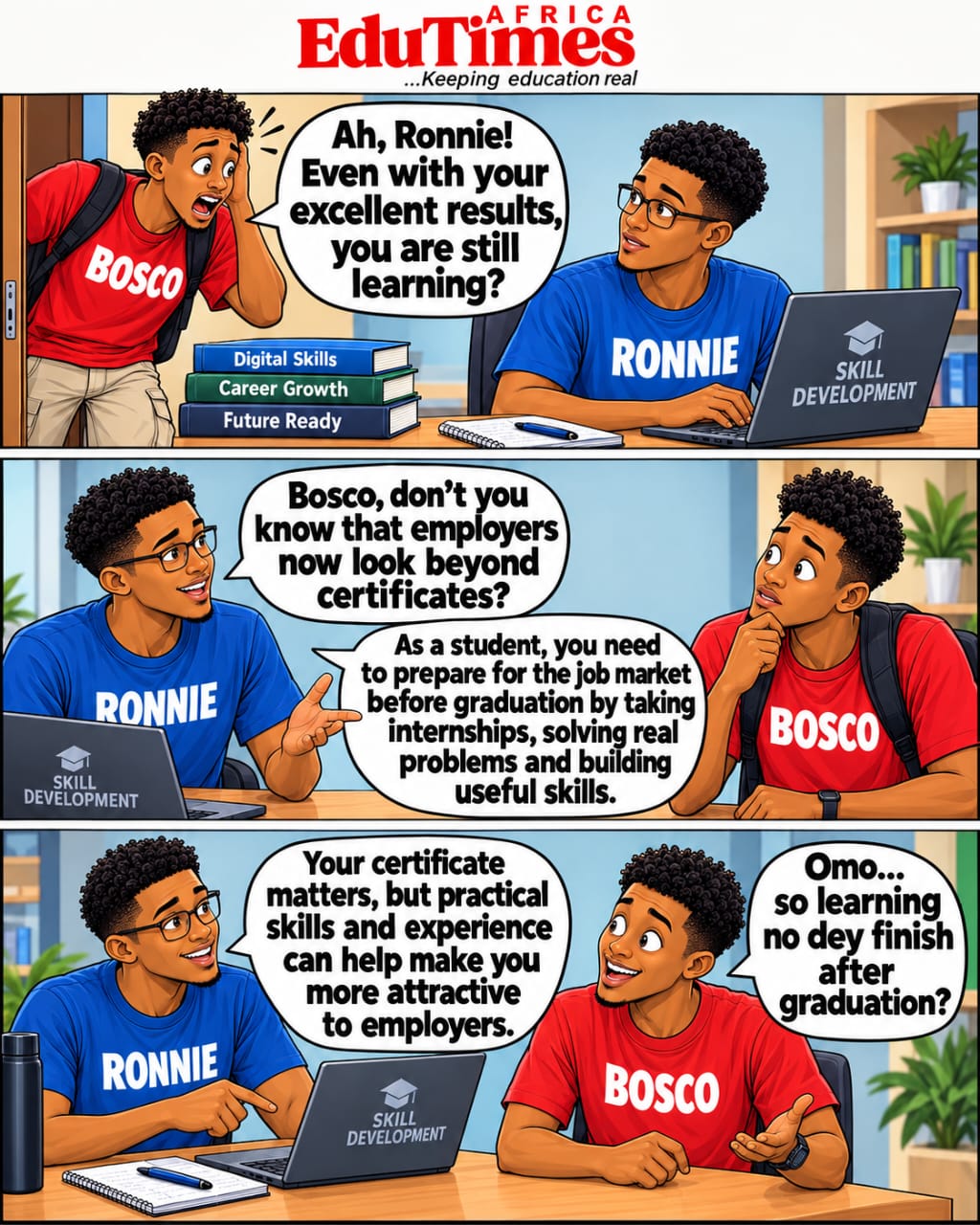
Nigeria has worried about doctors and nurses leaving for years. Teachers are now becoming part of that same conversation, but with a strange twist. When a doctor leaves a hospital, the gap is obvious immediately. When a teacher leaves, the effect shows up slowly: in a classroom that’s now missing an experienced hand, in a child who quietly falls behind because no one caught it in time, in a school forced to hire whoever’s available rather than who’s best. And here’s the part that should give us pause: research on Nigerian teachers shows their decision to leave isn’t only about salary. It’s also about wanting professional development, recognition, and decent working conditions. Many of them describe real emotional conflict about it, torn between wanting a better life and not wanting to abandon the students and communities they’ve built relationships with. In other words, most of these teachers aren’t running away from teaching itself. They’re running from the conditions they’re expected to teach under. That’s a very different problem, and it demands a very different response.
What does this mean for our children?
Strip away the statistics, and this was never really a story about teachers; it’s a story about children. Every teacher who leaves creates a gap. Sometimes it’s filled quickly. But what happens when the gaps start piling up faster than schools can fill them? What happens to a class of 40 that suddenly becomes 60? What happens to a young, inexperienced teacher who has no mentor left to guide them, because the mentor already left for London or Toronto? There’s also a quieter danger hiding in all this: inequality. Wealthier families will always be able to afford schools that can attract and keep good teachers. Children in less privileged communities will be the ones left with an overstretched system running on fumes. And if that gap widens, it doesn’t stay in the classroom; it follows those children into adulthood, into the workforce, into the kind of doctors, engineers, and leaders the country will or won’t have in twenty years. The teacher we lose today isn’t just one empty desk. It might be a piece of the workforce we were counting on to build the country tomorrow.
How did we even get here?
It’s easy to just blame teachers for wanting more money, but that’s too simple an answer. This didn’t happen overnight; it built up over years of underpaid work, poor conditions, little room to grow, aging infrastructure, and a country that hasn’t always treated education like the priority it claims to be. Then technology arrived and changed everything. COVID showed teachers that classrooms could exist without walls. The internet showed them what was possible outside Nigeria. Schools abroad realized Nigerian teachers were exactly what they needed. And social media connected the ones who’d already left with the ones still weighing the decision.
The world got smaller. But our education system didn’t get any more attractive to the people who make it work.
So, who will teach our children?
Maybe this is the question we should have been asking all along. Who will teach our children once the teachers best equipped to do it no longer want to stay? Who will guide the next generation when there is no one left to lead them? And who will stand at the chalkboard when a teaching career no longer yields enough dignity to keep its best? Who teaches the children whose families can’t afford the schools still able to attract good teachers?
We shouldn’t pretend every teacher who leaves is irreplaceable, or that people don’t have the right to seek a better life elsewhere. They do, and that’s fair. But a country that keeps losing its most skilled people, again and again, eventually has to ask itself why. How many more experienced teachers can we afford to lose before this becomes something we can’t undo? How long before we’re not asking why the good ones left, but simply asking, who’s left? The real danger isn’t that Nigerian teachers are leaving. It’s that we might be getting used to i

—————————–

Oluwatosin Osemeobo is an educator, writer, speaker, and School Sustainability Strategist with decades of experience at the intersection of education, Sustainability, leadership, and human development. An AFS Global Up–certified educator with deep expertise in intercultural learning and global competence, he operates at the intersection of future skills and sustainable development, empowering schools and educators to move beyond intention and achieve lasting impact.
His academic foundation includes a Bachelor of Education from Obafemi Awolowo University, advanced certifications from the Open University (UK) and the University of Cambridge, and specialized training through the UN Climate Change platform, covering inclusive leadership, the SDGs, trade and rights frameworks, and the UN Convention on the Rights of the Child.
As a Transformational Thought Leader and coach, Tosin has worked with teachers and professionals across multiple countries, equipping them to lead with clarity, adaptability, and purpose. His approach blends practical strategy with deep insight into how people and institutions actually change.
As a writer, he explores the ideas he is most invested in: sustainability, education reform, teacher wellbeing, global competence, and what it truly takes to build schools that serve the future. His work speaks to educators, policymakers, and anyone who believes that transforming education is one of the most important things a generation can do.
Tosin is a sought-after speaker and strategic consultant, and is based in Abuja, Nigeria. He is open to speaking engagements, writing commissions, consulting, and partnerships with organizations working on school sustainability, future skills, and human-centered education globally.
Email: tosemeobo@gmail.com Phone: +234 806 561 1550
Linkedin: www.linkedin.com/in/oluwatosin-osemeobo-9b8a7a12a













 EduTimes Africa, a product of Education Times Africa, is a magazine publication that aims to lend its support to close the yawning gap in Africa's educational development.