





















You might also like thesePosts



You describe yourself as a Nigerian-educated village boy who now sits on boards. What did the village and your early education teach you that still shapes the way you lead?

I received my early education in a rural Nigerian community, and I mention it not to romanticise where I came from, but because it shaped how I see opportunity. The village taught me early that talent is everywhere, but opportunity is not. I grew up around intelligent, hardworking people whose possibilities were limited by where they lived, the schools available to them and the infrastructure around them.
It also taught me resourcefulness. When resources are scarce, you solve problems with what you have, and you learn that relationships, reputation and responsibility to people matter more than titles.
That is why, in any boardroom, I ask one question: who is at the edge of this decision, and what would have to be true for them to participate?
It is also why I believe inclusion is engineered, not granted. People far from economic centres rarely lack potential. What they lack are the systems that connect that potential to opportunity.
When did you first realise that education and access to technology could change the trajectory of an individual, a community and a continent?
Early, because I could see what education was doing in my own life. In a rural community, it was one of the few things that genuinely expanded what you believed was possible.
Over time I learnt the harder truth: education equalises only when people can access it, and when the systems around them let it turn into opportunity. A brilliant child in a rural community may have the same potential as a child in Lagos, London or New York, but not the same infrastructure. Technology can narrow that distance. With meaningful connectivity, a young person is no longer limited to the teachers, markets and knowledge within walking distance.
But broadband alone does not transform a community. It has to work alongside reliable energy, affordable devices, relevant content, skills and finance. The goal is not simply to educate or connect people. It is to give them the capability to create and compete, wherever they were born.

Your career has taken you through telecommunications, infrastructure, energy, consulting and corporate leadership. What were the defining turning points?
The first was telecommunications. I worked from project and cost management through infrastructure deployment to business leadership, and I learnt that building infrastructure is never only an engineering problem. It is capital, regulation, energy, people and execution.
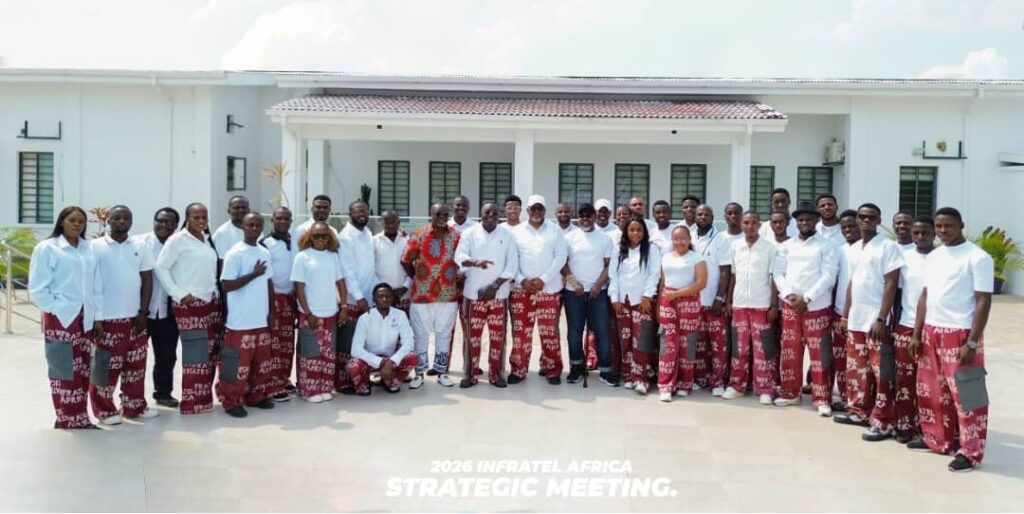
The second was entrepreneurship. When you become responsible for payroll, customers and investors’ money, strategy stops being a slide. It has consequences. Over the years, the work I have led and contributed to has delivered close to 1,000 telecom sites, more than 2,000 kilometres of fibre and connectivity to over 500 communities, much of it in places conventional markets pass by, including work alongside the Universal Service Provision Fund and World Bank-assisted programmes.
The third was energy. In Africa, you quickly discover that digital infrastructure cannot be separated from power. And the fourth was research and policy, which led to my doctoral work on public-private partnership models for sustainable rural digital infrastructure. The real turning point was seeing that these were never separate careers. Telecommunications, energy, finance and policy are parts of one system.
Your book challenges the way Africa is perceived in conversations about digital connectivity. What is its central message?
That Africa is not waiting to be connected to the future. Africa is already participating, creating and innovating. What it needs are systems that let that potential scale and capture value. The continent is too often described only through its gaps. The gaps are real, but they are not the whole story.
To governments and investors, my message is to stop counting connections and start building the conditions for participation: infrastructure, energy, affordability, skills, finance and capable institutions. To technology companies: treat Africa as a place to build with, not only a market to sell to. And to young Africans: do not settle for being users of the technologies shaping the next economy. Build them, own them and capture their value. www.africaisnotoffline.com
Why does rural connectivity remain one of Africa’s most important development challenges, and what needs to change?
Because geography still decides opportunity for too many Africans. Markets go where density, purchasing power and infrastructure make the numbers work. In rural areas, lower revenues, unreliable power, difficult logistics and higher deployment costs break the conventional model, yet these are the places where connectivity has the greatest developmental impact.
What must change is the economics. Governments cannot simply mandate coverage, and operators cannot carry every viability risk alone. We need public-private partnerships that share risk properly, infrastructure sharing, open-access networks, distributed energy and targeted support that makes marginal communities investable.
Is connecting a village to broadband enough?
No. A community can have coverage and still be excluded if people cannot afford devices or data, if power is unreliable, if skills are missing or if nothing online is relevant to daily life.
I call the answer Inclusion Architecture: connectivity and energy, affordable access, digital and productive skills, relevant services, finance, and institutions that help people participate safely. These elements work as a system. Remove one and the infrastructure can exist without delivering the outcome. The right question is never “did we connect this community?” It is “what can this community do now that it could not do before?”
Do African policymakers still see telecommunications as a communications sector, or as national economic infrastructure?
The shift is happening. For years, telecoms was regulated around spectrum, licences and operators. Increasingly, policymakers treat digital connectivity as economic infrastructure alongside energy, roads and transport, a direction reflected in the African Union’s Digital Transformation Strategy for Africa 2020 to 2030.
The logic is simple. Finance, education, health, agriculture, logistics, government services and now artificial intelligence all run on digital infrastructure. Once we treat it as an economic platform rather than a sector, decisions about fibre, towers, data centres, spectrum and energy belong in national development planning, not only in regulatory files.
How should Africa approach renewable energy, telecommunications infrastructure and digital inclusion in communities underserved by both the grid and broadband?
In many rural communities, the connectivity gap and the energy gap are the same problem. You cannot run a reliable network without reliable power, yet we still plan the two sectors separately.
They should be planned as integrated infrastructure. Solar and hybrid systems that power a telecom site can also serve a school, a clinic or small businesses nearby. With anchor customers, infrastructure sharing and sound partnership structures, the economics of both improve. And the real prize is not a powered tower. It is a community where reliable power and meaningful connectivity together open up learning, healthcare, digital finance and local enterprise.
What happens economically when a previously disconnected community gets reliable broadband?
The first change is not development itself. It is access to possibilities that geography used to block. In communities where we have deployed, the early signs are practical. Traders take payments digitally instead of travelling to bank. Farmers check prices before they sell. Young people find training and remote work that did not exist locally. A local economy also grows around the infrastructure itself, in installation, maintenance, retail and digital services.
But infrastructure only creates the possibility. Participation turns it into value, and that requires power, affordability, devices, skills and access to capital. The real measure is not how many communities have a signal, but how many people use that signal to learn, earn and build.
What are the biggest barriers preventing private capital from flowing into African digital infrastructure?
Africa’s challenge is not a shortage of global capital. It is a shortage of investable projects. Currency risk, regulatory uncertainty, right-of-way and permitting delays, unreliable power, high financing costs and uncertain demand turn valuable projects into unfinanceable ones.
Rural markets sharpen the problem: the development case is strong while the near-term commercial return is weak. Governments and development finance institutions do not need to fund everything. They need to de-risk: predictable regulation, blended finance, guarantees, viability-gap funding and well-structured partnerships. Africa must stop presenting an infrastructure gap and start presenting investable infrastructure opportunities, from fibre and towers to data centres and the compute capacity the AI economy will demand.
What can African countries learn from one another, and where is continental collaboration most urgently required?
As an AU Agenda 2063 Ambassador for Digital Infrastructure and Inclusion, I see the same problems solved in isolation, country by country. Our challenges look similar, but solutions cannot simply be copied. We need to get better at learning what works elsewhere on the continent and adapting it.
Collaboration is most urgent in cross-border fibre, spectrum coordination, data and digital trade rules, cybersecurity, interoperable payments, skills and AI infrastructure. Digital networks and businesses do not stop at borders. Interoperability lets African companies scale across the continent instead of rebuilding their model 54 times.

What would you like the next generation of African technology leaders, at home and in the diaspora, to build, not merely for Africa, but from Africa for the world?
I want them to move from consumption to creation and ownership: infrastructure, software, AI, platforms and intellectual property built in Africa, competitive anywhere. Some of the problems we solve here, financial inclusion, distributed energy, rural connectivity and delivering services under tight constraints, produce innovations with global relevance.
The diaspora has a particular role. Africans abroad bring capital, networks, technical depth and access to global markets. The strongest ecosystems will connect that talent to builders at home, through investment, mentorship and companies that operate across both. My message to all of them is the same: do not wait for permission to shape the future. Build it, and keep meaningful ownership of the value you create.
How has your rural upbringing influenced the issues you champion at the highest levels of decision-making?
It reminds me that the people most affected by a strategic decision are often not in the room. So I look beyond the immediate numbers and ask who is served, who is left out and whether the model can create value beyond the obvious markets.
That does not mean ignoring commercial reality. Experience has taught me the opposite: inclusion that is not commercially and institutionally sustainable does not last. The work is to design models where returns and wider impact reinforce each other. I understand the economics of the boardroom, and I have not forgotten the realities at the edge of the network. Good leadership connects the two.
What has advanced education added to your thinking, and what has experience taught you that no classroom can?
Doctoral scholarship taught me to interrogate experience: what does the evidence actually say, what are we assuming, and why does a model work in one place and fail in another? It sharpened how I connect practice with policy, particularly on public-private partnerships for rural infrastructure.
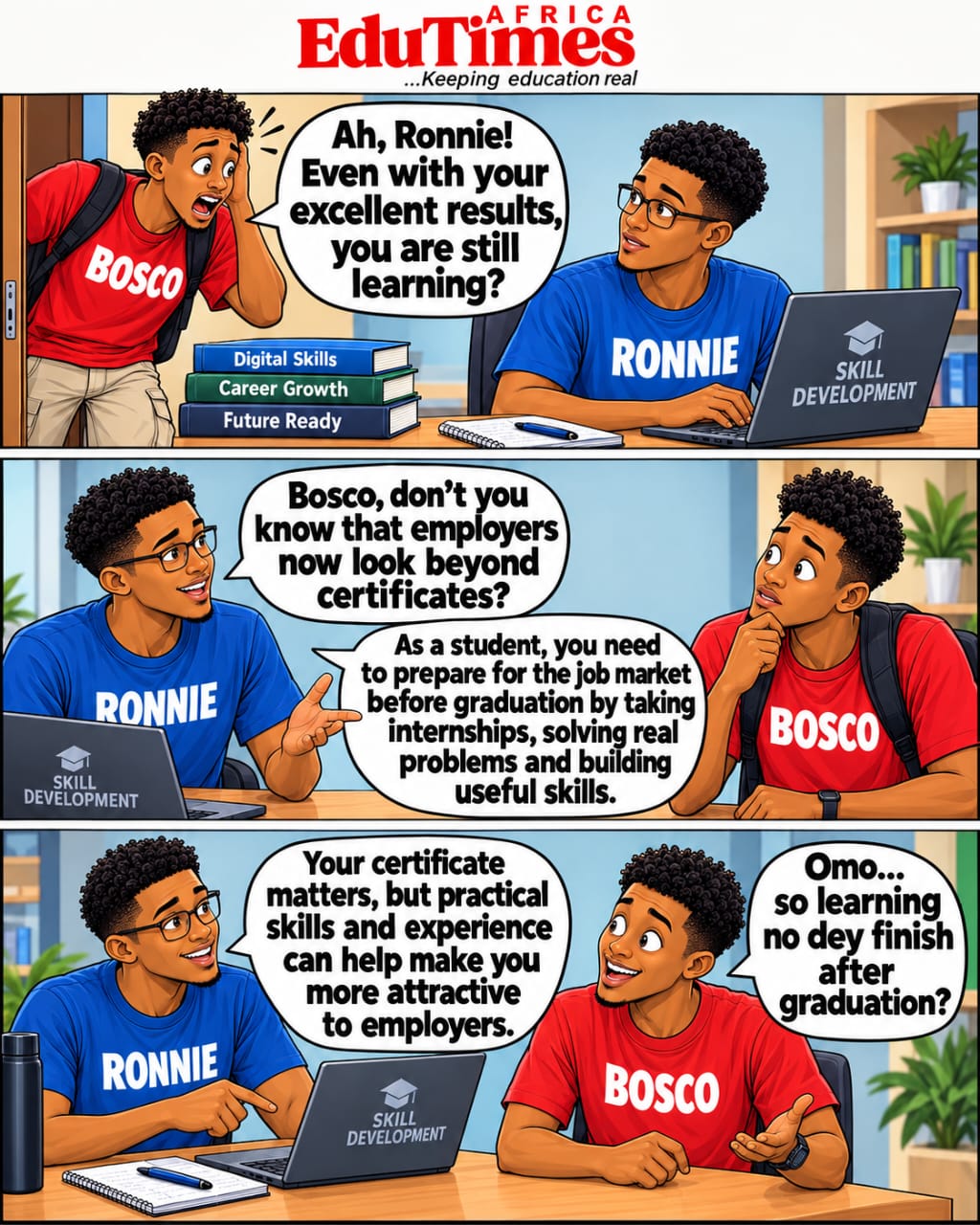
Experience taught what no classroom can: deciding with incomplete information, managing competing interests, deploying capital and staying accountable when outcomes do not follow the plan. Experience taught me to understand complexity; scholarship taught me to question it rigorously. And both taught me that you never graduate from learning.
If we meet again in 2035, what would you like to see changed, and what must today’s leaders do to make it possible?
By 2035, I want the place an African child is born to matter far less to the opportunities open to that child. Reliable power and meaningful connectivity should reach beyond the cities, and access to education, healthcare, finance and markets should no longer depend on geography.
At the UN General Assembly on 23 September 2026, President William Ruto of Kenya reminded the world that Africa’s 54 member states make up more than a quarter of the Assembly, yet the continent has no permanent seat on the Security Council. Being present is not the same as having a voice. The same is true of the digital and AI economy. It will not be enough for millions of Africans to use platforms and AI built elsewhere. We need the infrastructure, skills, compute, capital and intellectual property to help build these technologies, shape their direction and capture their value.
That is the Africa I want to see: not simply connected, but participating, building and owning. Today’s leaders must think beyond electoral and investment cycles, strengthen institutions, invest in people and infrastructure, and deliberately create the conditions for African innovation. Success should be measured not by how many Africans are online, but by how many have a seat at the table where the technologies and rules of the next economy are made.
_____________________
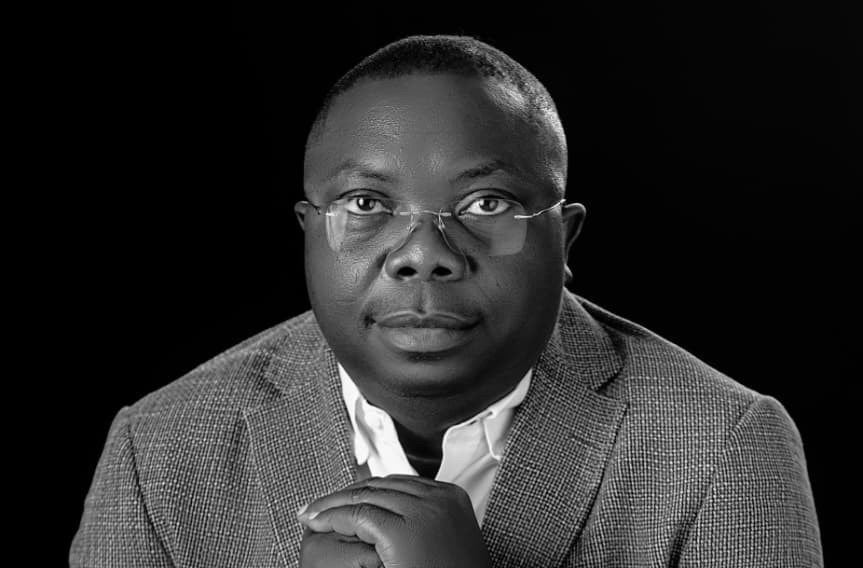
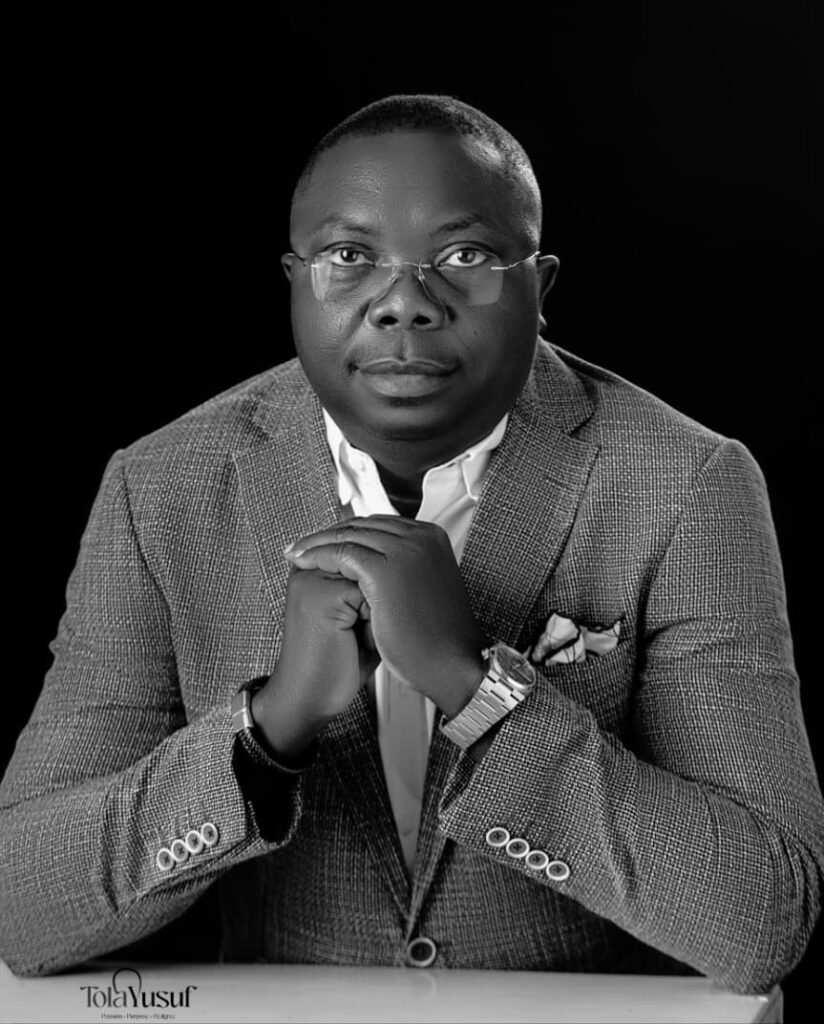
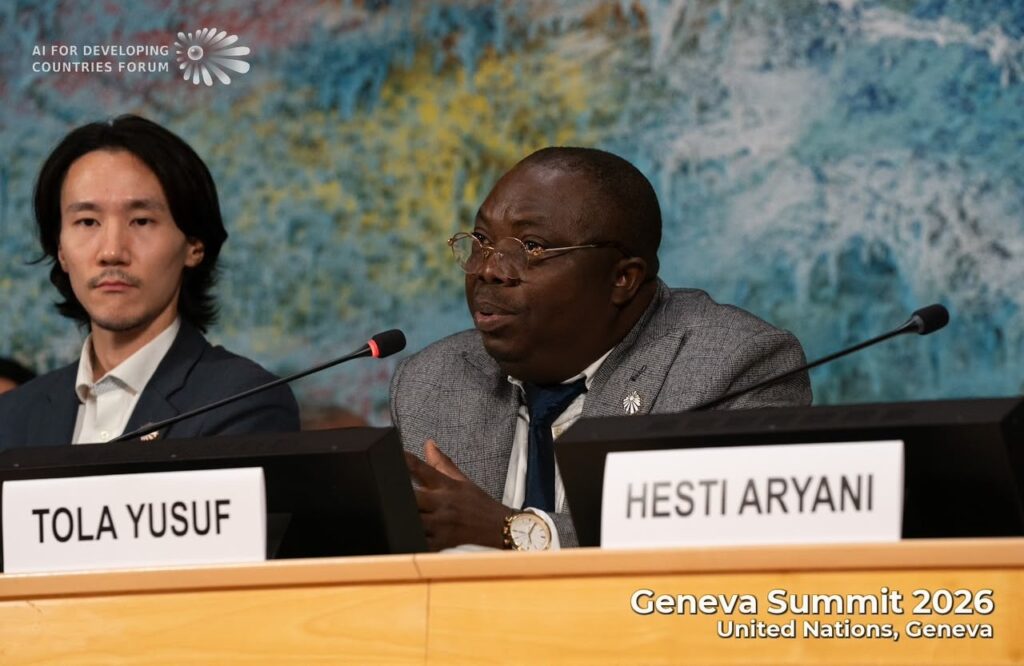
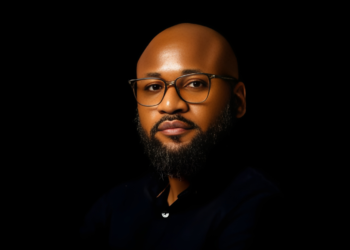
Dr Tola Yusuf is Founding Partner of Infratel Africa and AU Agenda 2063 Ambassador for Digital Infrastructure and Inclusion. His book, Africa Is NOT Offline: Leadership, Systems and Inclusion Architecture.










 EduTimes Africa, a product of Education Times Africa, is a magazine publication that aims to lend its support to close the yawning gap in Africa's educational development.