



























Nigeria’s digital economy is undergoing rapid transformation, driven by growing demand for technical skills, artificial intelligence (AI) and digital innovation. At the heart of the Federal Government’s response is the 3 Million Technical Talent (3MTT) programme, a flagship initiative of the Federal Ministry of Communications, Innovation and Digital Economy.
Launched to develop three million technical talents, 3MTT has expanded its reach across Nigeria. More than 190,000 Nigerians have so far been trained across four cohorts, while 1.87 million people have joined its registered talent pipeline. But what happens after Nigerians acquire these skills? Can training translate into sustainable jobs, businesses and innovation? Francis O. Sani, Programme Director of 3MTT Nigeria, and Technical Adviser to the Honourable Minister reveals how thus far, an impressive over 30,000 fellows have been connected to jobs and other income opportunities.
But as AI reshapes the world of work, how can Nigeria ensure its young talent is equipped to build solutions rather than simply consume technology?
You might also like thesePosts



In this exclusive interview with EduTimes Africa, Sani discusses the programme’s achievements and its evolution into what he calls a “talent-to-opportunity ecosystem.” The Director also explains how the 3MTT programme explores AI, partnerships, job creation, entrepreneurship in its efforts to retain and maximise its growing digital talent pool.


Since your appointment as the Programme Director for 3MTT Nigeria, what would you describe as your three most significant achievements, and what measurable impact have they had on the lives of young Nigerians?
I would group our progress into three broad areas: scale, quality and transition from learning to opportunity.
First is the scale we have achieved. 3MTT has moved from being a programme that was testing a model of technical talent development to becoming a national talent infrastructure. We have now trained more than 190,000 fellows across four cohorts, with fellows represented across all 36 states and the FCT. That scale matters because our objective has never been to build a talent pipeline for only a few technology hubs. We want a young person in any part of Nigeria to see themselves as a participant in the digital economy.
Second is the strengthening of the learning model. We have learned that digital skills training cannot simply mean putting a course online and issuing a certificate at the end, which is why our model combines self-paced learning with applied learning, practical projects, mentorship and community-based support.
The programme’s current placement infrastructure also connects trained fellows with employers, internships and freelance opportunities. Third, and perhaps most importantly, we are increasingly focused on what happens after training. For us, the real measure of success is not the number of people who complete a course; it is whether they can use those skills to secure employment, build businesses, solve problems and participate meaningfully in the economy. That is why we are building stronger pathways into employment and entrepreneurship, including partnerships with employers, placement organisations, platforms such as Hello.cv, and initiatives that help fellows demonstrate their capabilities to the market. The Hello.cv partnership, for example, provides 20,000 fellows with professional profiles, AI-powered job-search support and CV tools to make their skills more visible to employers globally. So, if I had to summarise the achievement, it would be this: we are moving 3MTT from a training programme to a talent-to-opportunity ecosystem.

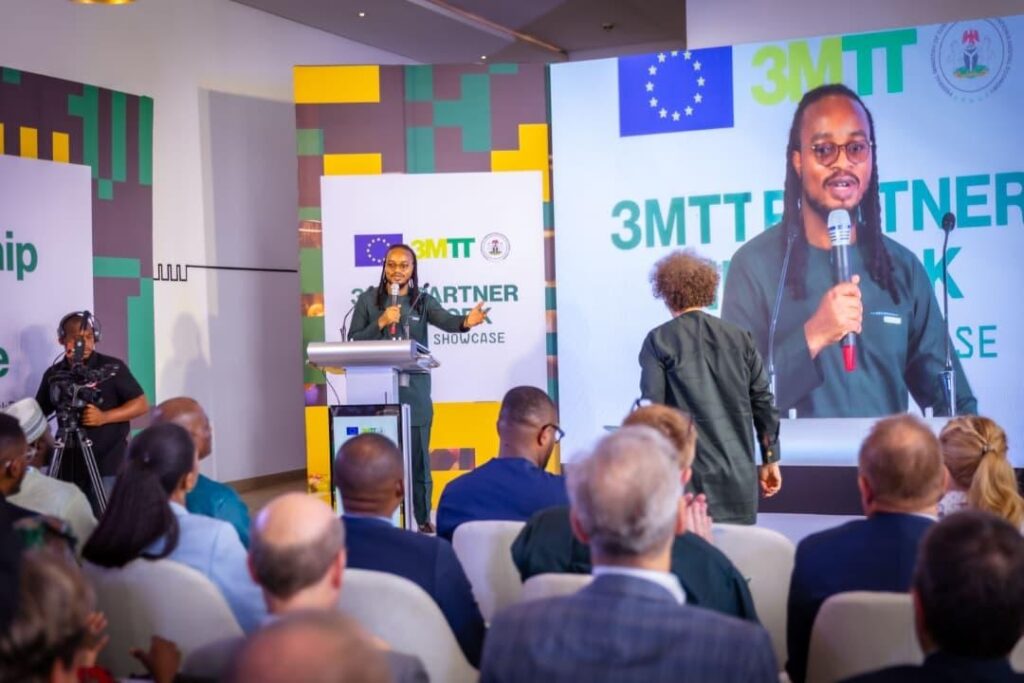
The 3 Million Technical Talent (3MTT) programme is one of the flagship initiatives of the FMCIDE. How many of those trained so far have transitioned into employment, entrepreneurship or sustainable income as a direct result of the programme?
Like I said, more than 190,000 Nigerians have been trained across four cohorts, in addition to our DeepTech programme. We also have a registered talent pipeline of 1.87 million Nigerians, reflecting the scale of interest in technical skills and the digital economy. But for us, the more important question is what happens after training. We have therefore built outcome tracking into the programme to understand how fellows are progressing beyond the learning stage and whether their skills are translating into economic opportunities. To date, more than 30,000 fellows have been connected to jobs and income opportunities. This includes pathways into employment and other forms of income generation, and we continue to track fellows’ progression as they apply their skills in the workplace, through entrepreneurship, freelance work and other opportunities. We have also introduced stronger mechanisms for validating the quality of the skills being acquired. More than 60,000 competency assessments have been completed and externally benchmarked, giving us a clearer picture of not just participation, but actual capability. So, when we talk about the impact of 3MTT, we are looking at the entire journey: from building the talent pipeline, to training, competency development, and ultimately connecting that talent to jobs and income. For me, that is the real significance of the programme. We are not measuring success simply by how many people we train; we are measuring how effectively we can turn Nigerian talent into economic opportunity.
What form does the 3MTT programme take? Is the training done on-site or virtually, and how much do Nigerians have to pay for the training?
3MTT is fundamentally a hybrid programme.
We combine online learning with physical, applied learning because each model solves a different problem. Online learning gives us the ability to reach Nigerians at scale, while physical learning environments provide community, mentorship, practical application and support for learners who may need additional guidance. The programme’s established model combines self-paced online courses with in-person applied learning through training organisations and Applied Learning Clusters.
And importantly, Nigerians do not pay for the 3MTT training itself. The programme was designed to remove financial barriers to accessing high-quality technical skills. Participants may, of course, have personal costs such as transportation or data depending on their circumstances, but there is no tuition fee for participation in the programme. The principle is simple: talent should not be excluded because someone cannot afford to pay for a quality digital-skills programme.
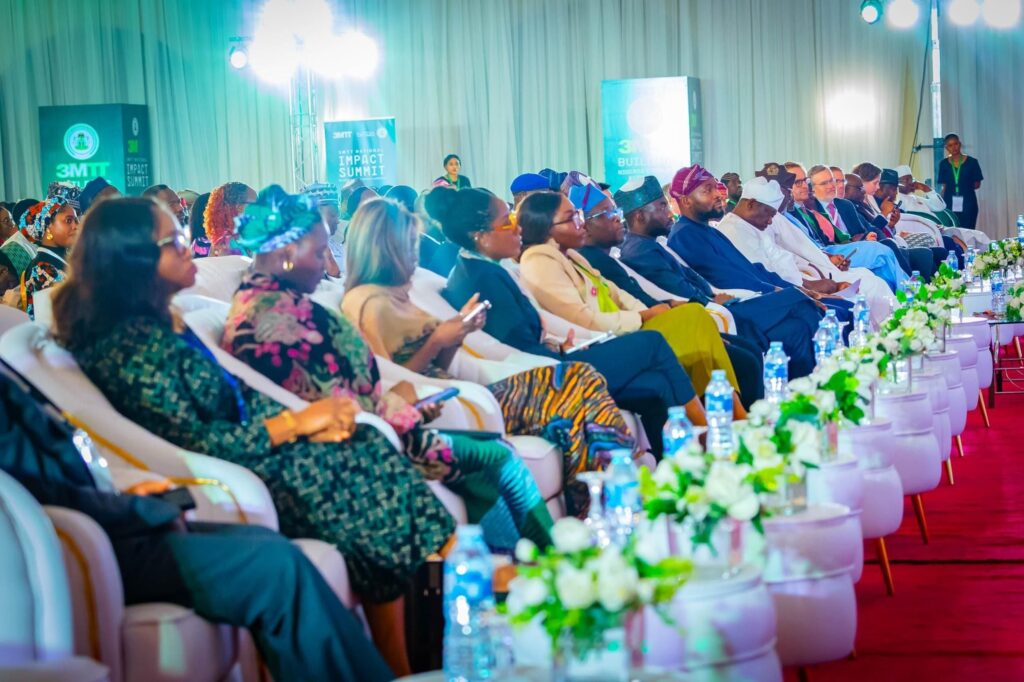
What age group is the 3MTT Programme’s primary target? What are the different skills that one can acquire?
3MTT is designed primarily around Nigerians who are looking to build technical skills and participate in the digital economy. We have deliberately taken an inclusive approach rather than making the programme exclusively about one age bracket.
The initial programme focused on twelve technical skill areas: Artificial Intelligence/Machine Learning, Animation, Cloud Computing, UI/UX Design, Data Analysis and Visualisation, Data Science, DevOps, Game Development, Product Management, Quality Assurance, Software Development and Cybersecurity. As the programme has evolved, we have also moved deeper into emerging and advanced areas. Through initiatives such as DeepTech_Ready, fellows can develop more advanced competencies in areas including machine learning, computer vision, natural language processing, data architecture and geospatial data science. This reflects an important principle for us: the digital economy is not static, so the skills ecosystem cannot be static either.
How is the programme funded?
3MTT is built on a collaborative model between government, the private sector, development partners and the wider ecosystem. The government provides the institutional leadership and platform, while our partners bring funding, technology, infrastructure, expertise, connectivity, training capacity, opportunities and other resources that help us take the programme further.
We have already seen what this model can achieve.
Partners such as MTN, Airtel, Microsoft, Google, IHS Towers and the European Union, among others, have made significant contributions to different aspects of the programme. The European Union, for instance, has committed €5 million to support the next phase of 3MTT, while MTN and Airtel have made significant financial commitments.
But we also recognise that building a technical talent ecosystem at the scale Nigeria needs cannot be the responsibility of a few organisations. It requires all of us. That is why we launched the 3MTT Partner Network. It creates a structured entry point for organisations that want to contribute to Nigeria’s digital talent ecosystem, regardless of the sector they operate in. Whether you are a technology company, financial institution, telecommunications company, university, media organisation, development institution, employer, research organisation, startup, professional body or an organisation working in another sector entirely, there is a role you can play.
And partnership with 3MTT does not necessarily mean writing a cheque. An organisation can contribute by creating jobs or internships, providing technology or infrastructure, supporting research, offering mentorship, delivering training, funding innovation, opening up market opportunities, amplifying Nigerian talent, or bringing expertise that strengthens the ecosystem.
So, my message to organisations across Nigeria and beyond is simple: come and join us. The 3MTT Partner Network is designed to be inclusive because Nigeria’s digital transformation must be inclusive. We are building an ecosystem where everyone who has something meaningful to contribute can find a place.
We don’t want to build this alone. We want to build it with everyone who believes in the potential of Nigerian talent.
How do you select your training partners? And are there other partners that support the programme in one way or the other?
NOur selection process is fundamentally about capacity, quality and reach.
We need partners that can deliver the required curriculum, provide the right learning environment, support fellows effectively and meet our standards for programme delivery. We also look at their ability to operate at scale and, where necessary, across multiple locations. But training providers are only one part of the ecosystem. We also have Applied Learning Clusters, technology companies, development partners, employers, state governments, universities, financial institutions and other ecosystem organisations contributing to different parts of the fellow journey.
That distinction is important because 3MTT is no longer just about finding organisations that can teach coding or data analysis. We are building a network that can support a person from learning, to practice, to portfolio development, to employment, entrepreneurship and continued professional growth, and that’s why the launch of the 3MTT Partner Network was an important step in formalising that broader ecosystem and making it easier for organisations to contribute to different parts of the talent pipeline.
Nigeria is rapidly embracing artificial intelligence. What is 3MTT doing to ensure that AI becomes a tool for improving education, healthcare, agriculture and public services rather than simply another technology that widens the gap between Nigerians who have access to technology and those who do not?
Our position is that AI must be an inclusion story, not an exclusion story. We cannot build an AI economy where only people in Lagos, Abuja, or a handful of technology companies can participate. That is why we are approaching AI from both the talent and application sides. On the talent side, we are building AI capabilities through the core 3MTT programme and more advanced programmes such as DeepTech_Ready, which focuses on data science and artificial intelligence. But skills alone are not enough. We also need Nigerians building solutions that address Nigerian problems. That is why we have placed increasing emphasis on project-based learning, innovation challenges and partnerships that encourage fellows to apply technology to real-world challenges. The wider Ministry strategy is also important here. AI has to sit alongside connectivity, digital public infrastructure, digital literacy, research and responsible governance. Ultimately, we want the Nigerian farmer, teacher, doctor, civil servant, entrepreneur and student to experience AI as a tool that increases their productivity and expands their opportunities, rather than something that creates another layer of inequality.
For EduTimes Africa, education is particularly important. How is 3MTT working with the Federal Ministry of Education, schools, universities and teachers to prepare Nigerian learners and educators for an AI-driven and digitally dominated economy?
We recognise that you cannot transform Nigeria’s digital economy without transforming the institutions responsible for producing knowledge and educating the next generation, so our collaboration with the Federal Ministry of Education is therefore particularly important.
One example is the National Digital Economy Research Clusters Initiative, which brings together Nigerian universities and research institutions around six priority areas, including digital skills and human capital, jobs and the digital economy, artificial intelligence, connectivity, digital public infrastructure, and trust and safety. For us, universities should not simply produce graduates who understand technology theoretically. They should increasingly become places where students research, build, experiment and solve real problems.
We also need educators themselves to be comfortable in a digital and AI-enabled environment, which means thinking about digital skills not as an isolated subject but as something that increasingly cuts across disciplines. And 3MTT provides a useful model because it demonstrates how learning can be connected to practical application, mentorship and the labour market. Our ambition is not to replace the traditional education system with technology. It is to make technology a multiplier of what our education system can achieve.
Nigeria produces thousands of technology graduates and digital talents, yet many skilled young Nigerians still seek opportunities abroad. What is 3MTT doing to turn Nigeria from a country that exports digital talent into a country that creates enough high-value technology jobs to retain that talent?
I think we need to challenge the idea that our response to talent migration should simply be to convince Nigerians not to leave. People will always move in search of opportunity, so the better question should be: How do we make Nigeria itself one of the places where high-value opportunities are created?
And that requires more than skills training. 3MTT is therefore focused on building the talent supply side, while the broader digital economy agenda works on infrastructure, innovation, investment and demand for that talent.
We are creating stronger connections between fellows and employers through our placement infrastructure. We are also creating opportunities for Nigerian talent to access global markets without necessarily having to physically leave Nigeria, which is why our partnerships with platforms such as Hello.cv and Nanaade are designed to make Nigerian talent more visible to employers around the world. At the same time, entrepreneurship and innovation matter. If a Nigerian developer builds a product used by customers in Nigeria and other countries, that person is not simply looking for a job; they are creating economic value. So our ambition is actually broader than talent retention. We want Nigeria to become a place that develops talent, employs talent, creates companies around talent and exports digital products and services. And if someone chooses to work globally from Nigeria, that is also a win for the Nigerian economy.
Looking ahead to the end of this administration, what should Nigerians use as the scorecard for 3MTT? In practical terms, what specific targets do you want to have achieved in digital skills, AI, innovation, and jobs placement?
Nigerians should judge us on outcomes, not announcements. The headline target remains the development of 3 million technical talents, but I would not want that number to be viewed in isolation.
By the end of the administration, I would like Nigerians to be able to look at 3MTT and see four things clearly. First, scale: millions of Nigerians equipped with relevant technical skills and a much broader geographic distribution of digital talent.
Second, depth: a significant pipeline of Nigerians moving beyond foundational digital skills into advanced areas such as AI, data science, cybersecurity, cloud and other emerging technologies. Third, innovation: fellows building products and solutions that address real Nigerian and global problems. Our Impact Challenge is already giving us a glimpse of this direction. Fourth, economic outcomes: a much stronger and measurable connection between training and employment, entrepreneurship, freelance work, international opportunities and increased income. I would also add one more measure: employer confidence.
We’re having companies increasingly say, “When I need technical talent, I know where to find trained Nigerian talent,” and this lets us know we have built something sustainable.
The ultimate scorecard therefore should not be how many certificates we issued, it should be how many lives changed, how many businesses were built, how many jobs were created, how much productivity increased and how much Nigerian talent became economically valuable both locally and globally.
Do you have any final words for the unemployed Nigerian youth who complain about the lack of jobs?
First, I’d say I completely understand the frustration.
For a young Nigerian who has graduated, has responsibilities and is applying for jobs without getting a response, being told to simply “learn a skill” can feel disconnected from reality. So I would not tell young Nigerians that acquiring a digital skill automatically guarantees them a job. It doesn’t.
What I would say is that the economy is changing, and we are working to make sure Nigerians have the skills and pathways to participate in that change.
If you are unemployed today, don’t see your current situation as a verdict on your potential. Look for opportunities to learn, build, collaborate and demonstrate what you can do. Start with the resources available to you, build evidence of your ability through projects, and stay connected to communities where opportunities are shared. And the government has a responsibility here too. It is not enough to tell young people to become employable; we must also build an economy that creates meaningful opportunities for them.
That is ultimately what 3MTT is part of.
We are trying to build a Nigeria where a young person does not have to leave the country before their skills can become valuable; where they can learn here, build here, work here, serve global customers from here and create opportunities for others.
The future we are building is one in which Nigerian talent is not Nigeria’s problem to solve, but one of Nigeria’s greatest economic assets.
==============
Click the link below to learn more and to register for the 3MTT training programme.
https://edutimesafrica.com/3mtt-your-tech-gateway-to-getting-hired/
_____________________
Francis Sani Bio
Francis Sani is the Technical Adviser on Innovation, Entrepreneurship & Capital to Nigeria’s Minister of Communications, Innovation & Digital Economy, where he leads the execution of nationwide digital transformation projects. He is also Programme Director of 3 Million Technical Talent (3MTT), the world’s largest technical talent accelerator, which has enrolled over 100,000 Nigerians in free digital skills training with a mission to create pathways to global employment.

Francis brings over a decade of experience at the intersection of innovation, capital, and policy. He previously led pan-African acceleration programmes at CcHUB, Africa’s largest innovation hub, partnering with Facebook, Google, Airbus, and GIZ. As Principal at MAGIC Fund, a $30M global VC fund, he supported startups now valued at $10B+. He also served as strategy manager to the CEO of Helium Health, one of Africa’s largest healthtech companies.
A philosopher and entrepreneur at heart, Francis founded the Oasis School of Philosophy and hosts gatherings exploring consciousness, science, and interconnectedness. He believes technology is a vehicle for collective prosperity and that Africa’s greatest asset is its people.
LinkedIn: https://www.linkedin.com/in/francis-sani-o-83534ba9
Instagram: https://www.instagram.com/
sani_francis X:
https://x.com/francis_sani














 EduTimes Africa, a product of Education Times Africa, is a magazine publication that aims to lend its support to close the yawning gap in Africa's educational development.