























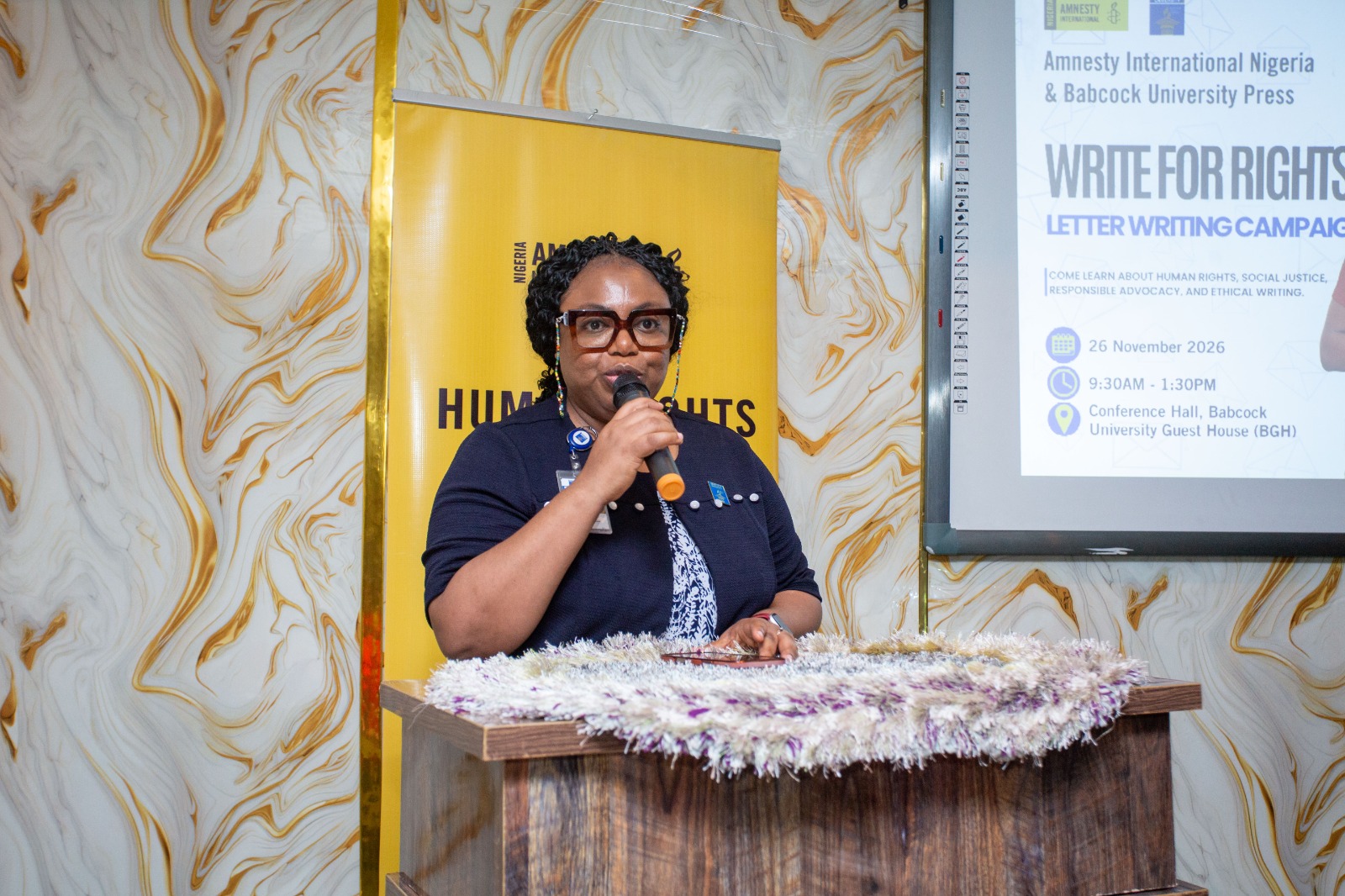


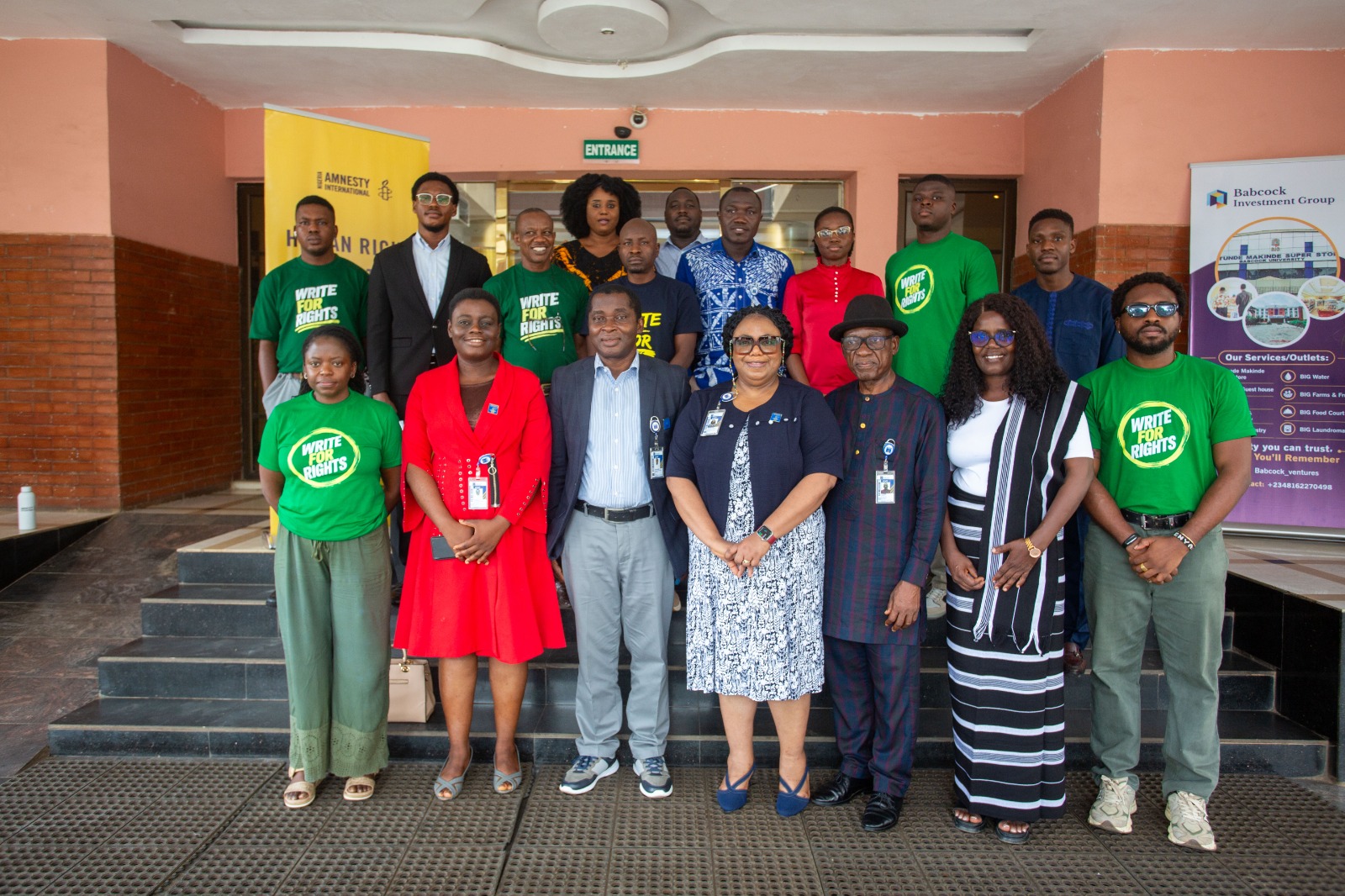
Babcock University has partnered with Amnesty International to train students and faculty members in human rights advocacy, civic engagement and campaigns against rights violations.
The pilot programme, held at the Babcock Guest House in Ilishan-Remo, Ogun State, brought together about 60 students and faculty members from different academic programmes.

The training featured practical sessions on advocacy, civic engagement and letter-writing campaigns to support individuals facing human rights violations locally and internationally.
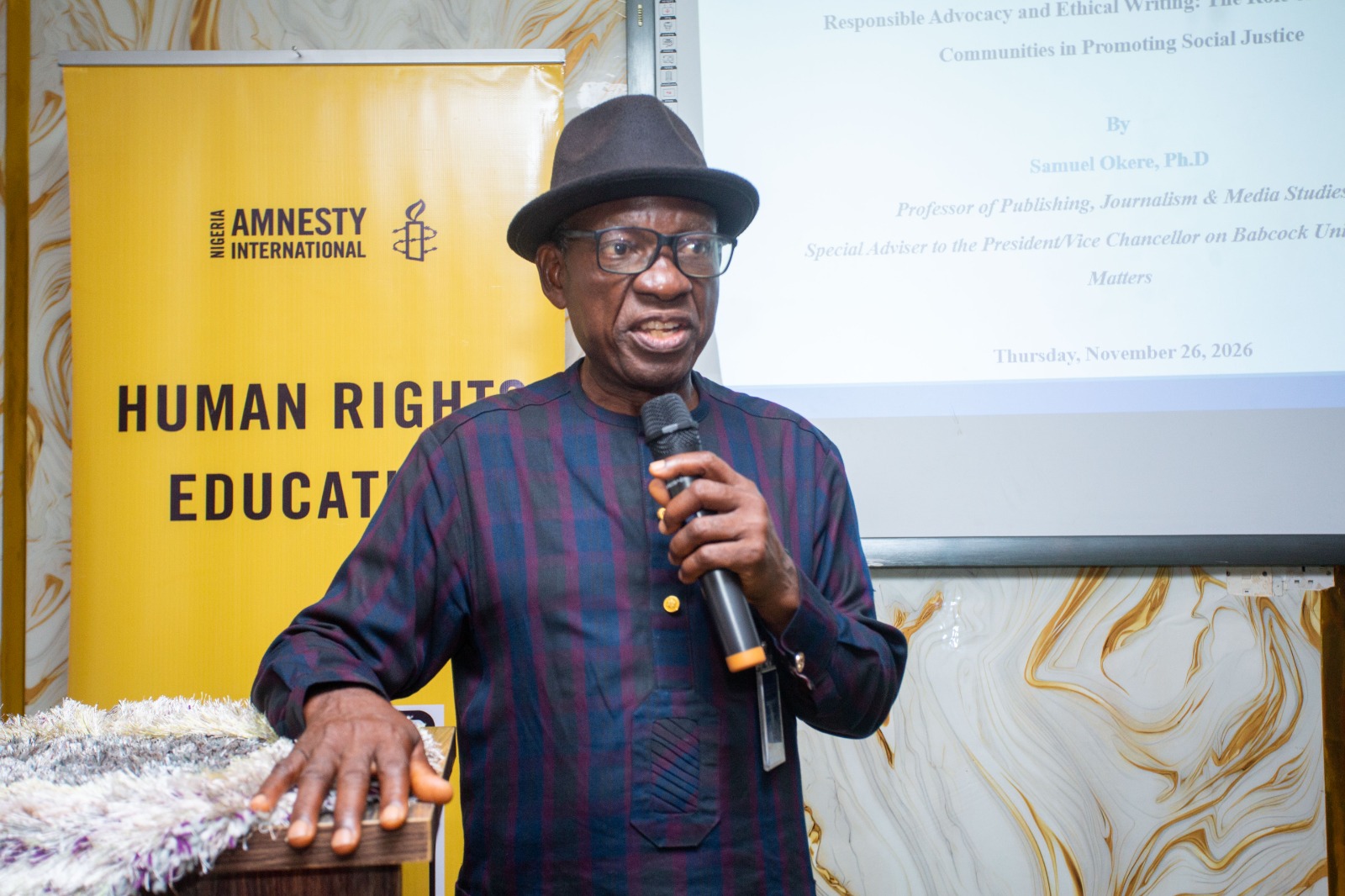
A Babcock University facilitator and Director of BU Press, Prof. Sam Okere, said the initiative was designed to equip participants with the skills and confidence to speak against injustice, express themselves effectively and advocate for people whose rights had been violated.

The Associate Vice President for Research, Innovation and International Collaboration, Prof. Foluso Ojewole, who represented the President/Vice-Chancellor, Prof. Afolarin Ojewole, urged participants to treat human rights violations as issues requiring collective responsibility.
“Injustice left unchallenged can encourage further abuses,” Ojewole said, adding that such violations should not be treated as distant concerns.

The Head of Mass Communication Department, Dr Ifeoluwa Atakiti, was also present at the programme.
According to Amnesty International’s Media and Communications Manager, Dooshima Tsee, Babcock University was selected because its institutional values align with those of the organisation.

She said the programme was also designed to create opportunities for meaningful interaction with students and improve their understanding of the resources and channels available for reporting human rights violations.
Tsee encouraged participants to join Amnesty International’s ongoing Write for Rights Campaign, which allows people around the world to sign petitions and take action in support of individuals facing human rights abuses.
She also stressed the need for sustained platforms where young people could express their concerns and participate in conversations about human rights.

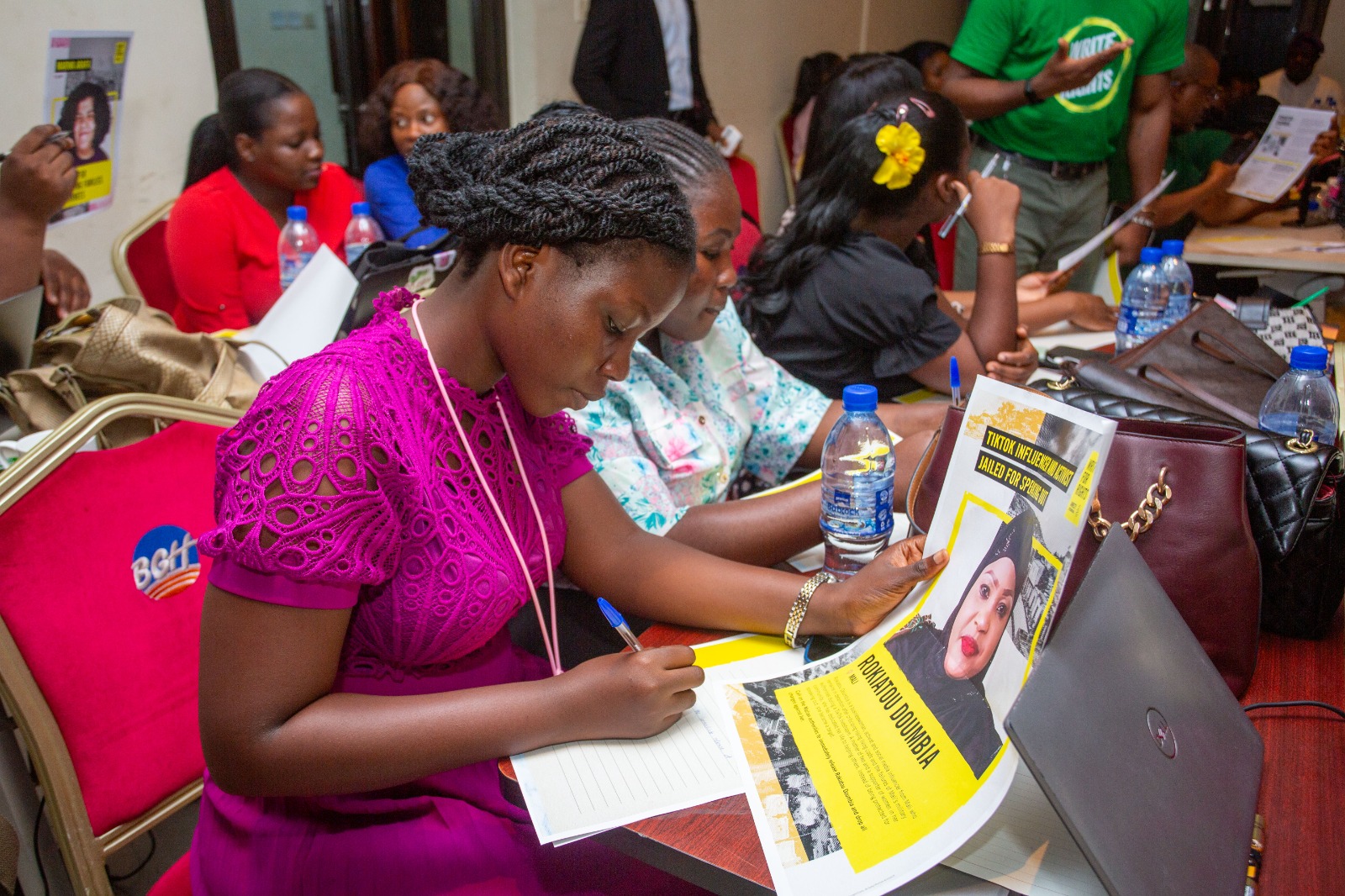
As part of the practical sessions, participants examined two international human rights cases and wrote letters to government authorities calling for justice and the release of those affected.
One of the cases involved Marwa Arafa, an Egyptian human rights activist, translator and mother reportedly detained over her peaceful activism and advocacy for political detainees and their families.
The other focused on Roukiatu Doumbia, a Malian entrepreneur, activist and social media influencer popularly known as “Rose Poivron”. She faced legal charges after criticising the rising cost of living in Mali during a TikTok livestream.
Participants described the experience as enlightening. Demilade Oyebade, a JUPEB student aspiring to study International Law and Diplomacy, said the programme showed that meaningful change could begin with small actions, including sharing stories and making social media posts.
Similarly, Momoreoluwa Oluwadare, a student of History and International Studies, said the training had strengthened her desire to support people whose rights had been violated.
The pilot programme forms part of Babcock University’s Global Relevance Strategy and its efforts to develop socially responsible students equipped to promote justice, defend human dignity and contribute positively to society.













 EduTimes Africa, a product of Education Times Africa, is a magazine publication that aims to lend its support to close the yawning gap in Africa's educational development.