


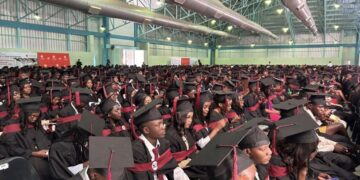














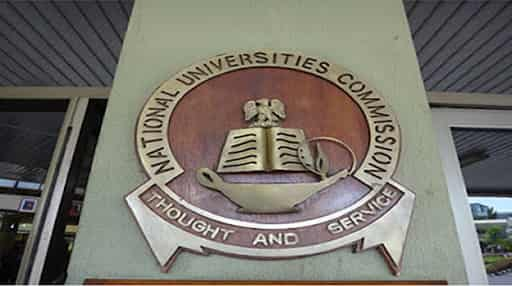


The National Universities Commission (NUC) is considering a three-to-four-week adjustment of academic calendars across Nigerian universities to enable lecturers and other academic personnel to participate in the conduct of the 2027 general elections.

The proposed adjustment is aimed at allowing university staff to undertake electoral responsibilities without disrupting academic activities or affecting students’ learning schedules.
The Executive Secretary of the NUC, Prof. Abdullahi Yusufu Ribadu, disclosed this on Monday, November 23, 2026, in Abuja, when the Chairman of the Independent National Electoral Commission (INEC), Prof. Joash Amupitan, led a delegation of national commissioners and senior officials on a courtesy visit to the commission.

Ribadu said the NUC would engage vice-chancellors across the country to facilitate the nomination of qualified and non-partisan academics to serve as Collation and Returning Officers during the elections.
He explained that the commission would convene an online meeting with university administrators to discuss the proposed arrangements and ensure that academic calendars were adjusted appropriately.
According to him, the NUC would also issue a formal circular to universities upon receiving an official request from INEC.
On the proposed academic break, Ribadu assured that the adjustment would not exceed four weeks, adding that consultations with vice-chancellors would determine how best to accommodate electoral activities without compromising students’ academic programmes.

“We will discuss with the Vice-Chancellors and have their calendars tweaked in such a way that it will not affect the elections, nor will it affect the studies of the students,” he said.
The NUC executive secretary also emphasised the importance of neutrality and integrity among academics deployed for election duties, suggesting that electoral personnel should take an oath of neutrality before their deployment.
Meanwhile, Amupitan called for stronger collaboration between INEC and Nigerian universities to support preparations for the 2027 general elections.
He acknowledged the contributions of university administrators and academics to previous elections, particularly their involvement in the collation and declaration of results.
The INEC chairman also disclosed that the commission had procured 57,000 additional Bimodal Voter Accreditation System (BVAS) machines, reducing the voter-to-device ratio to 850 voters per machine.
He further announced plans for a nationwide mock accreditation and result transmission exercise scheduled for Saturday, November 28, 2026, across the 36 states and the Federal Capital Territory.
On electoral security, Amupitan said the Inter-Agency Consultative Committee on Election Security had been decentralised to local government and registration areas to strengthen coordination and protect election officials.
He added that dedicated security arrangements would be introduced around collation centres to safeguard electoral personnel against intimidation and attacks.
Beyond election preparations, Ribadu proposed broader collaboration between the NUC and INEC, including internship opportunities for university students at INEC offices, possible academic programmes in electoral studies and joint research in artificial intelligence, robotics and data analytics.
He also suggested that universities could use student organisations and campus platforms to promote voter education and address misinformation and disinformation ahead of the elections.
The Presidential and National Assembly elections are scheduled for January 16, 2027, while governorship and State Houses of Assembly elections are expected to hold on February 6, 2027.
The proposed adjustment of university academic calendars is expected to accommodate the electoral activities while ensuring that students’ academic programmes are not unnecessarily disrupted.







 EduTimes Africa, a product of Education Times Africa, is a magazine publication that aims to lend its support to close the yawning gap in Africa's educational development.