























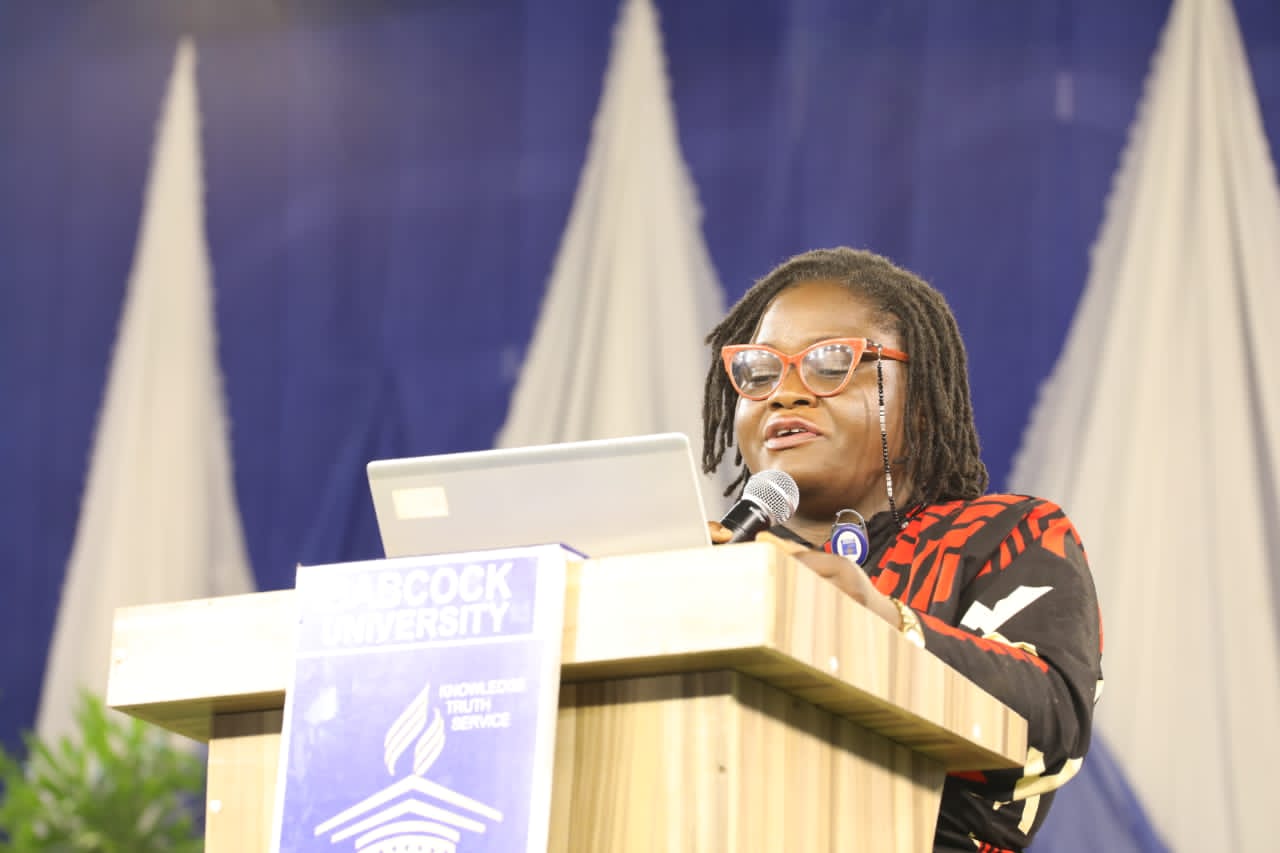


The Provost of the Benjamin Carson College of Health and Medical Sciences, Babcock University, Prof. Adeola Fowotade, has urged members of the university community to remain globally relevant while addressing local challenges and responsibilities.



Fowotade made the call while delivering the keynote address at the 2026 Babcock University Colloquium held at the university’s Amphitheatre in Ilishan-Remo, Ogun State.

The colloquium was themed, “Grounded in the Bible, Focused on the Babcock University Mission: How to Remain Faithful, Globally Relevant, and Locally Impactful in Our Different Professions.”
In her address, Fowotade challenged members of the university community to consider how they could remain firmly grounded in Scripture and the Adventist faith while producing work of quality, relevance and integrity that would have impact in Nigeria, Africa and the wider world.


Drawing from Colossians 3:23, she said every role, whether academic, professional or administrative, could serve as a platform for contributing to humanity and expressing service to God.
She called for faith-driven scholarship and innovation capable of addressing some of Nigeria’s pressing challenges, while encouraging the university community to develop African solutions with the potential to influence the continent and beyond.
According to her, building internationally credible scholarship and partnerships would enable Babcock University to transform local relevance into global contribution.
“Think globally; never abandon local responsibility,” she said, stressing that international recognition should not come at the expense of addressing the needs of the immediate community.
Using the biblical account of Daniel as an example, Fowotade said individuals could maintain their spiritual identity while developing the intellectual and professional competence required to operate effectively in diverse cultures and systems.
“Daniel did not lose his identity in Babylon,” she said, urging members of the university community to see faith as an anchor for navigating an increasingly interconnected world.
She also highlighted the GRACE Agenda as an integrated framework for advancing the university’s mission, noting that Babcock was more than a degree-awarding institution.
Fowotade said knowledge, healthcare, technology, administration and innovation should all serve as platforms for advancing the institution’s mission and contributing to society.

“Mission is not a department; it is a culture,” she said.
The Provost further challenged faculty, staff and students to evaluate the broader impact of their work by asking whether it addresses real problems, influences policy or practice, benefits society and can withstand international scrutiny.
She maintained that the pursuit of global relevance must not result in spiritual dilution or the abandonment of local responsibilities.
Fowotade concluded by reaffirming the need for Babcock University to produce graduates who are spiritually grounded, intellectually competent and globally impactful, while remaining connected to their communities and faithful to the institution’s mission.









 EduTimes Africa, a product of Education Times Africa, is a magazine publication that aims to lend its support to close the yawning gap in Africa's educational development.