






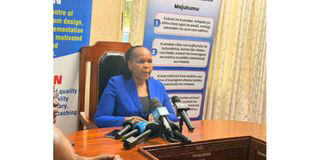




















The Provost and Dean of the School of Law and Security Studies, Babcock University, Prof. Dorcas Odunaike, has called on institutions to harness their collective strengths and promote collaboration to build resilient organisations capable of responding to modern challenges.



Odunaike made the call while presenting her paper at the 2026 Babcock University Colloquium, which commenced on October 7 at the university’s Amphitheatre in Ilishan-Remo, Ogun State.

The colloquium brought together scholars, administrators and staff to examine strategies for institutional growth and sustainability amid changing socio-economic and security realities.
Presenting a paper titled “Linking Strengths for Collaborative Workforce”, Odunaike said collaboration across departments and professional boundaries could multiply individual and institutional impact.

She noted that faith and the university’s mission should remain the foundation of its activities, describing teamwork as one of Babcock University’s greatest strengths.
According to her, every faculty member, department and staff member has an important role to play in advancing the institution’s goals.
“Let us support the GRACE Agenda with our best effort; mentor a colleague, co-author a paper, share expertise and commit to continuous improvement in our roles,” she said.

Odunaike called for more intentional collaboration beyond departmental boundaries, particularly through multidisciplinary research and academic programmes.
She urged faculty members from different disciplines to collaborate on research, co-author academic papers, co-supervise students and jointly design programmes that address emerging societal needs.

The professor also advocated problem-solving research focused on real challenges confronting Nigeria and Africa, particularly in healthcare, agriculture, energy, education and governance.
She further encouraged members of the university community to pursue global research funding by actively applying for international grants and developing stronger partnerships with industry, government, non-governmental organisations and universities around the world.
Odunaike also highlighted the potential of student-led technological innovations to produce the next generation of Babcock University innovators, citing areas such as solar energy systems, food technology, mobile applications and award-winning research.

“The innovations of today are the solutions of tomorrow’s world,” she said.
She added that effective linkage of institutional strengths would improve coordination, while cross-departmental innovation could generate creative solutions and new approaches to longstanding problems.










 EduTimes Africa, a product of Education Times Africa, is a magazine publication that aims to lend its support to close the yawning gap in Africa's educational development.