






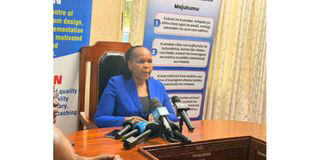




















The Federal Government has raised concerns that school enrolment and attendance figures may not accurately reflect whether Nigerian children are receiving quality education.



The Minister of State for Education, Professor Suwaiba Ahmad, said physical presence in the classroom should no longer be the sole measure of participation in basic education.


Ahmad recalled 2024 data from UNICEF indicating that 74 per cent of Nigerian children aged seven to 14 lacked basic reading, cognitive and mathematics skills.
She said the figures showed that children could be physically present in school without necessarily acquiring the knowledge and skills expected at their level.

The minister disclosed that the government plans to place greater emphasis on classroom safety, learner participation and educational outcomes when assessing basic education in Nigeria.
According to her, enrolment and attendance statistics alone cannot provide a complete picture of the state of the education system, as some children may be excluded from learning because of bullying, ridicule, discrimination or unsafe school environments.
Speaking at a national trainers’ session on safe learning environments, gender-responsive technology and ICT skills for educators in Teacher Training Institutions, Ahmad said a child’s presence in school must be accompanied by evidence that the learner is safe, included, participating and learning.
She noted that some children gradually disengage from school even while their names remain on the register.
The minister urged teachers and other education stakeholders to pay closer attention to what happens to learners inside classrooms, particularly their emotional and mental well-being and their ability to participate effectively in learning.
Ahmad also highlighted the impact of bullying and exclusion on children, noting that a learner may stop participating when they are repeatedly ridiculed, ignored or made to feel unsafe.

She said the Federal Ministry of Education had introduced the National Policy on Anti-Bullying in Nigerian Schools and its implementation guidelines.
However, the minister stressed that the effectiveness of the policy would ultimately depend on how teachers and other adults respond when children experience bullying, abuse or exclusion.
She called on educators to move beyond simply recording attendance and focus on ensuring that every child who comes to school is safe, included and able to learn.










 EduTimes Africa, a product of Education Times Africa, is a magazine publication that aims to lend its support to close the yawning gap in Africa's educational development.