





















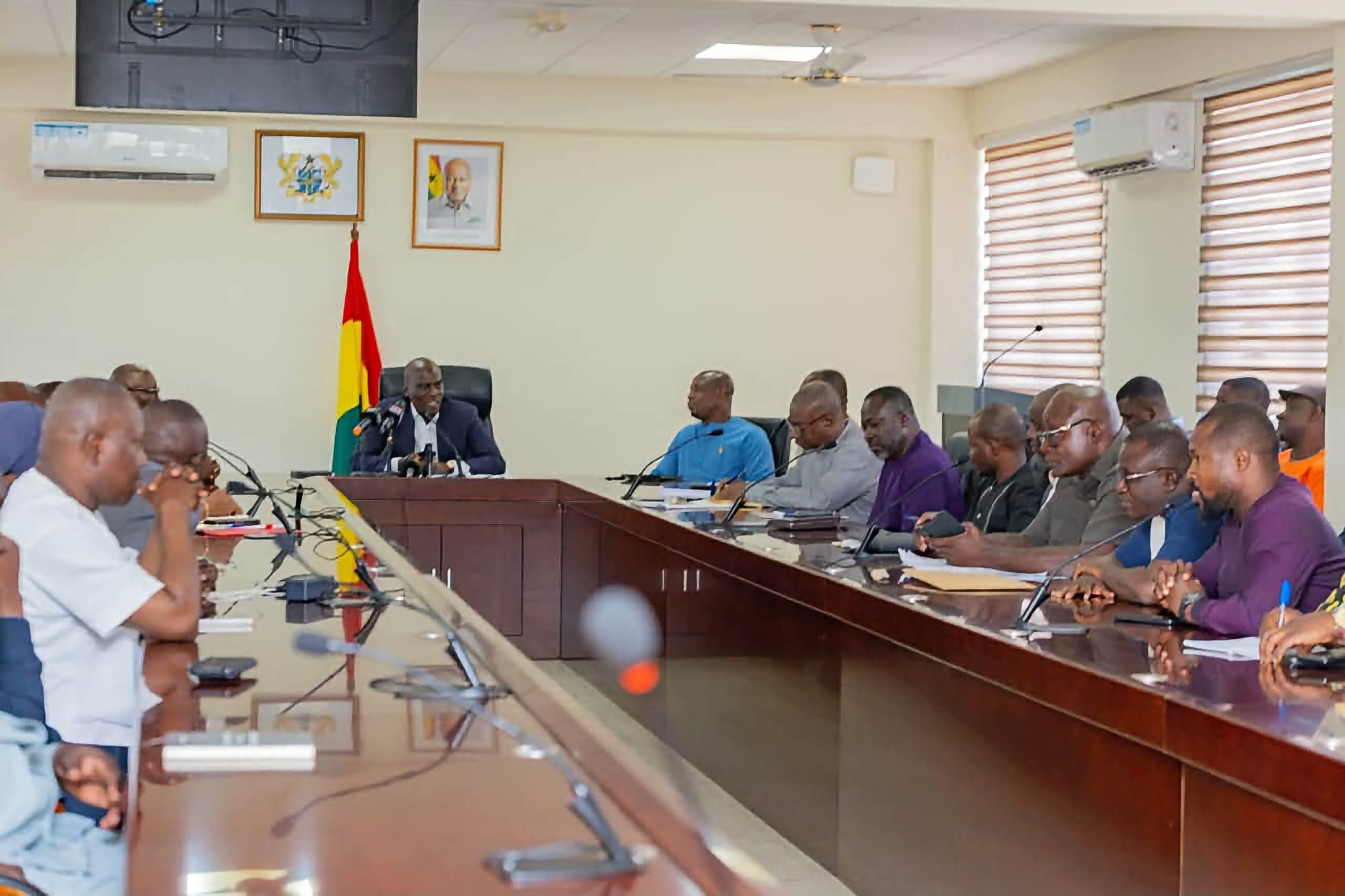


Ghana’s Minister for Education, Hon. Haruna Iddrisu, has met with representatives of the Ghana Association of University Administrators (GAUA) and university management as efforts intensify to resolve the ongoing strike by administrative and professional staff of public universities.
The meeting focused on key concerns raised by the union, including salary adjustments, market premiums, job evaluation, staff equivalences, conditions of service, outstanding allowances and retirement arrangements.

Iddrisu appealed to the striking workers to consider suspending the industrial action and return to the negotiating table, assuring them that he was prepared to engage the Ministry of Finance, the Fair Wages and Salaries Commission and other relevant institutions to help address their concerns.
The minister stressed the need to restore stability on university campuses, particularly with institutions preparing for the new academic year.

He noted that considerable efforts had been made to restore Ghana’s academic calendar following disruptions caused by the COVID-19 pandemic and urged all stakeholders to protect the progress achieved.
Union Seeks Fresh Job Evaluation
One of the major issues discussed was the union’s demand for a fresh job evaluation exercise.
GAUA argued that existing arrangements were based on previous evaluations and no longer adequately reflected the responsibilities and roles of university administrative and professional staff.
The minister welcomed the proposal and expressed his willingness to engage the Fair Wages and Salaries Commission on the possibility of conducting a new job evaluation.
The meeting also considered the outstanding one-time research allowance.
Iddrisu said the government remained committed to paying the allowance and referred to a 24 April 2026 letter from the Deputy Minister for Finance, Thomas Ampem, requesting validated and disaggregated data on beneficiaries to facilitate payment.
He directed that the required information be submitted to the Ministry of Finance for validation and processing and pledged to follow up on the matter.
Staff Equivalence and Senior Officers’ Conditions

The long-standing issue of staff equivalences also featured prominently during the discussions.
Prof. Anamoah explained that the existing equivalence arrangements had historical origins and were designed to recognise the complementary roles of different categories of staff within the university system.
He urged stakeholders to understand the background to the arrangements and prevent the issue from becoming a source of division.
The union also raised concerns about the placement of senior administrative and professional officers, including Registrars, Executive Registrars and Finance Directors, warning that such arrangements could have implications for salaries and pension benefits.
Iddrisu acknowledged the concerns and said the relevant issues would be examined.
University management also appealed to the striking workers to return to work while negotiations continue, citing the impact of the industrial action on admissions, administration, teaching and other essential university operations.
Strike Remains in Force
The minister urged all parties to exercise restraint and avoid statements that could escalate tensions, stressing that dialogue remained the best path towards a lasting resolution.
Following the meeting, GAUA National President Stanley Abofam and National President Rev. Kweku Kakereyamwa described the engagement as positive and fruitful.
However, the union leaders clarified that the meeting did not result in an immediate suspension of the strike.
They said they would return to their constituents to present the outcome of the engagement and consult members before deciding on the next step.
The union assured the minister that it would communicate its decision within 48 hours.
The meeting ended with both sides reaffirming their commitment to further dialogue, while the industrial action remains in force pending the union’s consultations and subsequent decision.










 EduTimes Africa, a product of Education Times Africa, is a magazine publication that aims to lend its support to close the yawning gap in Africa's educational development.