
























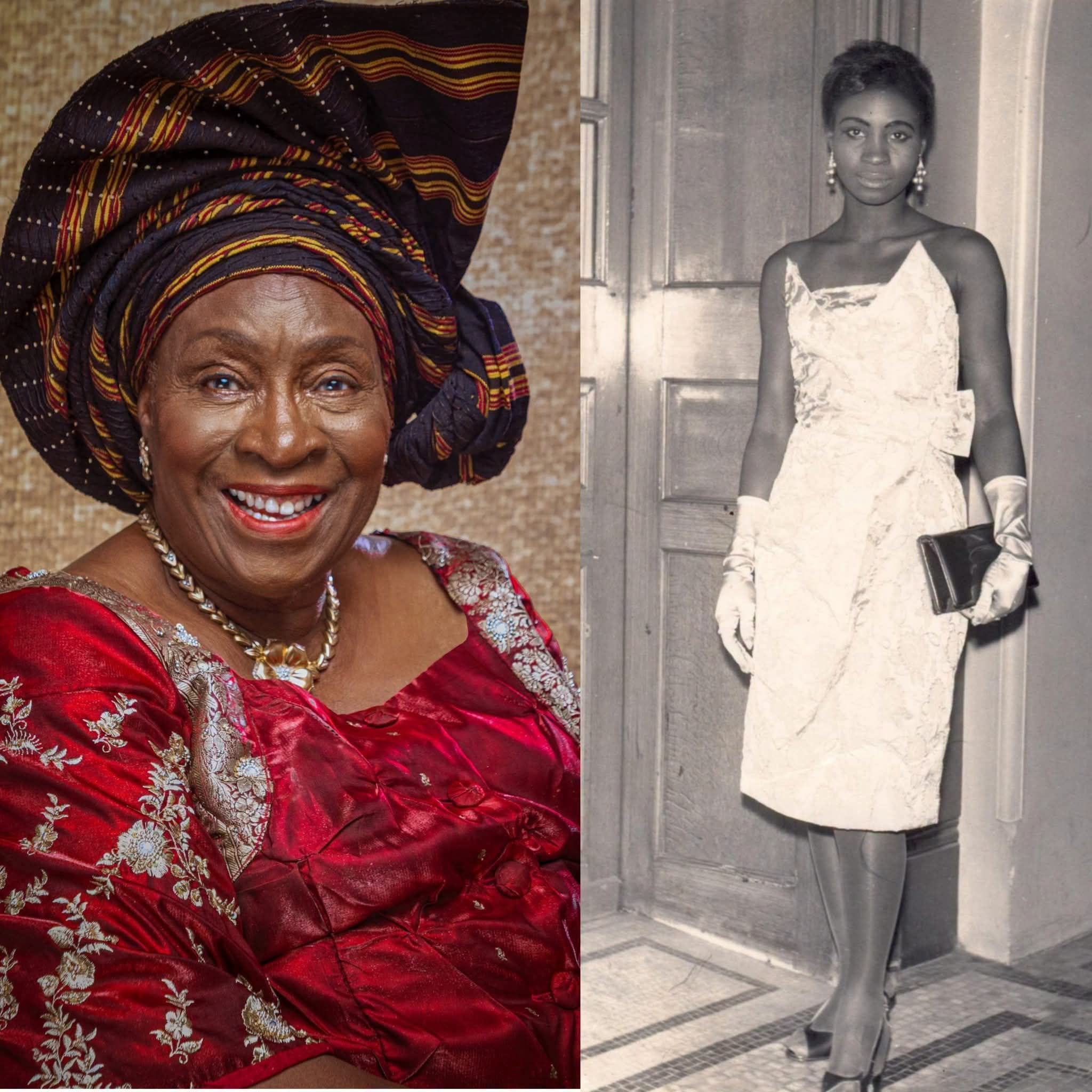


Long before Lagos Fashion Week, African fashion became a global conversation and Nigerian designers dominated international runways, one Nigerian woman was already challenging the way Nigerians dressed.
Her name was Victoria Omọ́rọ́níkẹ Àdùkẹ́ Fọlashadé Thomas-Fahm, popularly known as Shade Thomas-Fahm.

Born in Lagos in 1933, she is widely regarded as Nigeria’s first modern fashion designer and a pioneer of the country’s fashion industry. Her story is one of education, courage, creativity and an early belief that Nigerian fabrics and traditional clothing could be transformed into modern fashion.
Here are 15 things to know about the fashion pioneer.

1. She was born in Lagos
Shade Thomas-Fahm was born in Lagos in 1933. Her professional name would later become synonymous with the beginnings of modern Nigerian fashion.
2. She initially went to Britain to study nursing
In 1953, she travelled to England with the intention of training as a nurse.
But fashion would eventually change the direction of her life.
3. London changed her career path
While in London, Thomas-Fahm became fascinated by the city’s fashion and department stores.
She abandoned her original nursing plan and pursued fashion instead.
4. She trained professionally in fashion
She studied fashion at St Martin’s School of Art, now part of Central Saint Martins, after earlier training at Barrett Street Technical College.
She became the first Nigerian woman to study fashion design professionally.
5. She completed her fashion training in 1959
Thomas-Fahm qualified from St Martin’s in 1959 and returned to Nigeria the following year.
That timing was significant: Nigeria gained independence in 1960, the same year she returned home.
6. She founded Maison Shadé
After returning to Lagos, she established Maison Shadé, which later became known as Shadé’s Boutique.
The business included a factory in Yaba, while the boutique later moved to other locations in Lagos.
7. She wanted Nigerians to embrace Nigerian fabrics
Thomas-Fahm did not simply reproduce European fashion.
She wanted to demonstrate that indigenous Nigerian fabrics could be fashionable, sophisticated and suitable for modern life.
8. She championed indigenous textiles
Her designs featured fabrics including aṣọ-òkè, àdìrẹ, akwete and okene.
She brought these materials into contemporary clothing and helped give Nigerian textiles a stronger place in modern fashion.
9. She modernised the ìró
One of her notable innovations was adding a zipper to the traditional ìró, transforming the wrapped garment into something easier for modern, working women to wear.
It was a simple design intervention with a major practical impact.
10. She popularised the pre-tied gèlè
Thomas-Fahm also created a pre-tied gèlè, making the traditional headwrap easier and quicker for women to wear.
It was another example of how she combined tradition with convenience.
11. She designed for the modern Nigerian woman
Her designs were aimed particularly at the cosmopolitan, working woman.
Rather than abandoning traditional clothing, she asked how traditional Nigerian garments could evolve to suit changing lifestyles.
12. Her boutique attracted prominent clients

Maison Shadé became a fashionable destination in Lagos.
According to the V&A, her customers included diplomats and members of royalty, demonstrating the reputation she built during the early years of the Nigerian fashion industry.

13. Her clothes reached the ready-to-wear market
Thomas-Fahm was not limited to bespoke clothing.
She produced ready-to-wear collections that were sold through her boutiques and other retailers, including Kingsway Stores in Lagos.
14. Her work travelled beyond Nigeria
She actively promoted her designs internationally and travelled abroad to attract buyers.
In December 1972, for example, she travelled to New York for promotional events for her fashion collections.
15. Her influence continues today
Thomas-Fahm’s importance goes beyond the clothes she designed.
She helped establish the idea that Nigerian fashion could be modern without losing its cultural identity.
Her pioneering work has since been recognised by institutions including the Victoria and Albert Museum in London, which featured her work in its major Africa Fashion exhibition.
Her legacy
Shade Thomas-Fahm did more than make clothes.
She helped redefine what Nigerian fashion could look like at a time when the country was finding its identity as an independent nation.
By combining indigenous textiles with modern silhouettes and practical design, she showed that tradition and innovation did not have to compete.
Today, when Nigerian designers take adire, aṣọ-òkè and other indigenous textiles to international audiences, they are working within a fashion tradition that pioneers like Shade Thomas-Fahm helped build.
Before the global spotlight came the pioneers. And Shade Thomas-Fahm was one of them.













 EduTimes Africa, a product of Education Times Africa, is a magazine publication that aims to lend its support to close the yawning gap in Africa's educational development.