

























Stakeholders in Nigeria’s education sector have called for a more holistic approach to school safety, saying protecting schools should go beyond the responsibility of security agencies to include governments, teachers, parents, communities and technology providers.



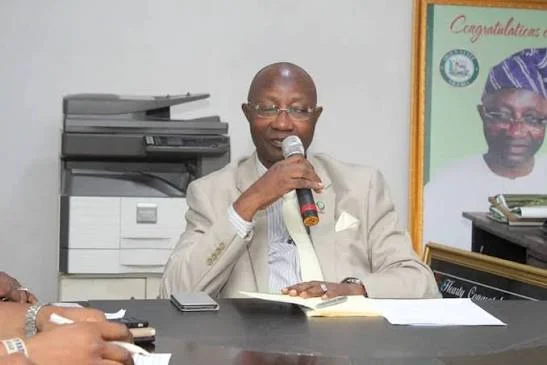
The call was made at the 4th Michael Alogba Olukoya Annual Lecture and Award Series organised by the Nigeria Union of Teachers (NUT), Lagos State Wing, in Ikeja, Lagos.

Speaking at the event, the Lagos State Chairman of the NUT, Hassan Akintoye Mujeeb, described this year’s theme, “School Safety: Stakeholders’ Strategies and Inputs,” as timely, noting that effective learning cannot take place in an atmosphere of fear and insecurity.
According to him, schools should remain centres of knowledge, creativity and character development rather than environments threatened by violence, bullying, abuse, drug-related activities and other security risks.

“A safe school is one where every child feels protected. A safe school is one where teachers can discharge their duties without intimidation or fear. A safe school is one where parents confidently release their children every morning, knowing they will return home safely,” he said.
Mujeeb urged governments to prioritise school safety by improving infrastructure, providing perimeter fencing, installing functional security systems, strengthening emergency response mechanisms and implementing policies that guarantee safe learning environments.
He also encouraged teachers to remain vigilant by identifying early warning signs of abuse, bullying, violence and emotional distress among learners, while calling on parents to strengthen moral upbringing and maintain close communication with schools.

Delivering the keynote address, the Lagos State Commissioner of Police, Fatai Tijani, represented by the Deputy Commissioner of Police in charge of Finance and Administration, Anthony Okonkwo, said school safety should no longer be seen as the sole responsibility of security agencies.

He explained that the Nigeria Police Force’s Safe School Model combines specialised school protection squads, intelligence gathering, risk assessment and community policing to strengthen security around educational institutions.
According to him, international frameworks such as the Safe Schools Declaration and Crime Prevention Through Environmental Design should also be adopted to improve surveillance, regulate access to school premises and prevent security breaches.
The police commissioner recommended the installation of surveillance cameras, digital attendance systems, panic buttons linked to police command centres and regular emergency drills, alongside stronger collaboration between schools, security agencies, parent-teacher associations and host communities.
He also advocated the establishment of School Community Security Committees and a Safe School Trust Fund to support security infrastructure, particularly in under-resourced public schools.
Also speaking, the Lagos State Commandant of the Nigeria Security and Civil Defence Corps (NSCDC), Adedotun Keshinro, represented by the Corps Public Relations Officer, Oluwaseun Abolurin, warned that schools have increasingly become targets of kidnapping, violent attacks, cultism, bullying, arson and terrorism.
Although he acknowledged that Lagos currently enjoys relative peace, he cautioned stakeholders against complacency.
“Prevention is cheaper than cure. The goal is to equip school managers with the tools to identify, assess and manage threats before they become tragedies,” he said.
He explained that school threat assessment is a proactive strategy for identifying students or situations that may pose security risks before violence occurs.
“Every threat is a form of communication. When a child says, writes or does something concerning, we must ask, ‘What is this person telling us?'” he added.
The commandant maintained that while security agencies can respond to emergencies, school authorities have a greater responsibility to prevent them through proper planning and vigilance.
To strengthen school safety, he outlined seven recommendations, including the establishment of Threat Assessment Teams in schools, regular vulnerability audits, confidential reporting channels, teacher training on behavioural warning signs, action plans for identified threats, routine emergency drills with security agencies, and proper documentation and periodic review of security incidents.
Other stakeholders at the event included the Lagos State Commissioner for Basic and Secondary Education, Jamiu Alli-Balogun, and the state Director of the Department of State Services (DSS), Babajide Salako, among others.














 EduTimes Africa, a product of Education Times Africa, is a magazine publication that aims to lend its support to close the yawning gap in Africa's educational development.